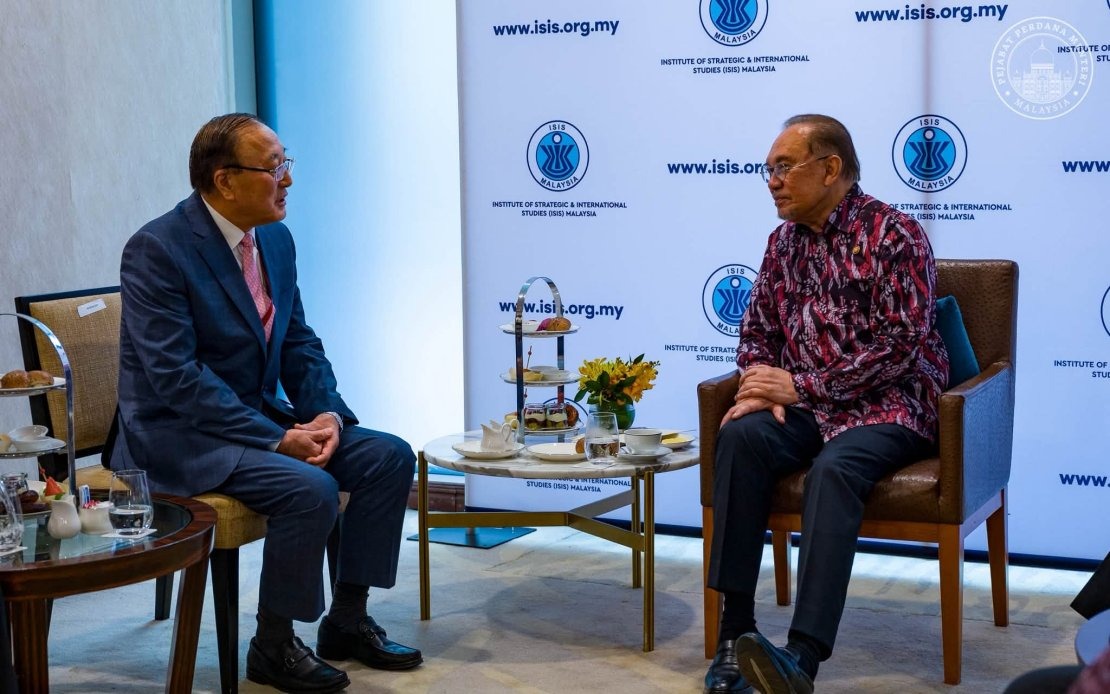
Prime Minister Datuk Seri Anwar Ibrahim has pledged Malaysia's commitment to intensifying cooperation with the Boao Forum for Asia (BFA) across a comprehensive range of strategic sectors, signalling the nation's intention to play an increasingly active role in regional economic and technological advancement. The announcement came during a meeting with BFA secretary-general Zhang Jun, underscoring Malaysia's readiness to engage with one of Asia's most influential multilateral platforms at a time when the region faces mounting external pressures.
The scope of the proposed collaboration spans areas critical to the region's future trajectory. Trade and investment remain foundational pillars of the partnership, reflecting the enduring importance of economic integration for Southeast Asian prosperity. However, the Malaysian government's emphasis on digital transformation and artificial intelligence demonstrates recognition that technological capability now determines competitive advantage in the global marketplace. These emerging domains represent frontiers where regional nations must coordinate policies and share expertise to avoid being left behind by more advanced economies.
Energy transition constitutes another pivotal dimension of the envisaged cooperation framework. As Malaysia and other Southeast Asian nations commit to climate goals and sustainable development pathways, collaboration through platforms like the BFA enables knowledge exchange on renewable energy deployment, just transition mechanisms, and the mobilisation of green finance. This sector carries particular significance for Malaysia given its hydrocarbon export revenues and the need to manage economic diversification during the global shift away from fossil fuels.
Food security emerged as a designated cooperation area, reflecting vulnerabilities exposed during recent global supply chain disruptions and climate volatility. Southeast Asia's expanding population and rising dietary demands create urgent imperatives for coordinated regional approaches to agricultural productivity, trade corridors, and climate-resilient farming practices. Malaysia's participation in BFA discussions on this theme positions the nation within broader regional problem-solving mechanisms rather than adopting isolated national responses.
Education and talent development rounded out the partnership priorities articulated by Anwar. The recognition that human capital development underpins long-term competitiveness reflects understanding that technological and economic transformation requires workforce capabilities aligned with emerging opportunities. Regional cooperation in education can facilitate curriculum harmonisation, facilitate student and researcher mobility, and enable knowledge transfer across borders.
Anwar's framing of this cooperation initiative within the context of geopolitical uncertainty and economic pressure reveals the calculus underpinning Malaysia's external engagement. The Malaysian leadership appears to view enhanced BFA participation as a mechanism for advancing national interests whilst contributing to broader regional stability. By emphasising dialogue-based cooperation and inclusiveness, the Prime Minister positioned Malaysia as a stakeholder in collective prosperity rather than zero-sum competition, a posture increasingly important as tensions between major powers affect smaller regional states.
The visit by Zhang Jun itself carries significance beyond the bilateral encounter. As BFA secretary-general, his travels to key Asian capitals reflect the forum's efforts to deepen relationships with influential regional economies and ensure that its initiatives resonate with national policymakers. Malaysia's status as a substantive economic actor within ASEAN, combined with its geographic position and established diplomatic networks, makes engagement with Kuala Lumpur strategically valuable for an organisation seeking to amplify its influence.
For Malaysian readers, this development signals the government's determination to leverage multilateral platforms for advancing national priorities in technology, energy, and food security. Rather than relying exclusively on bilateral relationships or ASEAN mechanisms, participation in broader Asia-focused forums enables Malaysia to access networks of policymakers, investors, and innovators whilst contributing Malaysian perspectives to regional discussions. The emphasis on resilience and tangible benefits to ordinary citizens also reflects awareness that international cooperation must demonstrably improve living standards and economic opportunity domestically.
The timing of Anwar's announcement merits consideration. As global economic headwinds intensify and technological competition accelerates, nations increasingly seek partnerships that enhance competitive positioning whilst managing shared challenges. Malaysia's willingness to deepen BFA engagement suggests confidence in the forum's utility for addressing transnational issues and facilitating cooperation that transcends traditional diplomatic channels. For a middle-power nation seeking to punch above its weight in regional affairs, such platforms offer valuable convening capacity and agenda-setting influence.
Looking forward, the realisation of these cooperation commitments will depend on translating broad statements into concrete mechanisms and resource allocation. BFA initiatives in artificial intelligence, green energy, and educational exchange will require sustained Malaysian participation, regulatory alignment, and domestic investment. The success of this partnership will ultimately be measured by whether Malaysian businesses gain market access in BFA networks, whether domestic institutions acquire technological capabilities, and whether ordinary Malaysians experience improved prosperity through expanded regional cooperation.

