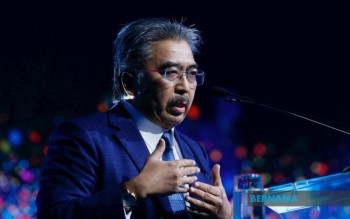
The Malaysian government is navigating a delicate policy challenge as it attempts to simultaneously accelerate the nation's transition to electric vehicles and expand the supporting infrastructure, while remaining mindful of cost pressures on the public. During parliamentary proceedings in Kuala Lumpur, Investment Minister Datuk Seri Johari Abdul Ghani outlined the government's cautious approach to implementing an electric vehicle levy, emphasising that no final decision has been reached and that authorities are still evaluating the most workable mechanism to fund critical charging infrastructure across the country.
The financial architecture underlying Malaysia's EV ambitions presents a complex puzzle that extends far beyond simple vehicle electrification. Johari underscored that the government has already committed substantial resources to EV subsidies while simultaneously facing the pressing need to develop charging networks that can support mass adoption. These dual obligations, he explained, must be understood within the broader context of Malaysia's energy mix and fiscal situation. The nation continues to depend heavily on gas and coal-fired electricity generation, meaning that the true cost of expanding EV infrastructure encompasses not merely the capital expenditure on physical charging stations but also the underlying electricity supply investments required to sustain them.
A critical tension emerges when considering where the financial burden should ultimately rest. If the government imposes levies directly on vehicle manufacturers, those companies will inevitably transmit the costs downstream to consumers purchasing EVs. Conversely, direct government funding of charging infrastructure requires either reallocating money from other public services or borrowing, both problematic given Malaysia's existing fiscal deficit. The minister's candid acknowledgment of this fiscal reality—that the government cannot indefinitely absorb these costs through subsidies alone—reflects the genuine constraints shaping policymaking in Kuala Lumpur.
Johari's remarks signal that the administration recognises the inadequacy of relying solely on private sector investment to build the necessary charging ecosystem. Vehicle manufacturers and distributors have limited incentives to construct networks serving the broader public interest, particularly in less commercially attractive regions. A dedicated fund generated through an EV levy could theoretically address this market failure by creating a sustainable revenue stream specifically earmarked for public charging infrastructure. This approach mirrors models being explored by other countries grappling with similar infrastructure challenges.
The government's cautious framing of these discussions reflects awareness of public sensitivity around new levies and cost-of-living pressures. By emphasising that no decision has been finalised and that various mechanisms are under consideration, authorities are buying time to build political consensus and gather stakeholder input. The acknowledgment that charging network development in Malaysia cannot match the scale achieved in China—where state investment has been massive and coordinated—demonstrates realistic recognition of comparative constraints, though it also highlights the gap Malaysia must overcome to ensure EV adoption is not constrained by inadequate infrastructure.
For Malaysian consumers considering EV purchases, the unresolved levy question creates uncertainty about future vehicle pricing. The timing and structure of any levy will significantly influence the total cost of ownership, potentially affecting purchase decisions and overall market penetration. Manufacturers face their own strategic dilemmas, needing to plan investment in EV development and importation while confronting potential new cost structures that could compress margins or necessitate price adjustments that might dampen demand.
The broader policy context reveals that Malaysia's EV transition, while government-supported through subsidies and policy announcements, remains incomplete in its infrastructure planning. Unlike markets with well-established charging networks, Malaysian drivers considering EV adoption must weigh the practical challenges of journey planning and charging availability. Government recognition of this infrastructure deficit, articulated through the exploration of levy mechanisms, represents a necessary step toward acknowledging that market forces alone will not deliver the network density required for mass adoption.
Regional considerations also merit attention. Throughout Southeast Asia, countries including Indonesia, Thailand, and Vietnam are pursuing EV expansion strategies while confronting identical infrastructure financing challenges. Malaysia's policy deliberations may influence regional approaches, and conversely, developments in neighbouring markets may inform Malaysian decision-making. The question of how to fund charging networks sustainably remains largely unresolved across the region, making Malaysia's policy choices relevant beyond its own borders.
The government's emphasis on understanding the fuller picture reflects legitimate complexity that extends beyond simple environmental or technological considerations. Electricity generation capacity, grid modernisation, coal and gas supply chains, and fiscal management are all implicated in EV infrastructure decisions. This interconnected reality means that EV policy cannot be developed in isolation from energy policy, monetary policy, and industrial policy more broadly. Johari's defence of this holistic perspective, while potentially frustrating to those favouring faster EV adoption, articulates an important truth about policy implementation in resource-constrained environments.
Moving forward, the government faces pressure to clarify its preferred mechanism while maintaining flexibility to adjust based on stakeholder feedback and changing circumstances. A levy structure that proves too burdensome could suppress EV adoption; one that is too modest may prove insufficient to fund adequate charging infrastructure. Balancing these considerations while managing public expectations requires careful communication about the costs and benefits of the EV transition, and honest acknowledgment that all stakeholders—government, manufacturers, and consumers—will bear some responsibility for funding the necessary infrastructure transformation.

