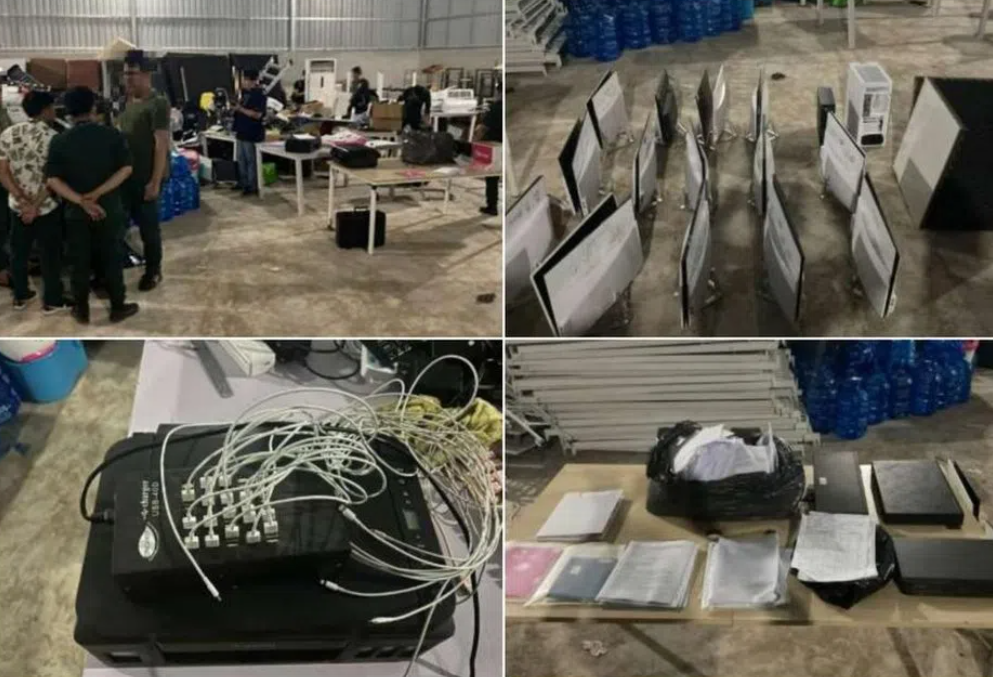
A Malaysian man has been handed a 16-month prison sentence for his involvement with a sophisticated Cambodian scam operation, despite his remarkably short and unsuccessful tenure with the criminal enterprise. Yip Chee Ming, 30, pleaded guilty to membership in an organised crime group on Friday following his arrest last year in connection with an operation run from Phnom Penh that systematically targeted victims across Singapore. The court also considered a separate fraud charge during sentencing, underscoring the serious nature of his participation even though his criminal activities yielded no actual victims.
Yip's path into organised crime began innocuously enough when a friend named Jason approached him in October 2024 with an employment opportunity. The recruitment came through a Telegram group, where Tang Soon Wah, identified as a leadership figure within the syndicate, extended an invitation for both men to view the operation's headquarters. Intrigued by promises of lucrative monthly compensation amounting to US$1,800 in cryptocurrency plus performance commissions, the pair travelled to Cambodia in late November to assess the job prospect. The five-storey building housing the operation in the Cambodian capital was fortified with security personnel, reflecting the scale and security-conscious nature of the criminal enterprise.
The structure of the syndicate reveals a sophisticated hierarchical organisation typical of transnational fraud networks. At the top, leadership managed overall strategy and financial distribution while supervisors and trainers occupied the middle tier, coaching callers on script delivery and persuasion techniques. The trainers specifically coached operators on adopting Singaporean accents to enhance the credibility of their impersonations, a detail that demonstrates the meticulous preparation involved in executing identity fraud at scale. Lower-level money launderers converted criminal proceeds into cryptocurrency, creating a cash-to-digital conversion mechanism that complicated tracing and asset recovery. Court documents indicated at least 78 suspected members operated across these various functions, suggesting an operation of considerable complexity and resource commitment.
Yip commenced his role on November 22, 2024, with instructions to impersonate a bank officer in interactions with potential victims. Despite receiving scripted dialogue and organisational training, he proved remarkably inept at the deceptive craft. His failure extended across multiple attempts over consecutive days, a situation that proved unsustainable even for an organisation accustomed to managing criminal personnel. By November 23, merely one day after commencing actual work, Tang fired him from the position, erasing their digital communications to sever the connection. The court did not reveal how Yip returned to Malaysia or the circumstances surrounding his exit from Cambodia, details that remain undocumented in the judicial record.
The scope of the broader criminal enterprise underscores why Singapore and Cambodian law enforcement prioritised dismantling this network. Between September 2024 and September 2025, the syndicate orchestrated at least 528 reported scam incidents, accumulating victim losses totalling approximately S$52.5 million. The strategy of government official impersonation proved particularly effective, with perpetrators claiming authority to manipulate victims into transferring funds through fear of legal consequences or immigration complications. This tactic exploited the psychological vulnerabilities and respect for authority common across victim populations, leveraging psychological pressure rather than technical sophistication.
Yip's arrest came during a coordinated enforcement action in September 2025 involving both Singapore Police and the Cambodian National Police. The operation resulted in charges against twelve individuals alleged to be syndicate members, including nine Singaporeans, one Malaysian besides Yip, and one Filipino national. The Singaporean detainees include Deon Tan Ke Yuan, Lester Ng Jing Hai, Christy Neo Wei En, Heiqal Lee, Tay Jun Xiang, Ng Wei Kang, Zachary Lee Jia An, Melvin Tan Wenzheng, and Lau Haoxiang, ranging from ages 25 to 39. The multinational composition of the arrested individuals indicates that such operations recruit across borders, drawing participants from multiple countries into coordinated criminal activity.
The sentencing of Yip reflects judicial recognition of the organised crime dimension despite his minimal operational contribution. Singapore law provides for fines up to S$100,000, imprisonment up to five years, or both for membership in organised criminal groups, standards that position such offences as serious felonies regardless of individual success or duration. The court's decision to impose 16 months and two weeks demonstrates judicial calibration, acknowledging Yip's fundamental complicity in the conspiracy even as his personal contribution proved negligible. The additional fraud charge taken into consideration suggests prosecutors viewed his actions as encompassing both the organisational membership and attempted deception of victims.
From a regional perspective, this case illustrates the transnational nature of contemporary fraud operations and the challenges posed to enforcement agencies across Southeast Asia. Criminal networks routinely establish headquarters in jurisdictions perceived as offering operational security while targeting victims in more developed economies with higher disposable incomes and accessible financial systems. The recruitment of Malaysian and other regional participants demonstrates how such operations tap into labour pools across borders, often exploiting economic disparities and employment precarity. The involvement of Singaporeans within the Phnom Penh operation suggests that citizenship status offers no protection from recruitment into such schemes.
Statistical trends provide further context for understanding why this particular operation warranted significant enforcement resources. Notwithstanding an overall decline in scam cases across Singapore during 2025, government official impersonation specifically doubled from 1,504 cases in 2024 to 3,363 cases in 2025, establishing it as the fifth most prevalent fraud category. This surge indicates that while some fraud vectors have contracted, the impersonation methodology has gained traction among criminal operators, suggesting its relative effectiveness compared to alternative approaches. The economic impact remains substantial despite numerical comparison to other crime categories, with per-victim losses often exceeding those associated with alternate fraud types.
Yip's case serves as a cautionary lesson about the recruitment methods employed by transnational organised crime networks and the severe legal consequences accompanying even minimal participation. His inability to successfully defraud anyone did not spare him prosecution or imprisonment, establishing that liability attaches at the point of organisational involvement rather than requiring demonstrated criminal success. The three-day employment duration, far from mitigating judicial response, occurred within a broader enforcement context recognising the systematic harm perpetrated by the entire operation. For Malaysian readers particularly, the case underscores that cross-border organised crime involvement exposes nationals to prosecution and incarceration in foreign jurisdictions, with diplomatic protections offering limited shield against conviction for international criminal conspiracy.

