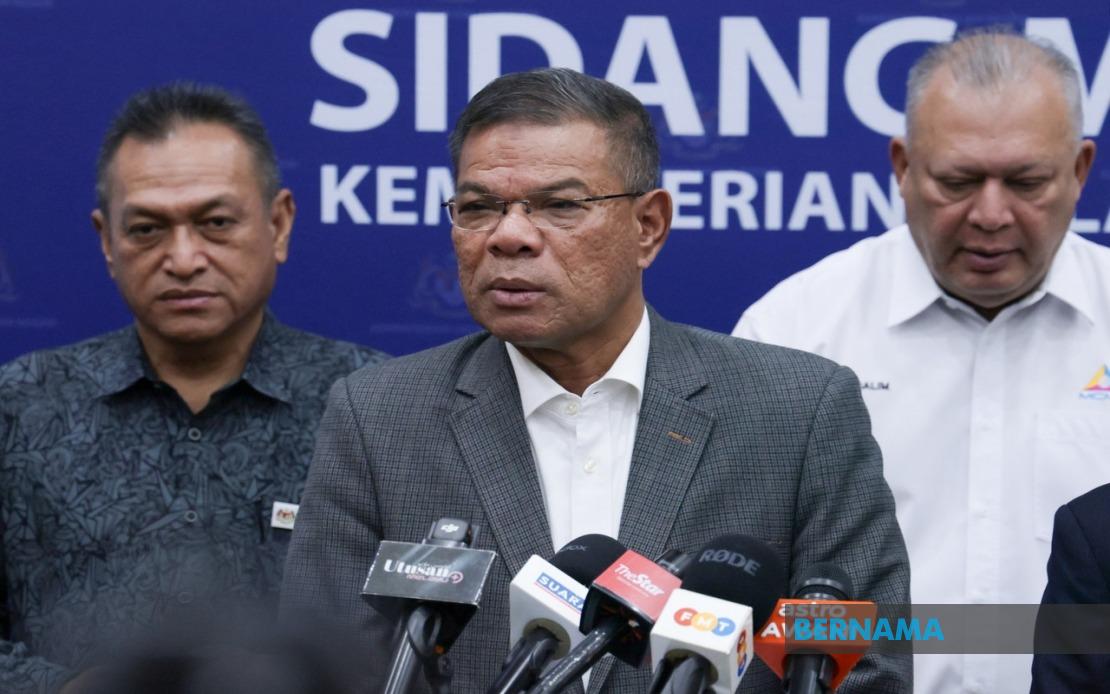
The National Anti-Drugs Agency (AADK) has formally launched a specialised drone unit equipped with 18 unmanned aircraft, marking a significant technological upgrade in Malaysia's fight against narcotics trafficking and abuse. Home Minister Datuk Seri Saifuddin Nasution Ismail announced the initiative at a press conference in Putrajaya on August 18, underscoring the government's commitment to deploying advanced surveillance tools in the nation's ongoing battle against drugs. The minister characterised the drone capability as a transformative addition to AADK's operational arsenal, designed to strengthen both monitoring capacity and enforcement precision across the country.
The deployment of drone technology addresses a critical gap in Malaysia's drug enforcement strategy by enabling continuous surveillance of known drug activity zones, particularly during hours when traditional observation proves challenging. According to Saifuddin Nasution, the drones are equipped for both daytime and night-time operations, allowing AADK personnel to maintain oversight of suspected drug hubs throughout the 24-hour cycle. This round-the-clock monitoring capability represents a substantial improvement over previous methods, which relied primarily on ground-based intelligence gathering and informant networks that are inherently limited by visibility constraints and human resource availability.
The information gathered through drone surveillance will be systematically processed and transmitted to AADK's operations command centre, where tactical enforcement decisions can be formulated with greater confidence. By establishing this direct pipeline of visual intelligence, the agency aims to reduce false positives and enhance the accuracy of targeting decisions before field teams are deployed for arrests or raids. Saifuddin Nasution specifically noted that prior surveillance efforts had already identified 23,317 individuals suspected of involvement in drug-related activities, with the new drone data expected to refine and expand this intelligence database considerably. The digital integration between surveillance platforms and operations rooms reflects a broader shift towards intelligence-led policing approaches that have proven effective in other regional law enforcement contexts.
Beyond the immediate tactical advantages, the drone unit announcement forms part of a larger strategic reorganisation of AADK's operational framework. The minister revealed that the agency has simultaneously launched its Strategic Plan 2026-2030, a comprehensive roadmap intended to modernise AADK's approach across four pillars: prevention, enforcement, treatment, and rehabilitation. This multi-dimensional strategy acknowledges that effective drug control requires more than interdiction alone, encompassing community education, treatment access, and rehabilitation support systems. The drone initiative, therefore, sits within a broader institutional evolution designed to make AADK a more sophisticated and comprehensive agency.
The timing of the drone unit's deployment reflects mounting pressure on Malaysian authorities to demonstrate tangible progress in containing drug supply chains and reducing consumption rates. The nation has sustained its designation as a major transit hub for Southeast Asian narcotics trafficking, with powerful criminal organisations exploiting Malaysia's strategic geographical position and ports to move methamphetamine, heroin, and synthetic drugs throughout the region. Domestic drug abuse rates have remained stubbornly high, with addiction treatment centres operating at or near capacity in major urban centres. The technological upgrade signals to both the public and regional partners that Malaysia is investing in modern enforcement infrastructure rather than relying solely on traditional law enforcement methods.
On the same day as the drone announcement, Home Minister Saifuddin Nasution also launched the KDN Gen AI Platform, indicating parallel efforts to harness artificial intelligence applications within the Home Ministry's broader security apparatus. The intersection of drone surveillance and AI-powered analytics suggests that future drug enforcement operations may involve automated pattern recognition systems capable of identifying suspicious behaviour or activity clusters across multiple data streams simultaneously. Such technological convergence could substantially amplify the practical impact of the drone unit by reducing the analytical burden on human operators and enabling real-time alert generation when predefined patterns of drug trafficking activity are detected.
The drone unit launch occurred during a press conference called primarily to witness a memorandum of understanding between the Malaysian Communications and Multimedia Commission (MCMC) and the Immigration Department (JIM). Communications Minister Datuk Seri Fahmi Fadzil and other senior officials attended, reflecting the cross-ministerial coordination required for sophisticated enforcement operations in an increasingly digital security landscape. This institutional gathering underscores how drug enforcement now intersects with communications regulation and border control—spheres where information sharing and coordinated technology deployment have become essential for operational effectiveness.
For Malaysian observers and regional analysts, the drone unit announcement carries significance beyond the immediate anti-drugs context. The investment in advanced surveillance technology demonstrates the government's willingness to deploy capital-intensive solutions to persistent security challenges, a posture that may influence how other agencies approach their operational modernisation. However, the effectiveness of the drone capability will ultimately depend on integration with ground-level enforcement teams, judicial processes capable of converting surveillance intelligence into successful prosecutions, and treatment infrastructure sufficient to handle the volume of drug-dependent individuals likely to be identified through expanded surveillance. The technological advancement alone, without corresponding reforms in these complementary systems, risks creating intelligence that outpaces enforcement and prosecution capacity.
For Southeast Asian drug trafficking networks, the deployment of AADK's drone fleet represents a measurable increase in operational risk, particularly for organisations reliant on visual reconnaissance and manual smuggling operations. The technology may prove most disruptive for localised drug distribution networks and retail-level dealers who conduct business in patterns susceptible to aerial observation. Larger criminal enterprises with sophisticated counter-surveillance capabilities may adapt more readily, potentially relocating operations to areas deemed lower-priority for drone deployment or shifting to methods that present less distinctive visual signatures. The long-term deterrent effect will depend partly on how consistently and visibly the technology is deployed across different regions and criminal contexts.
The establishment of the AADK Drone Unit also carries implications for Malaysian privacy discourse and civil liberties considerations, though these dimensions remain largely unaddressed in the official announcements. Aerial surveillance capabilities, particularly with night-vision and advanced targeting systems, raise questions about the scope of observation, data retention policies, and oversight mechanisms governing their use. Regional observers have noted that Southeast Asian governments increasingly adopt advanced surveillance technologies, sometimes without corresponding legal frameworks or independent review processes. How Malaysia structures accountability and transparency mechanisms around its new drone capability may establish precedents affecting other agencies' surveillance activities and broader public expectations regarding state monitoring powers.
Looking forward, the success of the AADK Drone Unit will be measured through metrics including the number of drug-related arrests facilitated by drone intelligence, the volume of narcotics seized through drone-assisted operations, and ultimately whether expansion of surveillance capacity correlates with measurable reductions in domestic drug availability and consumption. The agency's Strategic Plan 2026-2030 provides a framework for integrating drone data with prevention and rehabilitation initiatives, potentially enabling more holistic interventions that address drug trafficking and addiction simultaneously. As Malaysian authorities operationalise this technology and gather practical experience, the model may inform or be informed by similar initiatives undertaken by neighbouring countries facing comparable transnational drug trafficking challenges.

