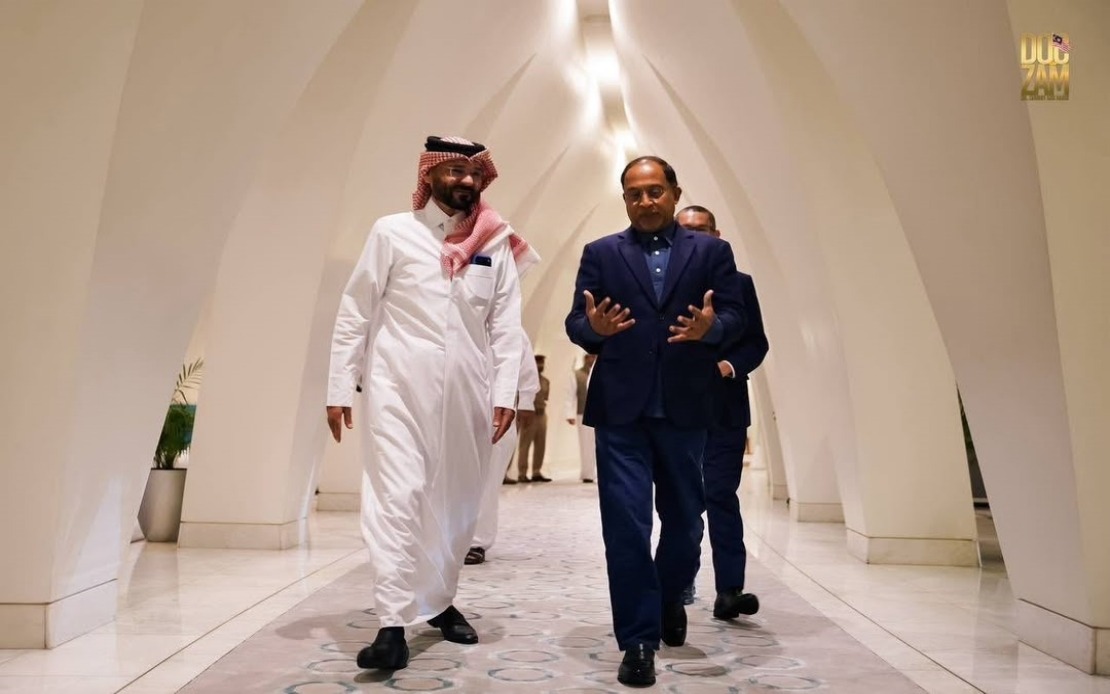
Malaysia's Higher Education Minister Datuk Seri Dr Zambry Abd Kadir touched down in Doha early Tuesday morning to represent the Malaysian government at a period of national mourning for Qatar's former leader, Sheikh Hamad bin Khalifa Al Thani, who died on Sunday at the age of 74. The ministerial visit underscores the diplomatic protocols surrounding the death of a major regional figure and reflects Malaysia's standing relationship with the Gulf state.
Zambry announced his intentions through social media, indicating that he would meet with the current Amir of Qatar, Sheikh Tamim bin Hamad Al Thani, at the Lusail Palace during his official visit. This direct engagement with the ruling family represents a formal acknowledgement of the succession and continuity of bilateral ties between Kuala Lumpur and Doha at the highest levels of government.
In his statement, the minister conveyed Malaysia's formal condolences to both the Qatari leadership and its population, framing the death as a significant loss for the Gulf nation. The wording of such diplomatic expressions carries weight in international relations, signalling respect for the deceased's contributions and recognition of Qatar's period of transition and reflection.
Sheikh Hamad's reign from 1995 to 2013 marked a transformative era for Qatar, during which the nation underwent substantial modernisation and emerged as a major regional power. His decision to peacefully transfer authority to his son, Sheikh Tamim, in 2013 represented a significant moment of dynastic stability in the Middle East, where leadership transitions can often prove contentious. The former Amir's long stewardship left an indelible mark on Qatar's institutions, economic development, and international standing.
Qatar has declared a four-day period of official mourning commencing from Sunday, July 12, during which all government ministries, entities, and public institutions remain shuttered. This extended mourning period reflects the ceremonial importance afforded to the former Amir and allows the nation's leadership and population to collectively honour his legacy and achievements.
The timing of Zambry's departure and arrival in Doha demonstrates Malaysia's commitment to maintaining strong diplomatic relationships within the Gulf Cooperation Council region, where Qatar holds strategic importance as both an economic partner and influential player in regional affairs. Malaysia has longstanding commercial and cultural ties with Qatar, including significant investments and labour migration patterns that bind the two nations together.
Sheikh Tamim, who ascended to power over a decade ago, has continued his father's vision of positioning Qatar as a global player, particularly through major sporting events and diversified economic investments. The current Amir's succession was notably smooth, contrasting with transition challenges elsewhere in the region, and reflected the institutional stability established during his father's tenure.
For Malaysian policymakers and observers, the passing of Sheikh Hamad represents the conclusion of an important chapter in contemporary Middle Eastern history. The former Amir's reign witnessed Qatar's transformation from a relatively modest hydrocarbon economy to a globally influential nation with substantial sovereign wealth and international presence. His legacy extends beyond Qatar's borders, influencing regional dynamics that affect Malaysia's interests in the Gulf.
The diplomatic gesture of sending a senior cabinet minister to pay respects reinforces Malaysia's protocol-conscious approach to international relations and signals that the country values its connection to Qatar's leadership across generational transitions. Such attendance at state functions serves multiple purposes: it demonstrates Malaysia's respect for a departed leader, acknowledges the current administration's legitimacy, and maintains the momentum of bilateral engagement at critical junctures.
Malaysia's response to Sheikh Hamad's passing also reflects broader Southeast Asian perspectives on Gulf affairs. As an Islamic-majority nation with significant economic interests in the region, Malaysia maintains balanced relationships with various Gulf states and views their stability as important to regional security and prosperity. The current period of Malaysian government representation in Doha thus carries weight beyond simple condolence protocols.

