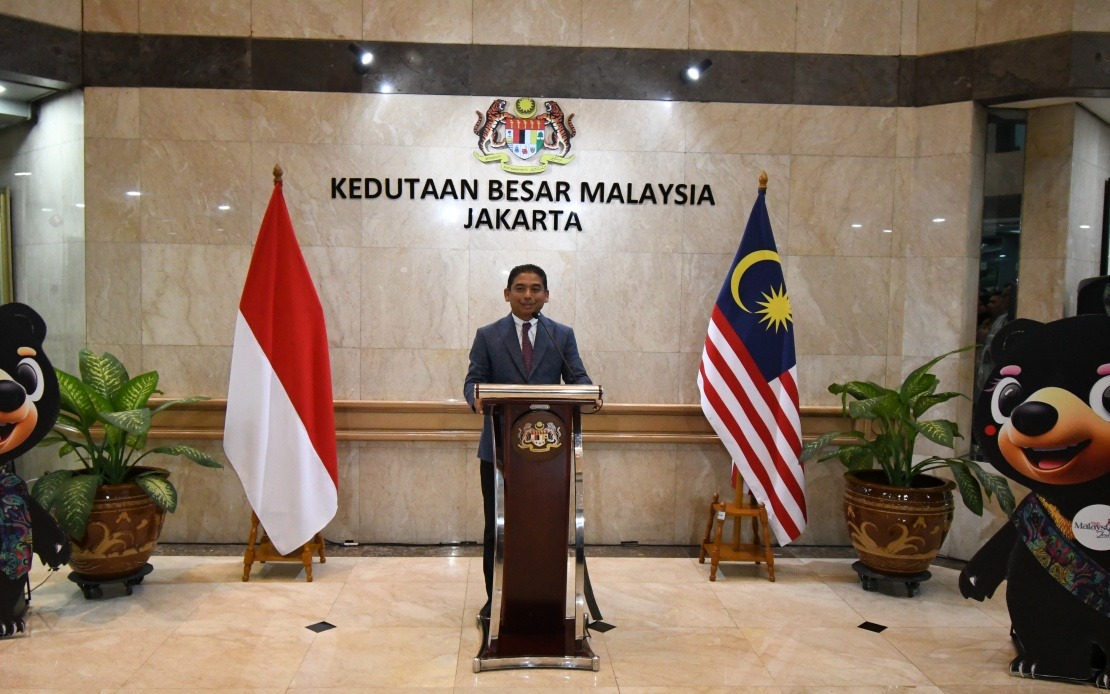
Datuk Muzafar Shah Mustafa, Malaysia's freshly appointed Ambassador to Indonesia, has officially commenced his duties at the Malaysian Embassy in Jakarta. The seasoned diplomat arrived on August 10 and reported for duty immediately, marking an important transition in bilateral relations between Malaysia and its nearest significant neighbour. His appointment comes at a time when Malaysia-Indonesia ties remain central to regional stability and economic cooperation in Southeast Asia.
Muzafar received his credentials from Yang di-Pertuan Agong Sultan Ibrahim at Istana Negara on July 14, formally authorising him to represent Malaysia's interests in the Indonesian capital. The embassy's announcement of his arrival underscores the significance placed on this diplomatic posting, with official recognition given to his first day at the mission. His deployment represents a deliberate choice to position an experienced career diplomat in a role of considerable strategic importance.
The ambassador's transition to Indonesia follows nearly three years of service as Malaysia's High Commissioner to India, a post he held since October 2023. He departed New Delhi on July 9, concluding what constituted a meaningful chapter in his diplomatic journey. India represents one of Malaysia's significant bilateral relationships in Asia, making his tenure there formative for understanding complex regional dynamics and managing relationships with major South Asian powers—expertise that could prove valuable in the Indonesia posting.
With a diplomatic career spanning nearly thirty years, Muzafar brings substantial institutional knowledge to his new assignment. He joined Malaysia's Foreign Ministry in 1995, when the region's geopolitical landscape differed markedly from today's multipolar environment. His trajectory through various postings demonstrates a carefully cultivated breadth of experience across diverse regions and political contexts.
Before his appointment to India, Muzafar served as Malaysia's Ambassador to Mexico from 2018 to 2023, a five-year posting that expanded his portfolio to Latin American affairs. Interestingly, his Mexican accreditation encompassed simultaneous diplomatic representation in Belize, Costa Rica, El Salvador, Guatemala and Honduras—typical of non-resident ambassador arrangements where one diplomat manages several smaller countries. This multi-country responsibility required considerable administrative skill and cross-cultural flexibility.
His earlier Latin American experience included an ambassadorial posting to Venezuela from 2016 to 2018, exposing him to the complexities of managing diplomatic missions during politically turbulent periods. Such experience navigating challenging political environments could prove relevant in contemporary Southeast Asia, where geopolitical tensions periodically test diplomatic resilience.
Muzafar's diplomatic portfolio also encompasses substantial European experience. From 2007 to 2011, he served as counsellor at the Malaysian Embassy in Berlin, providing him with exposure to European Union matters and German-Malaysian relations during a period of significant global economic change. This posting during the post-financial crisis era would have required engagement with complex international economic and security discussions.
His earliest overseas assignment took him to the Middle East, where he worked as second secretary at the Malaysian Embassy in Baghdad from 1999 to 2003. This posting coincided with an exceptionally turbulent period in Iraq's modern history, requiring diplomatic acuity and personal resilience. Such experience managing Malaysian interests amid regional instability provides valuable preparation for navigating contemporary challenges.
The breadth of Muzafar's geographical exposure—spanning Asia, Europe, Latin America and the Middle East—suggests a diplomat with sophisticated understanding of different diplomatic cultures and international relations frameworks. His career progression from second secretary to counsellor to ambassador reflects steady advancement through the Malaysian foreign service hierarchy.
On a personal level, Muzafar is married to Datin Najwa Zainal and is father to four children. Diplomatic postings, particularly those involving frequent relocation, present significant challenges to family life, making his sustained career progression noteworthy given these personal responsibilities.
The Indonesia posting represents a homecoming of sorts for Malaysian diplomacy, as Indonesia remains Malaysia's most critical bilateral relationship given geographical proximity, shared ASEAN membership, and overlapping interests across trade, security and cultural domains. Muzafar's appointment signals continuity in Malaysian diplomatic commitment to this relationship while bringing fresh perspectives from his recent India experience.
Indonesia-Malaysia relations encompass trade arrangements worth billions of dollars annually, labour migration affecting millions of Malaysians working in Indonesian territories, and regional security cooperation through ASEAN mechanisms. The ambassador's ability to navigate these multifaceted relationships will be tested as he settles into his Jakarta posting.
Muzafar's appointment occurs within the broader context of ASEAN's ongoing institutional development and increasingly complex relationships with major powers including China and the United States. His experience in diverse diplomatic contexts positions him to contribute meaningfully to Malaysia's strategic interests in the region during his tenure.

