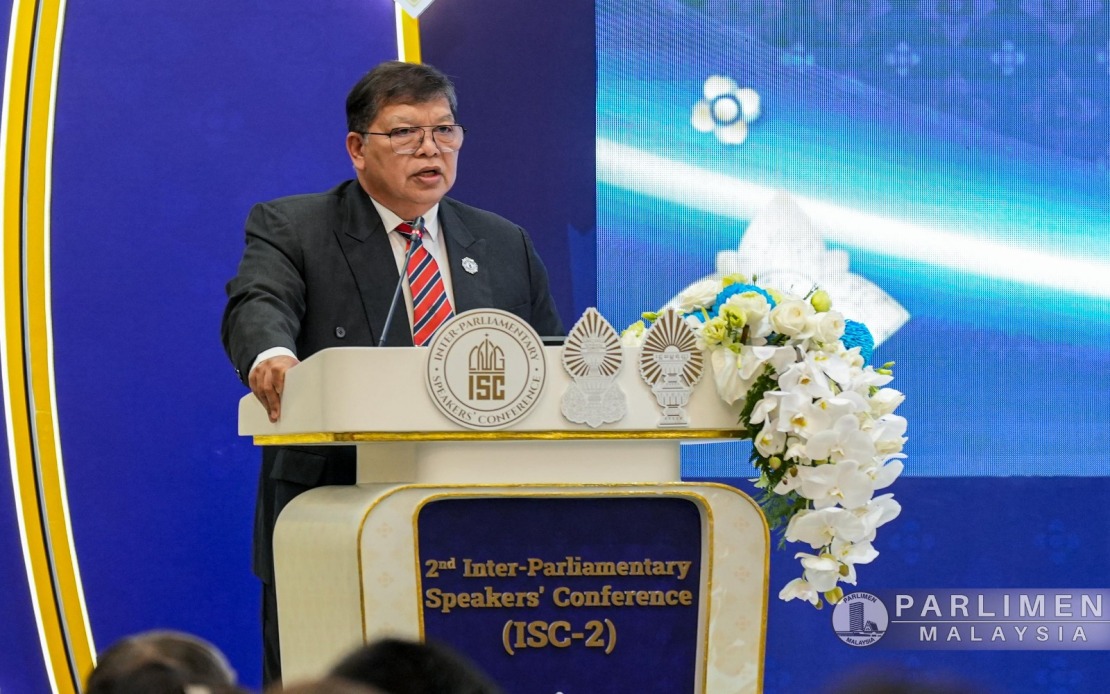
Dewan Rakyat Speaker Tan Sri Dr Johari Abdul has sounded an alarm about the deepening climate crisis, arguing that the world's failure to act decisively is inflicting severe hardship on defenceless populations whilst simultaneously eroding planetary health. Speaking at the Second Inter-Parliamentary Speakers' Conference (ISC-2) in Phnom Penh on Friday, he articulated a vision that transcends traditional environmental discourse, framing climate change as an urgent multidimensional challenge that threatens economic stability, public health systems, and the foundational pillars of food and energy security across the region.
The climate emergency has evolved far beyond the remit of environmental protection agencies, Johari contended, now touching every aspect of governance and societal wellbeing. He expressed frustration with the lack of meaningful dialogue among political leaders and the widespread knowledge gaps among lawmakers regarding climate science and solutions. His remarks underscored a critical governance deficit: policymakers remain wedded to outdated energy paradigms even as renewable alternatives become increasingly viable and economically competitive. The Speaker questioned why deforestation continues unabated whilst solar, wind, and ocean wave energy technologies remain underexploited in the region, suggesting that institutional inertia and fossil fuel dependencies continue to override environmental imperatives.
Education and technological innovation emerged as central pillars in Johari's prescription for addressing the climate crisis. He advocated for mandatory climate change curricula in schools, arguing that a scientifically literate populace would demand better environmental governance. Equally critical, he stressed, is substantially increased investment in research and development to accelerate the transition toward sustainable energy systems and climate adaptation technologies. Rather than reflexively expanding coal-fired power generation to meet growing electricity demand, policymakers must pivot toward renewable energy infrastructure that decouples economic growth from carbon emissions. This emphasis on institutional capacity-building reflects growing recognition that climate resilience requires not merely technological fixes but fundamental shifts in how societies educate citizens and allocate research budgets.
Johari's warnings carry particular resonance in Southeast Asia and South Asia, where recent catastrophic weather events have exposed the fragility of communities living on the frontlines of climate change. The recent flooding disaster in Nepal, triggered by a glacial collapse in the Himalayas, has devastated populations across the Nepal-China border region, with authorities confirming 469 deaths and 2,381 people missing as of Friday. The tragedy underscores how glacial retreat—a direct consequence of rising global temperatures—transforms mountain regions into zones of heightened hazard, releasing torrential floodwaters that sweep away homes, livelihoods, and lives with terrifying speed. Several Malaysian citizens remain unaccounted for in the disaster, bringing the human dimension of this transnational crisis directly home to Malaysian audiences.
The vulnerability extends across the broader Asian region, where geographical and climatic conditions make communities exceptionally susceptible to extreme weather phenomena. From the mountainous terrain of Nepal to the landlocked plateaus of Laos, rural populations bear the brunt of increasingly severe climate-related hazards: flash floods, landslides, and violent storms that systematically destroy agricultural productivity and critical infrastructure. The Philippines experiences approximately 20 typhoons annually, a frequency that strains disaster response systems and disrupts economic activity. Across South and Southeast Asia, millions of people—predominantly in rural areas with limited adaptive capacity—face perpetual threats that force impossible choices between livelihoods and safety. This regional pattern demonstrates that climate change is not an abstract future threat but an immediate reality reshaping the lived experience of vulnerable populations.
Johari characterised the climate crisis as fundamentally a political problem requiring sustained leadership commitment and political courage. He acknowledged that technological solutions exist but remain inadequate without the collective political will to implement them systematically. Perhaps most provocatively, he highlighted growing inequalities between wealthy and impoverished nations, arguing that the capacity to adapt to climate impacts increasingly correlates with national wealth. Affluent nations can invest in protective infrastructure, early warning systems, and technological adaptation, whilst poorer countries struggle to finance basic resilience measures. This structural injustice—wherein those least responsible for carbon emissions suffer disproportionate consequences—demands not merely environmental policy adjustments but fundamental redistributions of global resources and technology transfer mechanisms.
China's approach to green technology development provided Johari with a concrete example of strategic long-term climate policy. The country's substantial investments in eco-friendly technologies, electric vehicle manufacturing, and expanded green spaces demonstrate how governments can orchestrate economy-wide transitions toward sustainability. Whilst China's overall carbon footprint remains substantial, its technological innovations and market dominance in renewables and electric vehicles have established pathways that other nations increasingly follow. For Malaysia and the broader Southeast Asian region, such models offer both inspiration and challenge: how can middle-income developing nations acquire and adapt green technologies without reinforcing technological dependence on wealthier powers?
The scientific consensus underpinning these warnings remains unambiguous and alarming. Rising global temperatures are melting ice sheets and glaciers, elevating sea levels that threaten low-lying island nations and coastal cities throughout Southeast Asia. Changing precipitation patterns are disrupting agricultural cycles, intensifying droughts in some regions whilst triggering catastrophic flooding in others. Ecosystem disruption creates cascading consequences for biodiversity, fisheries, and food security. For Malaysia, a nation with extensive coastlines, agricultural sectors vulnerable to weather variability, and tropical ecosystems sensitive to temperature changes, these scientific projections carry direct implications for national development and prosperity.
Regional leaders have begun articulating responses to these mounting pressures. Cambodian Prime Minister Hun Manet, speaking days before the ISC-2, warned of rising water levels threatening the Mekong River and its dependent communities. He acknowledged the limits of disaster prevention but emphasised the imperative of building institutional resilience: developing early warning systems, establishing coordinated response mechanisms, and strengthening the capacity of vulnerable communities to absorb climate shocks. This pragmatic acknowledgment that some disasters cannot be prevented, only responded to, reflects a growing regional acceptance that climate adaptation must proceed alongside mitigation efforts.
For Malaysian policymakers, Johari's interventions suggest the need for comprehensive reassessment of climate strategy. Current policies must be stress-tested against accelerating climate impacts, particularly in critical sectors including agriculture, water resources, coastal protection, and disaster management. Investment patterns should shift toward green technologies and climate-resilient infrastructure. Educational curricula require integration of climate literacy across all disciplines, not merely in specialised science courses. Regional cooperation mechanisms—including burden-sharing on refugee crises, water resource management, and technology transfer—will become increasingly essential as climate impacts intensify and cross-border impacts multiply. The Speaker's emphasis on political leadership and institutional transformation offers a framework for moving beyond rhetorical commitments toward substantive, resource-backed climate action that protects both current and future generations.

