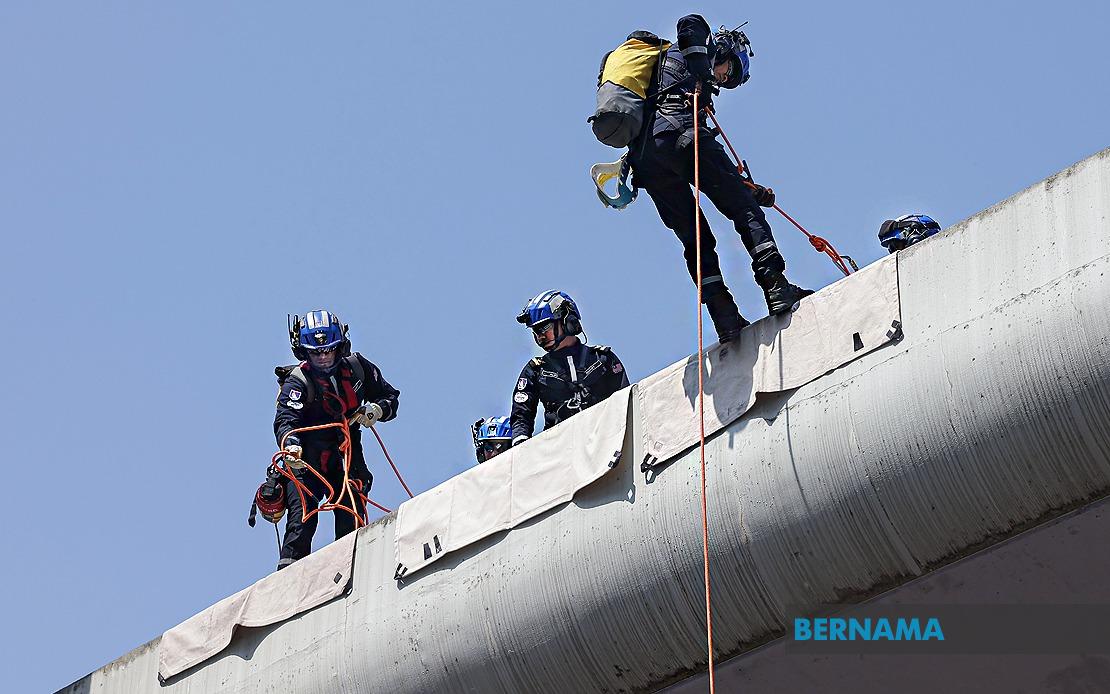
Malaysia has positioned its Special Search and Rescue Team on immediate standby for potential deployment to Nepal, where devastating floods have wreaked havoc across the Himalayan nation. The National Disaster Management Agency announced the readiness posture on Friday, though actual deployment hinges on formal approval from Kathmandu authorities, reflecting the diplomatic protocols that typically govern international disaster relief operations. This conditional state of readiness underscores both Malaysia's commitment to regional humanitarian support and the practical reality that receiving nations must formally request and welcome foreign assistance during crises.
The arrangement represents a delicate balance between rapid-response capability and sovereign consent. NADMA emphasised that while SMART stands prepared to mobilise within hours if summoned, the actual crossing of international borders and deployment of Malaysian personnel requires explicit authorisation from Nepal's government. All coordination efforts are being jointly managed through Malaysia's Foreign Ministry, ensuring that diplomatic channels and humanitarian needs are aligned. This multi-agency coordination reflects a mature approach to international disaster assistance, where speed and sensitivity to host nation preferences coexist.
SMART team commander Senior Fire Superintendent I Abdul Manaf Che Isa conveyed the unit's determined readiness despite their concurrent commitment to national celebrations. With Malaysia's 69th National Day falling on August 31, the SMART contingent faces the unusual situation of simultaneously preparing parade participation and maintaining deployment-ready status for a potential overseas mission. Rather than viewing this as conflicting priorities, the commander emphasised the team's professional ethos: they remain prepared for emergency mobilisation at any moment, irrespective of other scheduled commitments. This reflects the operational culture of elite rescue services, where disaster response takes precedence over ceremonial duties.
Prime Minister Anwar Ibrahim had formally announced Malaysia's decision to dispatch SMART to support Nepal's search and rescue efforts, alongside a parallel commitment of US$1 million in direct financial assistance. This dual-track approach—combining specialised personnel with material aid—represents a comprehensive response framework that addresses both immediate life-saving operations and longer-term recovery needs. The financial contribution, converted at the prevailing exchange rate of approximately RM4.03 per dollar, signals Malaysia's willingness to invest substantially in Nepal's recovery beyond simply offering rescue expertise.
Beyond immediate rescue operations, the SMART deployment carries broader humanitarian mandates. The team has been instructed to identify and repatriate Malaysian nationals affected by the floods, a particularly important function given the presence of Malaysian migrant workers and expatriates throughout Nepal. Simultaneously, SMART personnel are expected to coordinate with the Malaysian Embassy in Kathmandu to ensure comprehensive consular support, welfare monitoring, and safety assurance for all Malaysian citizens in affected regions. This integrated approach transforms SMART from a purely technical rescue force into a mission encompassing consular protection and citizen welfare.
The standby deployment highlights Malaysia's evolving role within South Asian disaster response networks. As a middle-income nation with sophisticated rescue capabilities, Malaysia has increasingly positioned itself as a contributor to regional stability and humanitarian coordination. Nepal, facing recurrent natural disasters due to its mountainous terrain and monsoon exposure, benefits from partnerships with technologically advanced neighbours. Malaysia's participation in such relief efforts strengthens bilateral relations and demonstrates the practical utility of diplomatic ties during crises, fostering goodwill that extends beyond emergency response.
For Malaysian readers, this mobilisation offers several takeaways about national emergency preparedness and international relations. First, it demonstrates that Malaysia maintains rapid-response capacity for global humanitarian commitments despite domestic priorities. Second, it illustrates how government agencies coordinate across defence, disaster management, and foreign affairs portfolios to mount effective international responses. Third, the prioritisation of Malaysian citizen welfare during overseas disasters reflects government commitment to protecting nationals abroad—a reassurance particularly relevant for Malaysia's substantial diaspora communities throughout Asia.
The financial commitment to Nepal also reflects broader patterns in Malaysian development cooperation. By combining technical expertise with capital transfers, Malaysia supports not only immediate disaster response but also longer-term reconstruction and resilience-building. This approach aligns with Malaysia's participation in regional forums and its positioning as a responsible middle power invested in Southeast and South Asian stability. Nepal's development challenges, compounded by climate-driven disasters, create ongoing humanitarian requirements where Malaysian partnership offers concrete support.
Regionally, Malaysia's readiness sends a signal about cross-border cooperation mechanisms. The willingness to maintain SMART on standby pending Nepal's formal request demonstrates respect for national sovereignty while showcasing genuine preparedness. Other Southeast Asian nations facing similar disaster risks can derive confidence from knowing that Malaysian rescue capabilities exist within a framework of agreed cooperation protocols. This model of standby deployment combined with sovereign consent represents best practices in international disaster management, balancing the urgency of life-saving operations against proper diplomatic channels.
The timing of this announcement, coinciding with national celebrations, creates symbolic resonance. Malaysia simultaneously celebrates national achievements while demonstrating outward commitment to international humanitarian responsibility. This juxtaposition reinforces narratives about Malaysian identity—internally proud but externally engaged and cooperative. For international observers, particularly within the South Asian region, such actions substantiate Malaysia's rhetoric about regional partnership and collective responsibility in facing natural disasters that recognise no borders.
Moving forward, the Nepal situation will likely serve as a test case for Malaysia-Nepal disaster cooperation frameworks. Successful SMART deployment, should it proceed, could establish templates for future regional emergency responses. Conversely, smooth coordination despite standby status demonstrates that effective disaster assistance sometimes means being prepared without necessarily deploying. Either outcome contributes to regional institutional learning about crisis management in an era of increasing climate-related hazards.

