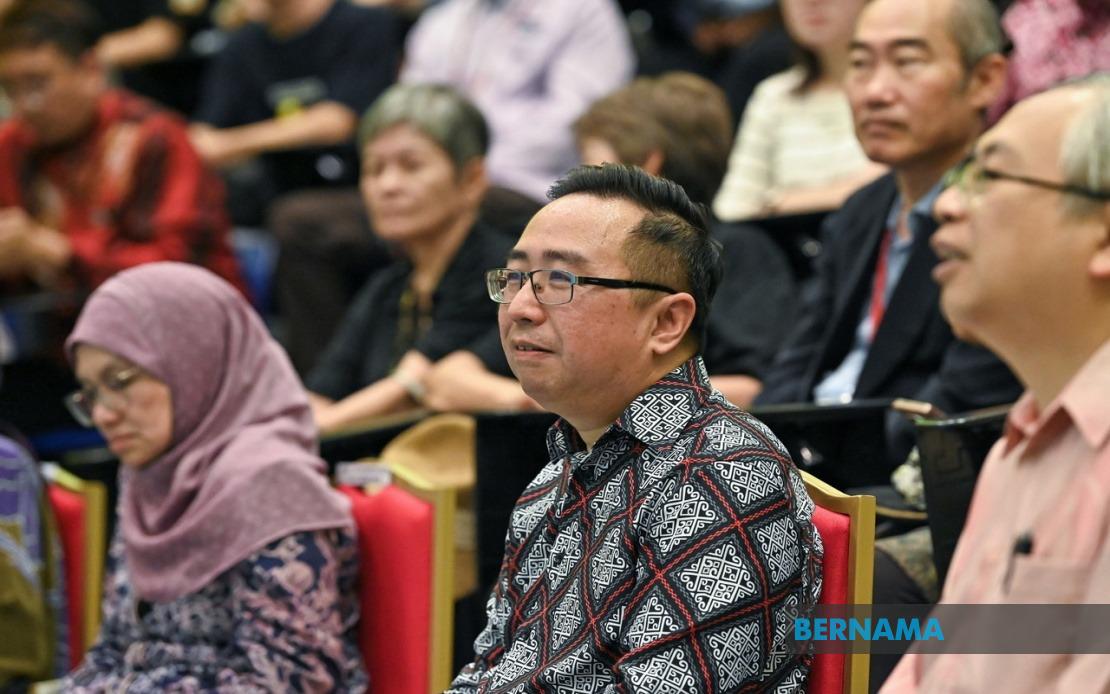
Science and technology students entering Malaysia's job market can expect robust employment prospects as the country witnesses accelerating high-tech investment flows, according to Science, Technology and Innovation Minister Datuk Chang Lih Kang. Speaking at the 20th Malaysia Festival of the Minds held at Universiti Tunku Abdul Rahman Kampar Campus, the minister assured graduates that labour shortages in the sector—rather than oversupply—characterise the current landscape. The imbalance between available positions and qualified professionals willing to fill them reflects Malaysia's transition toward higher-value manufacturing and technology-intensive industries.
The minister's remarks come as the government intensifies efforts to bridge a critical skills gap in science and technology fields. Rather than allowing market forces alone to guide talent decisions, MOSTI is actively engaging with students through public outreach initiatives to counter widespread misconceptions about technology's role in the workforce. Many young people harbour concerns that artificial intelligence and automation will eliminate employment opportunities across sectors, but Chang emphasised that the ministry's proactive messaging strategy directly addresses these anxieties by presenting evidence of genuine demand for human expertise.
The timing of this announcement reflects Malaysia's strategic positioning within global semiconductor and advanced manufacturing supply chains. Over the past two years, multiple multinational corporations have announced substantial operations in Malaysia, drawn by its established industrial base, skilled workforce availability, and government support mechanisms. These investments translate into concrete openings for engineers, data scientists, systems analysts, and other technical professionals. The government's push to coordinate between tertiary institutions and corporate employers represents an attempt to ensure the education pipeline remains responsive to actual market needs rather than lagging behind industry demands.
Beyond general employment assurances, the minister unveiled a major funding commitment addressing a specific technological gap. A joint initiative between the government and five industry partners will mobilise RM185 million over the next two years to develop Malaysia's advanced packaging technology capabilities. The government's contribution of RM92 million, matched by RM93 million from private sector participants, demonstrates the cost-sharing approach now characterising Malaysia's technology development strategy. This partnership model reflects broader policy shifts away from pure government-funded research toward collaborative ecosystems where business and state jointly finance capability-building.
Advanced packaging technology occupies a strategic position within the semiconductor industry's value chain. As chip designs grow more complex and power-intensive, the physical packaging—the assembly and encapsulation process that protects silicon dies and facilitates connections—becomes increasingly sophisticated and expensive to develop. Malaysia currently possesses substantial assembly and test capabilities but lacks world-leading expertise in cutting-edge packaging solutions. Closing this gap would allow Malaysian firms to capture higher-value segments of semiconductor manufacturing, moving beyond basic assembly into design and innovation.
The two-year timeframe for achieving enhanced advanced packaging capabilities suggests realistic ambitions rather than aspirational rhetoric. Developing new technology platforms requires not only capital but also sustained technical talent, intellectual property accumulation, and facility upgrades. Chang acknowledged that funding constraints and technological complexity present genuine obstacles, yet expressed confidence in meeting established targets. This measured optimism reflects the phased approach characteristic of Malaysia's recent industrial policy, where specific sector objectives receive tailored support rather than broad-brush interventions.
For Malaysian universities, the government's messaging carries important implications regarding curriculum development and research prioritisation. If job demand genuinely exceeds graduate supply in STEM fields, institutions face pressure to expand enrollment while maintaining academic standards. Additionally, the emphasis on advanced packaging technology suggests that engineering programmes teaching semiconductor manufacturing, materials science, and precision engineering will find strong graduate employment outcomes. Universities that can align their research capabilities with industry challenges—particularly in high-value manufacturing segments—will position their graduates advantageously.
Regionally, Malaysia's focus on advanced packaging technology carries significance for Southeast Asia's broader technology ambitions. While countries including Thailand, Vietnam, and Indonesia pursue semiconductor manufacturing development, Malaysia's more established position allows specialisation in higher-complexity segments. If successful, the advanced packaging initiative could establish Malaysia as a regional technology hub beyond basic assembly, creating demonstration effects encouraging other Southeast Asian nations to pursue similar upgrading strategies.
The minister's dual message—reassuring graduates about employment while simultaneously targeting specific technological capabilities—reflects sophisticated industrial policy thinking. Rather than assuming that STEM talent will naturally flow to available positions, MOSTI actively cultivates demand through targeted investment in high-value sectors. This approach acknowledges that graduate decisions depend partly on visibility of genuine opportunities; by publicising both current openings and government support for emerging sectors, officials attempt to influence educational choices. The 20th Malaysia Festival of the Minds serves this awareness-raising function, bringing prospective professionals into direct contact with ministry officials and industry representatives who can articulate concrete pathways from university studies to rewarding careers.
Looking forward, the success of these initiatives will depend on sustained execution across multiple fronts. Government funding commitments require reliable appropriations; industry partners must deliver their pledged contributions; universities must adapt curricula responsively; and employers must hire graduates at promised volumes. Any breakdown in this multi-stakeholder coordination risks returning to previous conditions of talent mismatch and unfulfilled potential. Nevertheless, the current momentum suggests Malaysia's policymakers recognise that future competitiveness depends on successfully transitioning from cost-based manufacturing advantages toward innovation-driven industrial capabilities—and that such transitions require deliberate cultivation of appropriate human capital.

