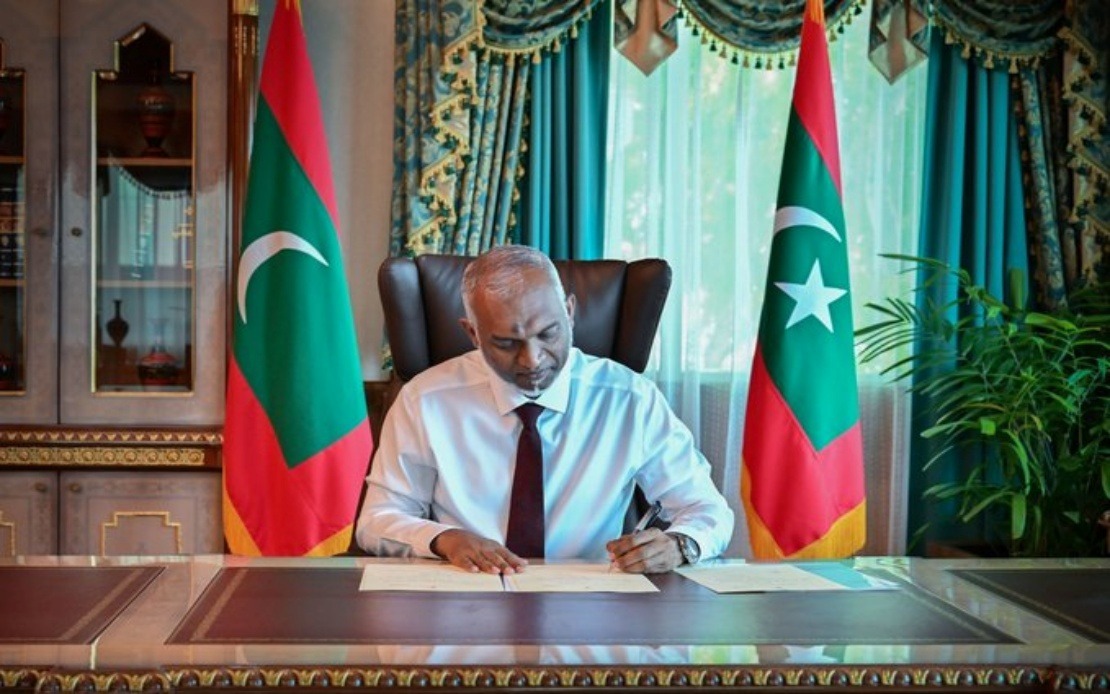
Maldives President Mohamed Muizzu has used Malaysia's National Day celebrations as an occasion to reaffirm the diplomatic bonds connecting the two Indian Ocean nations, sending formal greetings to His Majesty Sultan Ibrahim, King of Malaysia, and Prime Minister Datuk Seri Anwar Ibrahim on Monday. The gestures reflect the continuing emphasis both countries place on maintaining their relationship during key national commemorations, a diplomatic practice that signals ongoing commitment to partnership in a region where strategic alignments carry significant weight.
In his correspondence with Sultan Ibrahim, Muizzu characterised the Malaysia-Maldives relationship as rooted in longstanding amity that has flourished across five decades. The Maldivian leader highlighted how the partnership rests on foundations of mutual respect and shared interests, while explicitly pledging to work towards expanding cooperation in the coming years. Such language in official diplomatic communications typically signals that both nations view their relationship as strategically important and worthy of active cultivation rather than passive maintenance.
The separate communication addressed to Prime Minister Anwar Ibrahim focused on the human dimension of bilateral relations, with Muizzu emphasising how regular exchanges at the highest political levels and extensive people-to-people contact have deepened the friendship between the two nations. This distinction between state-level engagement and citizen interactions suggests recognition that sustainable international partnerships require both institutional mechanisms and genuine popular goodwill. For Malaysia, such affirmations carry particular significance given the country's role as a regional economic and diplomatic anchor in Southeast Asia.
According to the Maldivian presidency statement, Muizzu expressed confidence that the friendship trajectory would continue upward, creating conditions for Malaysian and Maldivian businesses and citizens to benefit from expanded economic opportunities. This forward-looking language reflects broader regional trends wherein Indian Ocean nations seek to deepen trade ties and investment flows amid evolving global economic dynamics. Malaysia's strategic location and developed financial sector make it an attractive partner for smaller island nations seeking to diversify their economic partnerships beyond tourism.
The Maldives-Malaysia connection sits within a broader pattern of regional diplomatic engagement, as evidenced by National Day greetings from other major South Asian powers. Pakistan's Ministry of Foreign Affairs extended formal congratulations through social media, characterising Malaysia as a brotherly nation and wishing it enduring peace and prosperity. Such messaging, while ceremonial in nature, reflects Pakistan's interest in maintaining cordial relations with Southeast Asian states and positioning itself as a stakeholder in regional stability.
India's acknowledgment came through External Affairs Minister Subrahmanyam Jaishankar, who conveyed wishes to Foreign Minister Datuk Seri Mohamad Hasan alongside greetings to the Malaysian government and populace. Jaishankar's message made specific reference to advancing the India-Malaysia Comprehensive Strategic Partnership, indicating that New Delhi views the bilateral relationship as sufficiently developed to warrant strategic designation. This framework encompasses multiple domains including defence, trade, technology, and cultural exchange, reflecting how contemporary diplomatic partnerships operate across numerous interconnected spheres.
The coordination of National Day greetings from multiple countries underscores Malaysia's positioning as a respected participant in Asian geopolitics and a nation whose diplomatic calendar is observed by regional heavyweights. For Malaysian policymakers, such recognition validates efforts to maintain balanced relationships with diverse regional and global powers. The timing of these messages during a national commemoration also serves practical diplomatic functions, as they reach broad domestic audiences in Malaysia and reinforce narratives of international partnership and standing.
From the Malaysian perspective, the Maldives relationship carries specific relevance given shared maritime interests, Muslim-majority populations, and participation in regional organisations. Both nations are members of various Indian Ocean forums and have collaborated on issues ranging from maritime security to climate resilience. The emphasis Muizzu placed on economic engagement suggests potential for enhanced commercial ties, whether through increased bilateral trade, investment flows, or joint ventures in sectors like tourism and marine resources.
The diplomatic ritual of National Day greetings, while appearing ceremonial, performs substantive functions in international relations. These messages create public records of bilateral goodwill, signal commitment to established partnerships to domestic audiences in both countries, and occasionally float proposals for enhanced cooperation. For smaller nations like the Maldives, such greetings to established regional players like Malaysia serve to reinforce diplomatic ties and maintain visibility at a time when global attention often concentrates on larger powers.
Looking forward, the emphasis on economic engagement articulated in these messages suggests that Malaysia-Maldives relations may evolve beyond traditional diplomatic courtesy into more substantive commercial and strategic partnership. Malaysian companies possess expertise in areas relevant to Maldivian development priorities, while the Maldives offers Malaysian investors exposure to Indian Ocean markets and maritime industries. Enhanced bilateral engagement could complement Malaysia's broader regional strategy of deepening ties with Indian Ocean littoral states.
The multi-country nature of Malaysia's National Day greetings, spanning South Asia through to the Indian Ocean region, demonstrates the country's successful cultivation of diplomatic relationships across geographical and strategic divides. This pattern reflects Malaysia's non-aligned tradition and pragmatic approach to foreign policy, maintained across multiple administrations. For regional observers, Malaysia's ability to maintain warm relationships with diverse partners simultaneously illustrates the enduring appeal of balanced diplomacy and the continued relevance of ASEAN principles in guiding Southeast Asian foreign policy conduct.

