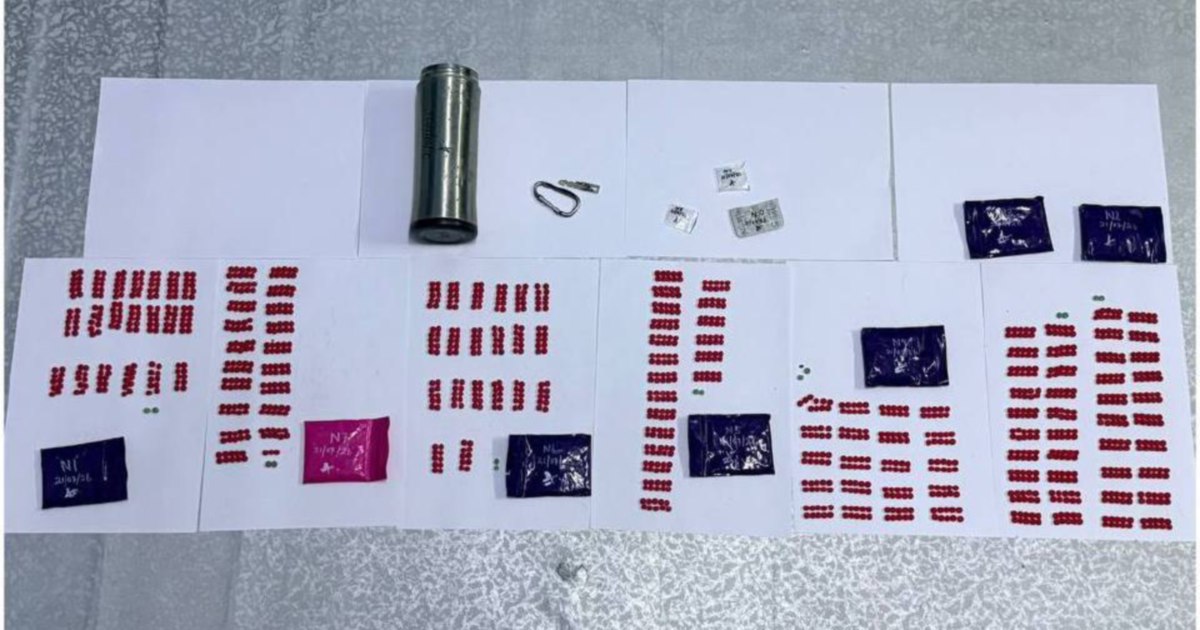
Authorities have apprehended multiple individuals during a series of raids conducted at Garden of Flowers, with one of the detainees standing out for his extensive criminal history involving drug-related offences. The suspect in question carries six prior convictions for narcotics violations, marking him as a repeat offender within law enforcement's radar for sustained involvement in the illicit drug trade.
The Garden of Flowers raids represent part of ongoing police efforts to dismantle drug distribution networks that have been operating across residential and commercial areas. Such operations have become increasingly routine as authorities seek to curb the flow of controlled substances into communities and maintain public safety. The involvement of a recidivist offender in this particular sweep underscores the persistent challenge law enforcement faces in preventing repeat drug offenders from returning to criminal activity after completing their sentences.
The arrest of individuals with multiple prior convictions raises important questions about the effectiveness of rehabilitation and reintegration programmes for drug offenders in Malaysia. When repeat offenders continue to engage in narcotics distribution despite previous interventions, it suggests gaps in the post-release support systems designed to prevent recidivism. This pattern is not unique to Malaysia but reflects a broader regional challenge where drug markets continue to attract individuals with criminal histories, often because the financial incentives outweigh the perceived risks of legal consequences.
Police operations targeting specific locations like Garden of Flowers typically follow intelligence gathering and surveillance that identify suspected drug distribution points. These operations serve multiple purposes: they remove active distributors from the street, confiscate drugs and related paraphernalia, and gather intelligence about supply chain networks. The success of such raids often depends on coordination between different police units and the deployment of adequate personnel to simultaneously approach multiple locations and prevent suspects from escaping or destroying evidence.
The presence of a six-time convicted drug offender among those arrested raises concerns about sentencing and incarceration practices. If an individual has accumulated six drug convictions yet continues to operate within drug distribution networks, this may indicate insufficient sentence lengths, inadequate supervision during release, or insufficient economic barriers to reoffending. Understanding these systemic issues is crucial for developing more effective deterrence strategies and rehabilitation frameworks.
Malaysia's drug problem remains a significant public health and security concern, with authorities reporting consistent seizures of various narcotics including methamphetamine, heroin, and synthetic drugs. The Garden of Flowers raids fit within a larger enforcement strategy aimed at targeting mid-level distributors and street-level dealers. While high-profile arrests of major traffickers command media attention, these routine operations against street-level networks are equally important for degrading the supply infrastructure that serves local addiction populations.
The integration of repeat offenders into drug distribution networks often reflects the hierarchical nature of these criminal enterprises. Individuals with criminal records may be recruited for roles that carry higher risk but also higher reward, creating a perverse incentive structure. Law enforcement must therefore address not only individual offenders but also the organisational structures that make repeated offending economically rational for criminal participants.
Community impact from drug distribution operations in residential areas like Garden of Flowers extends beyond the individuals directly involved in trafficking. Residents face increased security risks, potential exposure to drug-related violence, and the normalisation of illicit activity in their neighbourhoods. When arrests do occur, they provide temporary relief but often prove insufficient unless accompanied by sustained community policing and social interventions that address root causes of drug market participation.
The disposal of arrested individuals through the criminal justice system involves numerous stages: investigation, charging, prosecution, and potentially conviction. Throughout this process, the prior convictions of repeat offenders become relevant factors influencing bail decisions, sentencing considerations, and parole eligibility. A suspect with six previous drug convictions faces significantly higher thresholds for bail approval and stronger prosecution arguments for substantial sentencing.
Looking forward, the continued arrest of repeat drug offenders like the individual detained in the Garden of Flowers raids suggests that enforcement alone, without complementary public health and social interventions, faces inherent limitations. Regional and international cooperation on drug trafficking has strengthened in recent years, but street-level distribution remains predominantly a domestic challenge requiring local solutions. Malaysian authorities must balance immediate enforcement objectives with longer-term strategies to reduce demand for illicit substances and create pathways for offenders to exit criminal participation.

