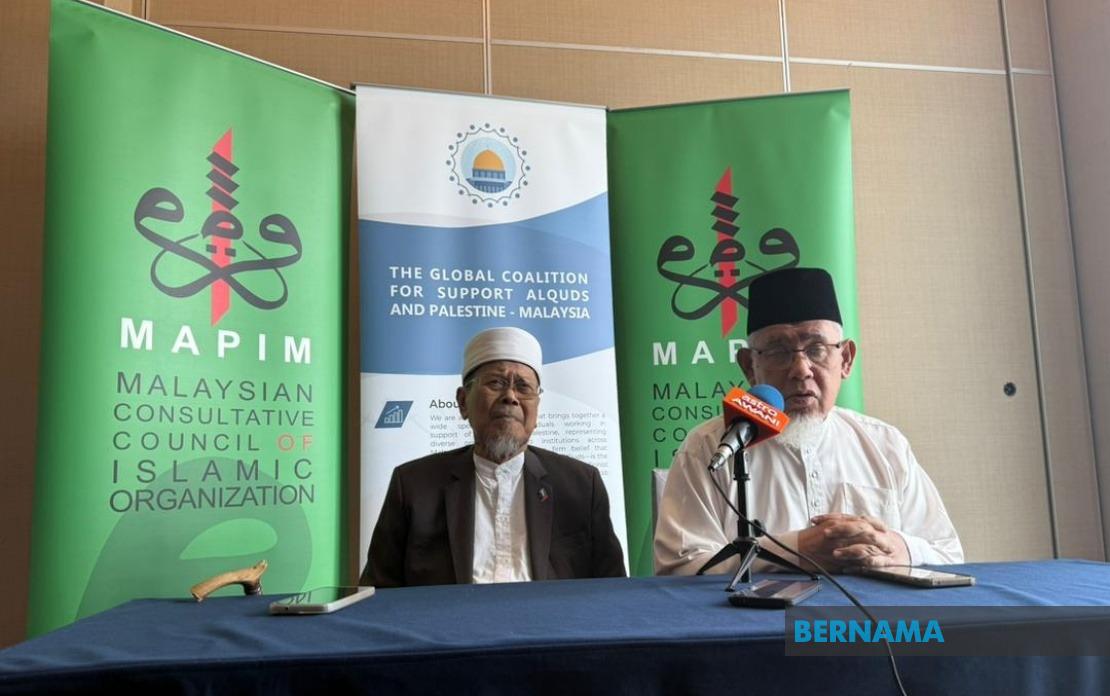
The Malaysian Consultative Council of Islamic Organisations (MAPIM) is set to convene a landmark two-day conference in Ipoh beginning tomorrow, bringing together mosque leaders and Islamic representatives from across the Southeast Asian region. Organised jointly with the Perak Islamic Religious Department (JAIPk), the gathering represents an ambitious effort to forge stronger institutional ties among Muslim communities spread across one of the world's most religiously diverse areas.
The conference will attract approximately 400 delegates representing mosques from Malaysia and eight neighbouring nations: Indonesia, Singapore, Brunei, Timor-Leste, Myanmar, Cambodia, Thailand and Vietnam. Beyond Southeast Asia, the event will feature notable participation from Turkiye, Iran and Pakistan, underscoring MAPIM's intention to situate regional concerns within a broader global Islamic framework. This cross-border assembly reflects growing recognition among mosque administrators that contemporary challenges facing Muslim communities—from youth disengagement to economic marginalisation—demand coordinated responses that transcend national boundaries.
The timing of the conference carries symbolic weight, coinciding with commemorations of World Mosque Day, which falls on August 21 each year. The observance marks the anniversary of the 1969 arson attack on Al-Aqsa Mosque in Jerusalem, an event that continues to resonate deeply across Muslim-majority regions. By anchoring the Ipoh gathering to this date, MAPIM signals that institutional reflection on the mosque's role extends beyond ritual remembrance into substantive action and strategic planning for the future.
MAPIM president Mohd Azmi Abdul Hamid articulated an expansive vision for the conference, emphasising that commemorating World Mosque Day must transcend annual ceremonialism. Instead, he framed the event as an opportunity to recalibrate the mosque's function within contemporary Muslim societies, positioning it as a source of communal strength and cohesion during a period when religious institutions globally face questions about relevance and influence. This reorientation addresses a persistent anxiety among Islamic leadership that traditional institutions risk becoming peripheral to younger generations' spiritual and social concerns.
The conference agenda centres on seven principal objectives designed to strengthen mosque networks across the region. These include establishing formal cooperation frameworks among mosque administrations, cultivating youth involvement in mosque governance and programming, and integrating economic initiatives that benefit surrounding Muslim communities. Organisers have also prioritised deepening partnerships with Islamic non-governmental organisations, recognising that mosques increasingly function within ecosystems populated by various faith-based and charitable entities addressing education, health and social welfare.
A significant dimension of the gathering involves producing tangible outcomes beyond the conference itself. Delegates will collectively draft a declaration and sustainable action plan intended for implementation following the event, transforming rhetorical commitments into concrete programming. This emphasis on actionable outputs reflects frustration within MAPIM circles that many regional conferences generate discussion without generating follow-through—a structural weakness that undermines institutional credibility and effectiveness.
Three major initiatives will be launched during the conference, each addressing different aspects of MAPIM's strategic vision. First, organisers will unveil a regional mosque coalition dedicated to advocacy concerning Palestine and Al-Aqsa Mosque, formalising what has largely remained ad hoc activism into an institutionalised structure. Second, a comprehensive book examining the mosque's contemporary role will be published, contributing to intellectual reflection on institutional adaptation. Third, MAPIM will introduce the MAPIM Gold Dinar, a financial instrument designed to facilitate public contributions toward the Al-Aqsa Mosque Fund, lowering barriers to participation by offering a tangible, affordable mechanism for fundraising.
The Palestine focus within the conference reflects deep concern throughout Southeast Asian Muslim communities regarding the conflict's humanitarian dimensions. For Malaysia specifically, with its substantial Palestinian diaspora and historical commitment to Palestinian causes, this emphasis resonates with longstanding foreign policy positions and grassroots sentiment. By institutionalising Palestinian advocacy through a formal coalition structure, MAPIM positions regional mosques as coordinated actors in global Islamic solidarity efforts, potentially amplifying their collective voice in international forums.
Mohd Azmi emphasised that the conference's ultimate purpose centres on positioning mosques as active participants in global humanitarian discourse, particularly regarding crises affecting Muslim populations. The MAPIM Gold Dinar initiative exemplifies this approach, transforming abstract advocacy into accessible individual action. By providing a straightforward purchasing mechanism, organisers hope to mobilise financial contributions from ordinary Muslims who might otherwise feel disconnected from formal fundraising infrastructure.
The gathering also incorporates academic and dialogue components that signal MAPIM's commitment to intellectual engagement alongside institutional coordination. Presentations and international discussions will presumably examine theological, administrative and social dimensions of contemporary mosque functioning, creating space for evidence-based reflection rather than purely devotional engagement. Particular attention to Palestine and Al-Aqsa Mosque suggests these topics will dominate intellectual proceedings, reflecting their centrality to MAPIM's current agenda.
For Southeast Asian governments and Muslim-majority societies, the conference carries implications for religious institutional development and regional cooperation architecture. The gathering demonstrates that Islamic organisations are expanding coordination mechanisms outside formal state structures, creating networks that operate according to their own logics and priorities. For Malaysia, hosting this assembly reinforces its positioning as a regional hub for Islamic institutional activity and policy innovation, potentially enhancing soft power influence within ASEAN contexts.
The conference ultimately represents an effort to strengthen mosque capacity and relevance during a period when religious institutions globally navigate rapid social change, generational shifts in practice patterns, and competition for community attention. By bringing together administrators, scholars and activists from across Southeast Asia and beyond, MAPIM seeks to demonstrate that mosques remain vital community anchors capable of addressing contemporary challenges through coordinated action and strategic innovation.

