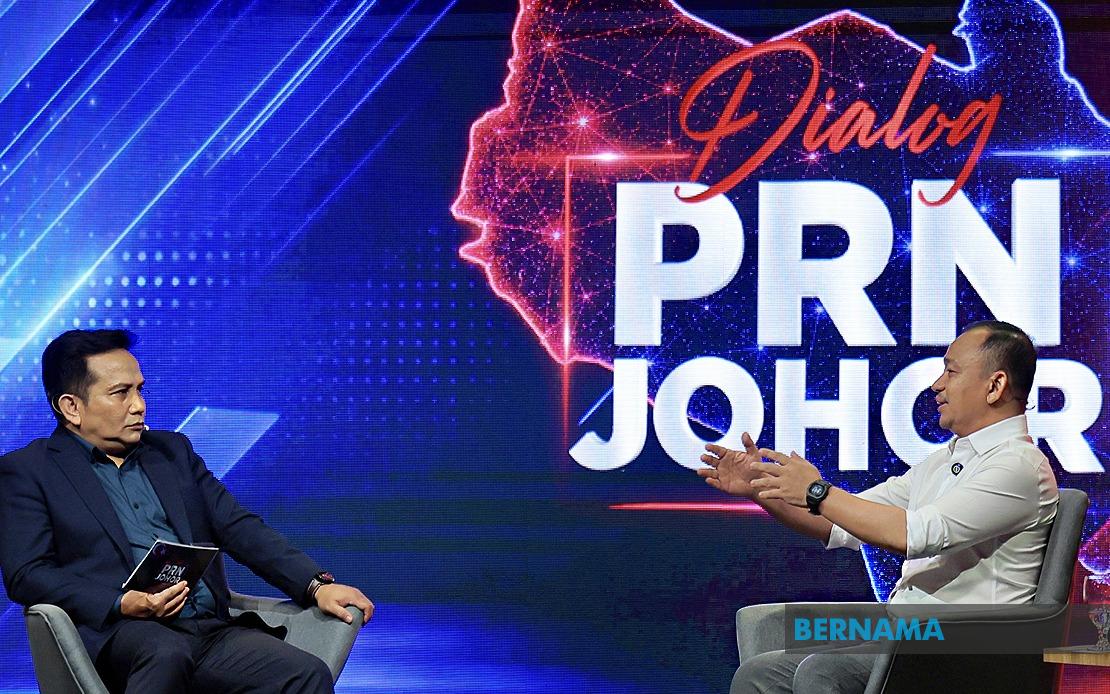
Dr Maszlee Malik, the Pakatan Harapan candidate contesting the Puteri Wangsa state seat, has expressed optimism that political dialogue initiatives can catalyse a shift towards more sophisticated electoral behaviour among Malaysian voters. Speaking after participating in a structured political dialogue session in Johor Bahru on July 7, the former education minister highlighted the value of creating platforms where candidates and citizens can engage substantively on policy matters and governance issues.
The dialogue event, jointly organised by Rangkaian Televisyen Malaysia (RTM), Astro AWANI, and Sinar Harian at the Permata Sari Auditorium under the Johor State Broadcasting Department, represented an attempt to elevate public discourse ahead of the state election. Maszlee characterised such forums as instrumental in bridging the gap between political representatives and the electorate, providing opportunities for voters to evaluate candidates based on their positions and arguments rather than partisan affiliation or populist appeals.
Central to Maszlee's message was a critique of emotion-driven political decision-making, which he suggested has long characterised Malaysian electoral patterns. The former minister contended that voters would benefit from exposure to fact-based debate and evidence-supported policy proposals, enabling them to make choices grounded in rational assessment rather than sentiment. This perspective reflects broader concerns within progressive political circles about the quality of public discourse and the need to elevate standards of political engagement across the nation.
Communications Minister Datuk Fahmi Fadzil's presence at the dialogue underscored the federal government's interest in promoting more structured electoral engagement. The inclusion of high-profile figures from the ruling coalition signals an attempt to model the kind of substantive, respectful political interaction that Maszlee and others advocate. Such visibility also demonstrates how dialogue initiatives can serve as platforms for reinforcing key campaign messaging while demonstrating commitment to democratic principles.
With three days remaining in the Johor campaign cycle at the time of the dialogue, the Pakatan Harapan machinery had shifted its strategic focus towards maximising voter participation. Maszlee emphasised that elevated turnout figures carry particular significance for the legitimacy of any government formed following the election, as higher participation rates are widely understood to reflect stronger public mandates. This emphasis on turnout reflects a calculated political strategy: opposition coalitions often benefit from mobilisation efforts, particularly among younger and more geographically dispersed voters.
The emphasis on encouraging out-of-town voters to return to their constituencies for polling day highlights a persistent logistical challenge in Malaysian electoral processes. Many voters work or study outside their home constituencies, and the PH campaign recognised that capturing their participation required proactive communication and possibly logistical support. This targeted approach illustrates how modern electoral campaigns operate across multiple organisational layers to address specific voter segments and their particular barriers to participation.
Maszlee's characterisation of dialogue initiatives as educational tools reflects a broader assumption about voter behaviour and political development. By positioning such forums as mechanisms for civic education, he suggests that electoral maturity is cultivated through exposure to quality information and substantive discourse. This perspective implicitly critiques existing media environments and campaign practices, suggesting that Malaysia's political culture benefits when alternatives to conventional campaigning are made available to the public.
The timing of this emphasis on mature political culture is noteworthy given Malaysia's recent political trajectory. The country has experienced significant electoral volatility and coalition realignments over recent years, with voters demonstrating capacity for substantial shifts in preferences. Maszlee's advocacy for fact-based decision-making can be understood as an attempt to channel this electoral dynamism into a more stable, principle-guided pattern of civic behaviour rather than allowing it to remain subject to short-term sentiment and external pressures.
From a Southeast Asian perspective, Malaysia's experience with electoral dialogue formats offers insights relevant to other regional democracies grappling with questions of discourse quality and voter sophistication. The emphasis on creating structured forums for political engagement reflects similar concerns in neighbouring countries about polarisation, misinformation, and the quality of public deliberation. Malaysian efforts to establish dialogue mechanisms therefore have implications extending beyond the immediate election cycle.
The polling day scheduled for July 11 would determine whether campaigns emphasising substantive dialogue and fact-based messaging resonated with voters in Johor. Early voting had already commenced on the day of the dialogue, indicating that the electorate was already exercising its franchise even as stakeholders continued efforts to frame the broader electoral conversation. This overlap between early and ongoing campaign activities reflects how modern elections operate across extended timeframes with multiple layers of voter participation.
Maszlee's positioning as a proponent of mature political culture also reflects his particular background and trajectory. As former education minister, his advocacy for informed citizenry and evidence-based discourse aligns with his ministerial portfolio and broader intellectual commitments. His participation in structured dialogue forums signals how individual candidates become advocates for particular visions of democratic practice and civic engagement, using electoral campaigns as platforms to advance these visions.
Looking forward, the extent to which dialogue initiatives like this one influence actual voter behaviour remains an empirical question. Research on electoral dialogue formats suggests mixed results, with some studies indicating meaningful impacts on voter knowledge while others find limited effects on ultimate electoral choices. Nevertheless, such forums serve important functions in signalling commitment to democratic norms and providing space for substantive policy discussion, even if their immediate electoral impact remains uncertain.

