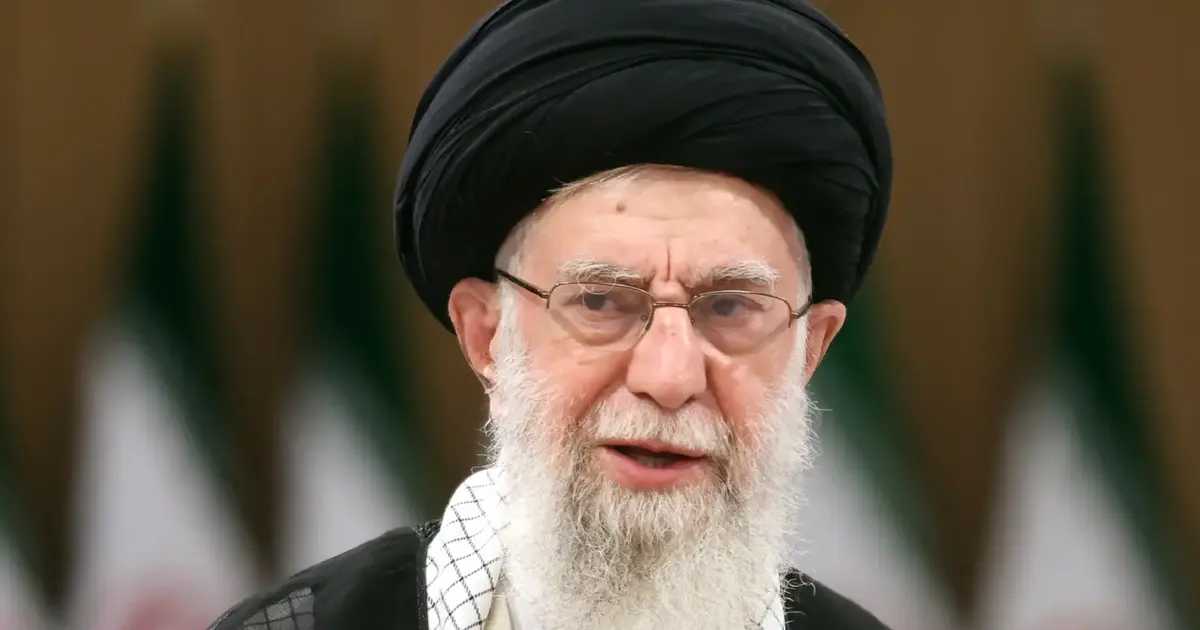
Malaysia will be represented by Agriculture and Food Security Minister Mohamad Sabu at the funeral of Iran's Supreme Leader Ayatollah Ali Khamenei, Prime Minister Anwar Ibrahim confirmed on Tuesday. The minister is scheduled to depart for Tehran to participate in the state funeral proceedings, which are expected to draw dignitaries and delegations from across the Muslim world and beyond.
Khamenei's death marks a significant moment in Iranian politics and carries broader implications for the Middle East region. As Supreme Leader since 1989, Khamenei wielded enormous influence over Iran's domestic and foreign policies, and his passing creates a leadership vacuum at a time of considerable geopolitical tension. The funeral ceremony will serve not only as a final tribute to his four-decade reign but also as a gathering point for regional and international players seeking to understand Iran's political trajectory under new leadership.
The selection of Sabu, a senior cabinet minister, reflects the diplomatic weight Malaysia attaches to its relations with Iran. Sabu's portfolio encompassing agriculture and food security underscores Malaysia's economic interests in maintaining cordial ties with Tehran, particularly given Iran's substantial agricultural output and its role in regional trade networks. His attendance sends a message of respect and continuity in bilateral relations during a period of Iranian institutional transition.
Malaysia's participation in the funeral represents a careful balancing act for the Anwar government. The country maintains diverse foreign policy commitments across Muslim-majority nations with varying political systems and ideological orientations. Iran remains an important strategic partner for Malaysia, particularly within Organisation of Islamic Cooperation forums and broader Southeast Asian-Middle Eastern cooperation initiatives. By fielding a ministerial delegation, Malaysia demonstrates its commitment to these relationships while signalling that it respects Iran's sovereignty and internal processes.
The timing of this representation comes amid ongoing regional tensions involving Iran and its neighbouring states. Malaysia, as a maritime trading nation heavily dependent on freedom of navigation through critical chokepoints including those near Iranian territory, has vested interests in regional stability. Maintaining diplomatic channels and showing respect during significant transitions in leadership serves Malaysia's long-term strategic interests in ensuring predictable regional dynamics.
Anwar's announcement also reflects Malaysia's broader diplomatic posture under his administration. Since returning to office, his government has emphasised pragmatic engagement with regional powers across the political spectrum rather than ideological alignment. This approach has allowed Malaysia to deepen relationships with countries that might otherwise view each other with suspicion, positioning Kuala Lumpur as a bridge-builder and responsible regional actor.
The funeral itself is expected to be one of the largest state ceremonies in recent Middle Eastern history. Khamenei's death has already triggered a succession process that will determine the ideological direction of the Islamic Republic over the coming years. The gathering of international delegates will provide informal opportunities for diplomatic engagement, making such occasions valuable for countries seeking to understand shifting power dynamics and forge new understandings with emerging Iranian leadership.
Sabu's background in party politics and advocacy work before entering government may serve him well in such a high-profile diplomatic mission. His presence signals that Malaysia views this moment as sufficiently important to warrant representation by a cabinet-level official rather than a lower-ranking diplomat. This elevation of protocol underscores the seriousness with which Anwar's administration regards Iran relations and respects the historical significance of Khamenei's three-decade tenure.
For Malaysia specifically, Iran represents an important node in broader Islamic and developmental networks. The two countries have cooperated on various fronts including parliamentary exchanges, educational partnerships, and economic ventures. The Islamic Revolutionary Guard Corps' network extends into several Southeast Asian nations, creating a complex security and diplomatic landscape that Malaysia must navigate carefully. By maintaining respectful engagement through such official channels, Malaysia preserves its diplomatic flexibility and demonstrates maturity in its foreign policy approach.
The funeral also comes at a moment when Malaysia is actively strengthening its position within ASEAN and the broader Indo-Pacific region. Demonstrating capacity for balanced, principled diplomacy that respects the sovereignty and internal processes of major powers enhances Malaysia's credibility as a thoughtful regional partner. Such positioning becomes increasingly valuable as geopolitical competition intensifies in Southeast Asia and the Indian Ocean region.
Anwar's explicit public announcement of Sabu's attendance, rather than allowing it to occur quietly through normal diplomatic channels, suggests the government views this as an opportunity to communicate Malaysia's foreign policy orientation to both domestic and international audiences. The transparency reflects confidence in Malaysia's position and underscores the legitimacy of engagement with Iran as a normal feature of Malaysian statecraft, not a controversial matter requiring justification.
Looking forward, the Iranian succession process will unfold over coming weeks, and Malaysia's diplomatic engagement during this period may yield benefits in understanding the new administration's priorities and building relationships with emerging Iranian leaders. Sabu's attendance at the funeral puts Malaysia in the room at a moment when alliances and relationships are being reconsidered and recalibrated across the Middle East.

