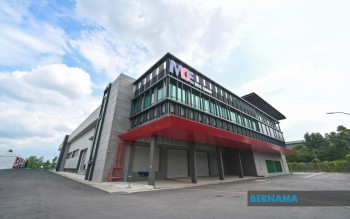
Malaysian automotive electronics manufacturer MCE Holdings Bhd has inaugurated the MCE Auto Hub, a RM50 million advanced manufacturing complex located within UMW High Value Manufacturing Park in Serendah. The facility represents the first phase of an ambitious expansion strategy that could eventually see total investment exceed RM200 million. Investment, Trade and Industry Minister Datuk Seri Johari Abdul Ghani presided over the official launch ceremony, underscoring the government's interest in strengthening the nation's advanced manufacturing capabilities.
The MCE Auto Hub occupies 5.52 hectares and has been engineered as an Industry 4.0-ready facility incorporating clean room production environments necessary for modern automotive electronics manufacturing. The hub's design reflects the complex demands of contemporary automotive technology, with controlled manufacturing spaces capable of producing components for both internal combustion engine vehicles and electric vehicles. This dual capability positions MCE to serve the automotive industry during its transition toward electrification, a shift reshaping global supply chains and manufacturing priorities throughout Southeast Asia.
The facility is expected to more than double MCE's existing production capacity whilst significantly enhancing the group's engineering, design, and research and development operations. With the hub now operational, MCE's workforce has expanded to 680 employees, including 90 engineers distributed across its facilities in Johor Bahru, Port Klang, and the new Serendah location. This concentration of technical talent in one location is intended to facilitate collaboration and accelerate the development of increasingly sophisticated automotive solutions for regional and international markets.
MCE has established itself as a tier-1 automotive supplier with comprehensive original equipment manufacturing and original design manufacturing capabilities. The company's trajectory since its first contract in 1990—supplying remote alarm and central locking systems to Malaysian manufacturers—illustrates how local suppliers can evolve into sophisticated technology providers. Over three decades, MCE has transitioned from traditional automotive components into advanced electronics and mechatronic solutions, gradually expanding its customer base across Malaysia, other ASEAN nations, and the United States.
The investment reflects confidence in Malaysia's capacity to compete in high-value automotive manufacturing. Minister Johari emphasized that in an increasingly competitive global industry, local suppliers must pursue excellence through engineering expertise and technological innovation. The MCE Auto Hub embodies this philosophy by creating an environment where advanced component design and manufacturing can occur within Malaysia, potentially reducing reliance on imported technologies and creating higher-skilled employment opportunities within the domestic supply chain.
MCE group managing director Dr Goh Kar Chun framed the facility as part of a broader commitment to demonstrating Malaysian engineering excellence on the world stage. He noted that the company's portfolio has evolved substantially from basic automotive components toward sophisticated electronics and mechatronic systems. The MCE Auto Hub represents an institutional confidence that Malaysia possesses the engineering talent, manufacturing discipline, and technological infrastructure necessary to design and produce next-generation automotive components that can compete internationally.
The facility's operational launch occurs at a critical juncture for Malaysia's automotive sector. Global automotive supply chains are being restructured as manufacturers increasingly localize production of electric vehicle components and advanced electronics. The MCE Auto Hub positions Malaysia to capture a portion of this opportunity by offering local design-to-manufacturing capabilities that reduce lead times and facilitate closer collaboration between component suppliers and vehicle manufacturers. This proximity advantage could prove particularly valuable for ASEAN-focused manufacturers seeking regional supply sources.
The investment carries implications beyond MCE itself. By establishing advanced manufacturing capabilities in Malaysia, the company creates demand for specialized services from semiconductor manufacturers, electrical and electronics suppliers, and other technology companies throughout the ecosystem. Dr Goh highlighted the importance of collaboration between carmakers, tier-1 suppliers, and smaller ecosystem participants, suggesting that MCE views itself as an anchor facility that can help coordinate a broader regional supply chain centered in Malaysia rather than competing primarily through individual company capabilities.
The government's alignment with this investment strategy reflects broader economic policy priorities. The MCE Auto Hub contributes to Malaysia's ambitions to retain and develop higher-value manufacturing activities rather than competing primarily on cost with other Southeast Asian nations. By supporting tier-1 suppliers in developing advanced capabilities, the government indirectly supports domestic automotive manufacturers whilst creating an attractive ecosystem for international producers considering regional supply consolidation.
The facility's Industry 4.0 designation indicates that manufacturing processes incorporate digital integration, data analytics, and automated production controls. This technological framework enables manufacturing flexibility—the ability to rapidly transition between different product specifications—which becomes increasingly valuable as automotive companies diversify their component portfolios across different vehicle architectures and electrification strategies. For MCE customers, this flexibility translates to opportunities for customized solutions without prohibitive manufacturing setup costs.
Looking forward, MCE's development strategy may influence how other Malaysian suppliers approach manufacturing expansion. The emphasis on design and engineering capabilities alongside manufacturing suggests a recognition that long-term competitive advantage emerges not from production volume alone but from intellectual property ownership and technological differentiation. As global automotive companies increasingly source components from regional hubs rather than centralizing all production, Malaysian suppliers capable of contributing design and development expertise become particularly attractive partners.
The MCE Auto Hub ultimately represents a calculated bet that Malaysia can evolve its automotive sector toward higher-value activities. Whether that bet succeeds will depend not only on MCE's execution but on whether the broader ecosystem—including educational institutions, technology companies, and policy makers—aligns to support continuous capability development. The facility's opening provides an immediate boost to Malaysia's manufacturing footprint but signals a longer commitment to building indigenous technological capabilities within the automotive value chain across the region.

