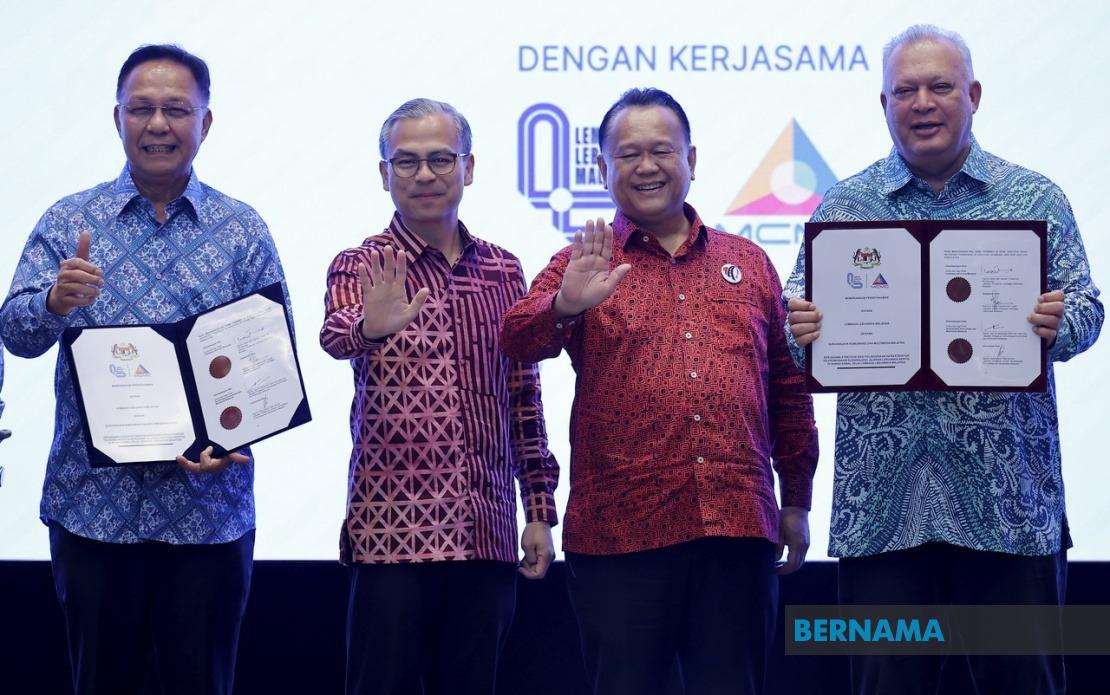
The Malaysian Communications and Multimedia Commission (MCMC) and the Malaysian Highway Authority (LLM) have formalized a strategic partnership designed to integrate digital communications infrastructure with the country's physical highway network. Sealed through a memorandum of understanding signed on July 30 in Cyberjaya, the accord represents a pivotal shift toward coordinated development that recognizes the symbiotic relationship between transportation and telecommunications in Malaysia's modern economy.
The agreement emerged from recognition that reliable communications coverage along Malaysia's expressway corridors remains patchy and uneven, creating both safety risks and economic inefficiencies. Communications Minister Datuk Seri Fahmi Fadzil, who witnessed the MoU exchange alongside Works Minister Datuk Seri Alexander Nanta Linggi, positioned the initiative as aligned with the Malaysia MADANI vision of ensuring equitable access to digital services. The partnership establishes institutional mechanisms—notably a Joint Task Force—to coordinate implementation efforts that transcend traditional bureaucratic silos.
Beyond headline-grabbing announcements, this collaboration addresses concrete operational challenges that have long hampered infrastructure deployment. Site access complications, technical approval bottlenecks, and fragmented coordination between highway operators and telecom regulators have historically slowed network expansion. By formalizing joint decision-making processes, MCMC and LLM aim to streamline these hurdles, potentially accelerating project timelines significantly. The Joint Task Force will specifically tackle site identification, permit approvals, and technical feasibility assessments in an integrated fashion.
The safety dimensions of highway communications infrastructure deserve particular emphasis for Malaysian readers navigating congested expressways. Enhanced telecommunications access enables emergency responders to reach distressed motorists more rapidly, facilitates real-time traffic information dissemination, and supports navigation applications that reduce congestion-related incidents. During peak travel periods on routes like the North-South Expressway, improved connectivity could translate directly into fewer accidents and faster incident response times—tangible public benefits beyond abstract notions of digital development.
Economic implications extend substantially into Malaysia's logistics and manufacturing sectors, which increasingly depend on continuous data connectivity for operations. Fleet management systems, vehicle telemetry monitoring, and supply chain coordination all require reliable network access. Manufacturers and logistics operators struggling with coverage dead zones along transportation corridors—particularly in geographically challenging terrain like the Menora Tunnel and Gua Tempurung—stand to gain competitive advantages from improved infrastructure. This partnership thus represents not merely telecom expansion but supply-chain optimization.
The initiative's scope already shows specificity: MCMC issued an invitation in May for proposals to construct communications towers along ten LLM-managed highways identified as priority corridors. The East Coast Expressway 2 (LPT2), West Coast Expressway (WCE), and the North-South Expressway feature prominently in this initial phase, indicating recognition that peninsular trunk routes demand priority attention. The strategic selection of these corridors reflects data-driven identification of blind spots that disproportionately affect commerce and inter-state travel.
Smart mobility technologies—an increasingly significant component of Malaysia's transportation vision—require the robust, resilient communications backbone that this partnership promises to deliver. Intelligent transport systems that optimize traffic flow, autonomous vehicle technologies being piloted in various jurisdictions, and multi-lane fast flow systems all depend fundamentally on reliable, low-latency communications networks. Without such infrastructure, Malaysia risks developing transportation technologies that function only in urban centers while remaining inaccessible along intercity corridors where their efficiency benefits would prove most valuable.
The whole-of-government approach emphasized in the joint statement reflects broader administrative learning within Malaysian governance structures. Rather than treating telecommunications and transportation as separate policy domains, MCMC and LLM's formalization of cooperation acknowledges interdependence and establishes permanent coordination mechanisms. This institutional innovation may serve as a template for other cross-sector infrastructure initiatives where fragmented authority has previously complicated project execution.
Implementation challenges remain substantial despite institutional enthusiasm. Identifying optimal tower locations requires balancing engineering requirements, environmental considerations, aesthetic concerns from communities adjacent to expressways, and land acquisition complexities. The reliance on highway right-of-way and reserve land, while theoretically simplifying site access compared to urban deployments, still demands careful environmental and technical assessment. Land availability along certain corridor sections may prove more constrained than anticipated, potentially complicating tower distribution.
From a regional perspective, Malaysia's initiative aligns with broader Southeast Asian trends toward telecommunications-integrated infrastructure development. Countries throughout the region face similar challenges of extending digital coverage beyond metropolitan areas while supporting economic growth across geographically diverse territories. The MCMC-LLM model may offer insights for neighboring countries pursuing comparable objectives, positioning Malaysia as a reference point for coordinated infrastructure development approaches.
The initiative also reflects maturing understanding that digital divide challenges transcend conventional urban-rural distinctions. Highway corridors represent liminal zones—neither purely urban nor entirely remote—where coverage gaps create disproportionate hardship for both travelers and commercial operators dependent on continuous connectivity. By explicitly targeting expressway corridors, MCMC and LLM acknowledge that meaningful digital inclusion requires attention to infrastructure serving mobile populations and dynamic economic activities, not merely residential connectivity.
Financial mechanisms and procurement processes remain largely unspecified in available statements, suggesting these details will emerge as the Joint Task Force advances planning work. The regulatory framework governing tower deployment, operational responsibilities between MCMC and LLM, and cost-sharing arrangements will likely require extensive clarification as projects progress from conceptual stage to construction. Clear delineation of these arrangements will prove crucial for maintaining implementation momentum and preventing jurisdictional disputes.
Ultimately, this partnership represents recognition that modern infrastructure challenges demand integrated solutions transcending traditional categorical boundaries. As Malaysia pursues digital transformation ambitions while managing physical transportation networks, initiatives explicitly linking these domains promise more efficient resource utilization and more coherent national development. Whether the Joint Task Force can translate institutional goodwill into tangible improvements in expressway telecommunications coverage will determine whether this MoU represents genuine structural change or familiar performative cooperation.

