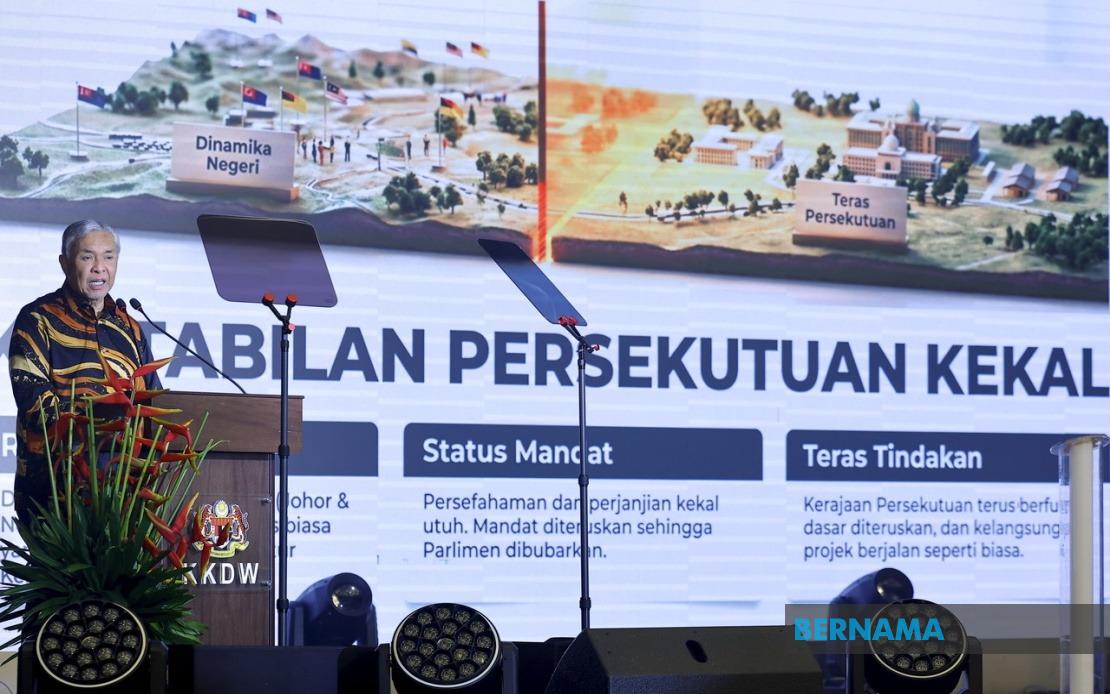
Barisan Nasional's Melaka chapter is mapping an aggressive electoral strategy ahead of the state's 16th general election, with party leadership declaring an intention to retain every one of its 21 legislative seats. The bold objective was articulated by BN chairman Datuk Seri Dr Ahmad Zahid Hamidi during remarks made at the Rural and Regional Development Ministry's monthly gathering in Putrajaya on Wednesday, reflecting the state administration's confidence in its political standing within the crucial southern region.
The target reflects the determination of incumbent Melaka Chief Minister Datuk Seri Ab Rauf Yusoh, who also holds the position of state BN chairman. In conveying this ambitious retention goal to national party leadership, Yusoh has signalled that the Melaka branch views the approaching electoral contest as winnable across its entire footprint. The state, which has pivoted between opposition and government control in recent electoral cycles, represents a meaningful battleground for BN's broader efforts to consolidate power across Malaysia's key constituencies.
Yet Ahmad Zahid's remarks introduced a significant caveat to this uncompromising stance: the coalition remains receptive to accommodating negotiations with rival political entities, contingent upon approval from BN's central decision-making apparatus. This flexibility represents a tactical acknowledgement that electoral mathematics in competitive states sometimes necessitates strategic partnerships rather than winner-take-all contests. The positioning suggests BN is preparing for multiple scenarios as the election timeline becomes clearer.
The chief minister has publicly emphasised openness to exploratory discussions with potential allies, creating space for coalition arrangements that could strengthen BN's overall position in the state assembly. Such negotiations have become increasingly common in Malaysia's evolving political landscape, where governing coalitions frequently involve partnership arrangements between previously competing factions. This approach allows BN to pursue maximum seat gains while maintaining flexibility for power-sharing configurations that might emerge from post-election mathematics.
Melaka's electoral significance extends beyond the state itself, carrying implications for national political momentum. As a relatively compact polity with manageable voter populations compared to Selangor or Johor, Melaka serves as a testing ground for campaign strategies and coalition dynamics. The state's political trajectory influences broader perceptions about BN's electoral viability and the appetite among voters for coalition governance versus opposition alternatives. Recent electoral history demonstrates the state's competitive nature, with control alternating between coalitions in successive electoral cycles.
The 21-seat configuration gives BN substantial leverage, though not insurmountable majorities in terms of electoral mathematics. Achieving a clean sweep would represent a decisive mandate, reinforcing BN's standing as the state's dominant force. However, the party leadership's simultaneous openness to coalition discussions indicates realistic acknowledgement that maintaining all 21 seats simultaneously whilst entering partnership arrangements presents complex challenges requiring careful negotiation and seat-sharing calculations.
Central BN leadership's involvement in any final agreement underscores the hierarchical decision-making structure within Malaysia's dominant political coalition. While state-level parties possess considerable autonomy in electoral strategy and candidate selection, coalition-level commitments and power-sharing arrangements fall within the purview of national headquarters. This ensures that any accommodation with other parties would reflect broader coalition-building objectives rather than isolated state-level preferences.
The timing of this declaration positions BN to shape the narrative surrounding the election before opposition parties solidify their own strategies. By publicly committing to a comprehensive seat defence whilst maintaining negotiation flexibility, BN creates multiple pathways to claim victory regardless of the final configuration. This dual messaging serves important psychological and strategic functions, maintaining party morale within Melaka whilst signalling pragmatism to potential coalition partners at the national level.
Melaka's political landscape includes not only BN but also significant opposition presence, particularly from Pakatan Harapan and other competing coalitions. The state's recent electoral history demonstrates voters' willingness to shift allegiances, suggesting that whilst BN's 21-seat advantage appears formidable, organised opposition campaigns combined with local grievances could dent this seemingly dominant position. The upcoming campaign period will reveal whether BN's confidence reflects genuine grassroots strength or represents optimistic positioning ahead of genuine competitive tests.
The election, scheduled as part of Malaysia's upcoming state electoral calendar, will test whether BN can maintain its current parliamentary strength or whether opposition momentum has gathered sufficient force to erode the coalition's traditional dominance. For Malaysian observers and regional analysts tracking coalition politics in Southeast Asia's largest democracy, Melaka's outcome will provide meaningful insights into the current electoral climate and the sustainability of BN's governance model across Malaysia's diverse constituencies. Ahmad Zahid's emphasis on both ambition and flexibility reveals a coalition navigating contemporary politics with both confidence and prudent strategic awareness.

