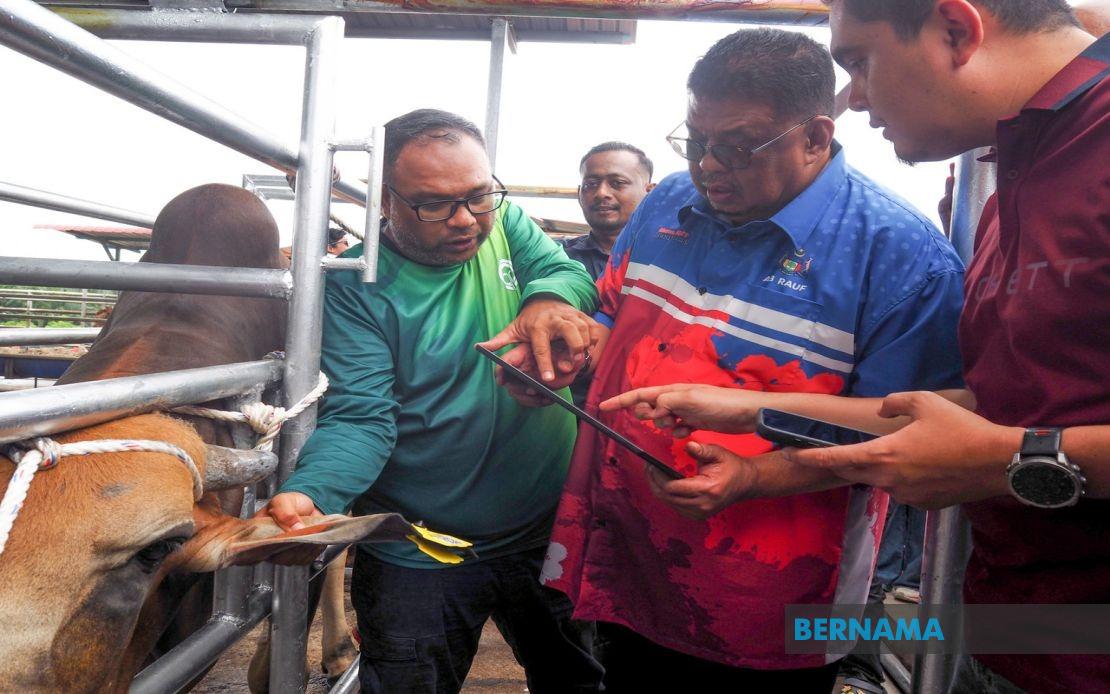
The Melaka state government has launched a digitised livestock identification system using QR Tags, marking a significant shift towards technology-driven animal management and public safety in the state. The initiative, developed through collaboration between the Melaka Veterinary Services Department and the Local Government Unit, stems from Chief Minister Datuk Seri Ab Rauf Yusoh's push to modernise livestock administration as part of a broader digital transformation agenda. This development reflects growing recognition across Malaysian states of the need to balance agricultural operations with urban safety concerns, particularly as livestock-related incidents continue to rise in populated areas.
The QR Tag system operates by embedding unique identification codes and farmer information on tags attached to registered livestock. When authorities or members of the public encounter an animal, they can simply scan the QR code with a smartphone to instantly access critical details including the owner's name, premises identification number, and farm location. This straightforward technology eliminates the previous reliance on manual documentation and verbal identification, which often proved time-consuming and error-prone. For Melaka, where urbanisation has increasingly brought livestock raising closer to residential zones, the ability to rapidly pinpoint owners has become essential for resolving incidents efficiently and fairly.
Since implementation began in early June, approximately 2,000 livestock in Melaka have received QR Tags, though this represents only a fraction of the state's registered population. The Melaka state government envisions a gradual expansion targeting the entire registered cattle and buffalo population, estimated at over 32,000 animals across the state. This phased rollout approach allows authorities to monitor system effectiveness, refine processes, and address technical or logistical challenges before scaling to full coverage. The long-term vision aligns with how other jurisdictions have adopted livestock tracking technologies, though Melaka's integration with the existing eVetPermit Malaysia platform demonstrates a locally tailored approach that leverages existing digital infrastructure.
The impetus for this system stems partly from escalating livestock-related incidents on Melaka's roads and in communities. Since 2023, the state has recorded 835 accidents involving livestock and more than 50 formal complaints concerning stray animals. These figures underscore a genuine public safety challenge: uncontrolled animals present hazards to motorists, damage property, and create liability questions when incidents occur. Previously, authorities faced considerable difficulty in tracing owners, leading to lengthy investigations and unresolved complaints. The QR Tag system fundamentally transforms this dynamic by collapsing the identification process from hours or days to seconds, enabling rapid owner contact and accountability.
Beyond immediate incident response, the system strengthens several interconnected aspects of livestock governance. Disease tracking becomes more precise when authorities can rapidly identify affected animals and trace their movement history through the digital record. Enforcement against illegal or unauthorised livestock keeping becomes feasible when comprehensive, updated registries exist. The system also encourages breeder compliance and responsibility, as farmers understand that their animals carry permanent digital identities traceable to their operations. This psychological dimension—the knowledge that ownership cannot be obscured—motivates better animal husbandry practices and heightened vigilance against escapes or abandonment.
A crucial operational detail is that each tag remains the animal's lifelong identifier, even if ownership transfers. Rather than replacing tags during sales, new owners simply update their information in the eVetPermit Malaysia system, preserving a continuous digital history of the animal while maintaining accurate current ownership records. This design reduces costs, minimises administrative burden during transactions, and creates an auditable trail useful for disease investigations or regulatory compliance checks. The approach reflects lessons learned from livestock identification schemes globally, where immutable animal identities paired with mutable ownership records have proven most effective.
Financial incentives are shaping uptake during the pilot phase. Until the end of 2025, the Melaka state government covers the RM6.50 cost per tag, enabling breeders to register livestock without immediate expense. This subsidy removes a barrier that might otherwise deter participation, particularly among smallholder farmers with tighter margins. From 2027 onwards, farmers will bear the cost at RM5 per tag for new installations or replacements—a modest amount designed to encourage compliance while sharing long-term operational expenses. The pricing structure recognises that sustainable adoption requires breeders' buy-in, making affordability during the establishment phase strategically important.
Breeder response has been notably positive, with farming communities viewing the system as protective of their interests rather than punitive. Many farmers recognise that clear ownership identification and digital records can defend them against false liability claims and strengthen their legal standing in disputes. The system also enhances the legitimacy and professional standing of registered livestock operations, supporting efforts to improve Melaka's agricultural sector reputation. This cooperative reception contrasts with resistance sometimes encountered when new regulatory frameworks are perceived as burdensome, suggesting that the initiative's framing emphasises mutual benefit rather than enforcement alone.
The successful coordination between the Local Government Unit, Melaka Veterinary Services Department, and local authorities has been identified as critical to implementation quality. This multi-agency collaboration ensures that livestock registration data, veterinary records, and local enforcement observations are integrated rather than siloed across separate systems. Councils can cross-reference complaints against registered ownership databases; veterinarians can access animal histories; and enforcement officers gain actionable intelligence for follow-up visits. This integrated approach maximises the return on technology investment and creates a comprehensive governance framework rather than isolated departmental tools.
For Malaysian readers and Southeast Asian observers, Melaka's QR Tag initiative offers insights into how states are adapting governance mechanisms to pressures created by concurrent urbanisation and agricultural persistence. Many regions face similar tensions between maintaining viable farming sectors and protecting urban residents from livestock-related hazards. Melaka's approach—leveraging smartphone technology already ubiquitous across the country, integrating with existing national systems, and incentivising voluntary participation—represents a pragmatic model that other Malaysian states or regional jurisdictions might adapt. The scheme also demonstrates how specific governance problems, when understood clearly, often find solutions through modest technological application rather than heavy-handed prohibition.
Looking forward, the success of this initiative will likely hinge on consistent data maintenance, user adoption, and integration with other agricultural and public safety systems. Challenges may emerge around updating records after animal transfers, managing lost or damaged tags, and ensuring that all relevant agencies maintain access to current information. However, the transparent communication about timelines, costs, and benefits positions Melaka's livestock management apparatus for a smoother transition than sometimes occurs with regulatory innovation. As the system matures through 2025 and approaches full expansion in subsequent years, its effectiveness in reducing incidents and improving farmer accountability will inform whether other Malaysian states pursue similar technologies, potentially creating a nationwide digital livestock network.

