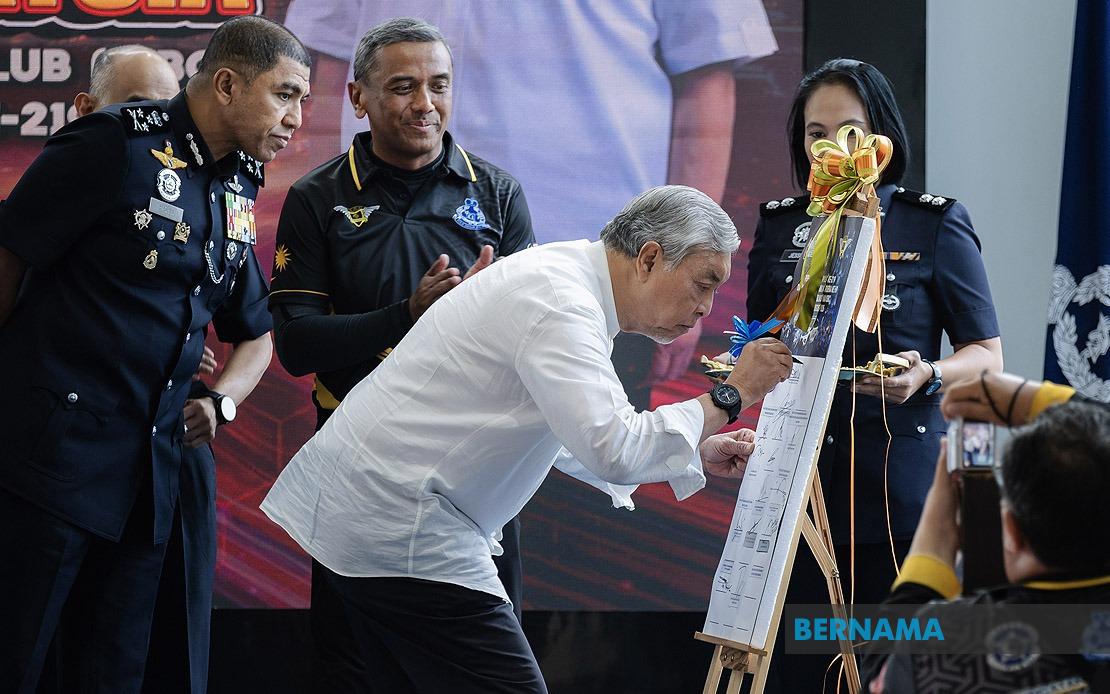
Barisan Nasional will require a political strategy tailored specifically to Melaka's unique circumstances for the upcoming state election, according to the coalition's chairman Datuk Seri Dr Ahmad Zahid Hamidi. Speaking after a charity motorcycle ride event in Kuala Lumpur on August 21, the Deputy Prime Minister indicated that any framework developed for the state polls must account for the distinct dynamics and interests at play in Melaka, rather than simply replicating arrangements that proved successful elsewhere in the peninsula.
The BN leadership's cautious approach reflects a recognition that electoral configurations that worked effectively in Johor and Negeri Sembilan may not translate seamlessly to Melaka's political terrain. While those two states delivered commanding victories for BN through specific power-sharing arrangements, Ahmad Zahid emphasised that each state possesses distinct political variables requiring individual assessment. This calibrated thinking suggests the coalition is approaching the Melaka negotiating process with deliberation, rather than applying a blanket template across all its state operations.
Any political negotiations involving BN and potential partners in Melaka must carefully weigh both advantages and disadvantages of proposed arrangements, Ahmad Zahid stressed. He articulated a framework whereby negotiating parties should ensure that anticipated gains substantially exceed potential costs or complications that might arise from such agreements. This principle underpins BN's approach to determining which political formations or independent parties might be brought into a governing coalition in Melaka, indicating a methodical evaluation process rather than opportunistic deal-making.
Integrity in political negotiations emerged as a central theme in Ahmad Zahid's remarks. He underscored the importance of honesty and sincerity throughout negotiations, and critically, the absolute necessity of honouring commitments made during such discussions. His pointed reference to not reversing agreed positions once arrangements have been finalised suggests the BN leadership wishes to establish a reputation for reliability in partnership agreements, potentially learning from past instances where post-election political realignments in Malaysian states have created friction or perceived breaches of earlier understandings.
Responsibility for navigating Melaka's political landscape has been delegated to the state's Chief Minister Datuk Seri Ab Rauf Yusoh, who simultaneously serves as chairman of the Melaka BN branch. Ahmad Zahid indicated that Ab Rauf will conduct preliminary negotiations at the state level, with outcomes subsequently elevated for examination and final determination by BN's national leadership structures. This hierarchical approach ensures that decisions affecting the state government align with broader coalition strategies determined at the federal level.
The timing of negotiations carries particular significance given that the Melaka state government's current mandate expires on December 31. This deadline creates a defined window for political arrangements to be finalised and formalised, preventing prolonged uncertainty about the state's governance structure beyond year-end. The approaching expiration date lends urgency to discussions while also providing sufficient runway for negotiations and any necessary legislative or administrative adjustments.
BN's standing in Melaka proved commanding in the most recent state election, where the coalition secured 21 of 28 seats, establishing a clear parliamentary majority. Pakatan Harapan captured five seats whilst Perikatan Nasional won two, leaving BN well-positioned but facing choices about whether to govern exclusively or incorporate other political entities. The present state executive council already reflects the Unity Government framework operating at federal level, with representation from Pakatan Harapan assemblymen despite BN's legislative superiority.
Ahmad Zahid contextualised state-level political cooperation within the broader imperative of maintaining stability at the national tier. Political arrangements in individual states, he suggested, should be evaluated not merely for their immediate state-level consequences but as components of the overall national political equilibrium. The Unity Government governing Malaysia requires consistent reinforcement across multiple institutional channels to function effectively and sustain public confidence.
At the federal level, Ahmad Zahid noted that inter-party cooperation transcends Cabinet-level meetings and encompasses systematic coordination across ministerial portfolios and whole-of-government operational frameworks. This sophisticated understanding reflects the complexity of Malaysia's current political configuration, where several major parties must work in concert across numerous government functions despite divergent ideological orientations and historical rivalries. A coherent whole-of-government approach becomes essential for translating political cooperation into functional governance.
Maintaining national political stability emerges as the overarching rationale underpinning BN's deliberative approach to Melaka's forthcoming political arrangements. Rather than treating state elections as isolated contests to be won through maximum tactical advantage, Ahmad Zahid's framing suggests viewing them as episodes within a larger national narrative of stability maintenance. This perspective may influence BN's willingness to share power or accommodate coalition partners even when commanding sufficient parliamentary strength to govern unilaterally.
For Malaysian observers and political analysts, Ahmad Zahid's statements signal that Melaka's political settlement will reflect calculated national interests rather than purely local considerations. The emphasis on tailored solutions distinct from other states indicates recognition that Malaysia's federalised structure requires differentiated governance approaches while maintaining overall political coherence. How these negotiations ultimately conclude will provide insight into whether the Unity Government framework can adapt flexibly to state-level variations whilst sustaining national-level cohesion.

