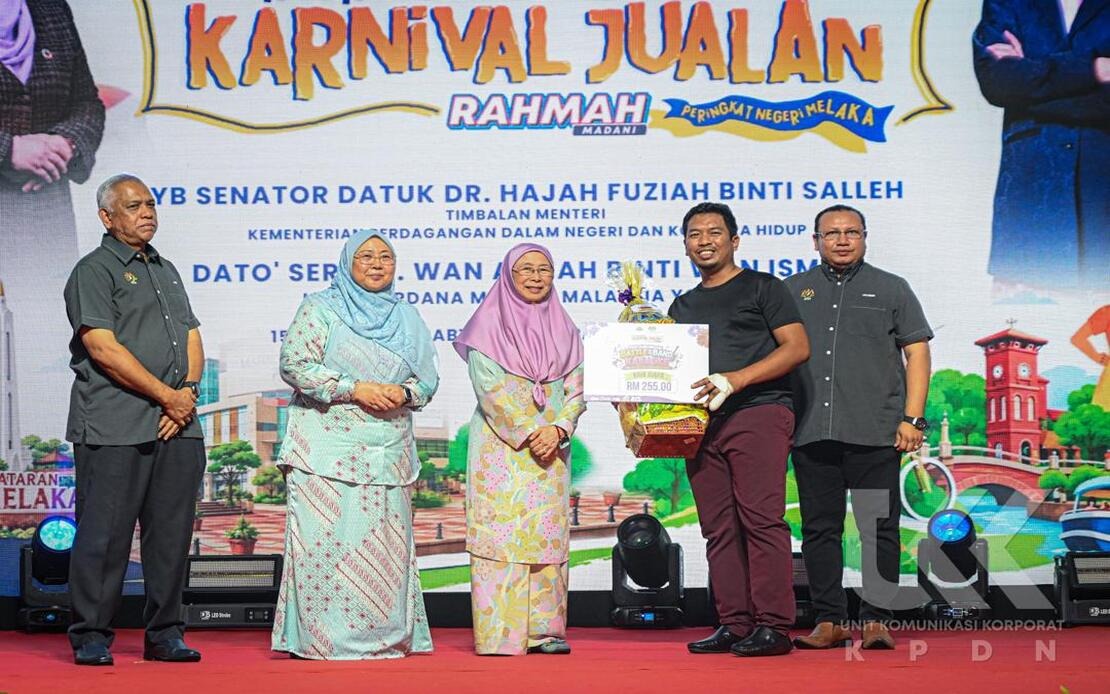
Malaysia's efforts to alleviate household financial pressure have gained traction with the Menu Rahmah programme now encompassing more than 3,210 registered food and beverage establishments across the country, according to Datuk Dr Fuziah Salleh, Deputy Minister of Domestic Trade and Cost of Living. Speaking during a ministry event in Melaka on August 15, Fuziah highlighted the robust participation from food operators, signalling their commitment to partnering with government initiatives aimed at reducing the financial strain on ordinary Malaysians grappling with inflationary pressures.
The widespread uptake of Menu Rahmah demonstrates a fundamental shift in how the private sector is approaching social responsibility in the context of Malaysia's broader economic challenges. Food stall and food court operators have emerged as the most enthusiastic participants, with 1,016 registrations recorded as of July this year. This category represents the backbone of Malaysia's informal food economy, where hawkers and small-scale vendors serve millions of Malaysians daily at affordable prices. Beyond these establishments, the programme has also attracted restaurants, traditional hawker operators, mobile food trucks, and bazaar vendors, creating a diverse ecosystem of affordable dining options across different market segments and consumer preferences.
Fuziah stressed that Menu Rahmah should not be viewed as a short-term stopgap measure or a cosmetic policy initiative. Instead, she positioned it as a foundational component of the government's sustained commitment to keeping cost-of-living concerns at the centre of its economic and social policy agenda. This framing is significant for Malaysian consumers and industry observers alike, as it suggests that price support mechanisms and consumer-friendly programmes may become permanent fixtures in the nation's approach to economic management rather than temporary interventions deployed only during periods of acute inflation.
The initiative has strategically prioritised high-demand locations, with particular emphasis on Rest and Service Areas throughout Malaysia's highway network. These venues experience consistent foot traffic from commuters, long-distance travellers, and commercial vehicle operators who might otherwise have limited affordable dining options while on the road. By establishing Menu Rahmah presence at these locations, the government has recognised that cost-of-living support must extend beyond urban residential areas to encompass transit corridors and mobile populations who spend significant portions of their day away from home.
Complementing Menu Rahmah's expansion is the MADANI RAHMAH Sales Programme, which has demonstrated even more impressive traction among Malaysian consumers. By July 2026, the programme had been executed 19,322 times, substantially exceeding the annual target of 17,500 implementations and generating nearly 25.5 million transactions nationwide. The programme's architecture offers savings between 10 and 30 percent compared with standard retail prices, making essential items genuinely accessible to lower and middle-income households. The range of subsidised products—including chicken, fish, eggs, cooking oil, flour, rice, fresh produce, and household essentials—targets the commodity basket most critical to household budgeting decisions.
The geographic reach of these programmes underscores their significance within Malaysia's federal structure. MADANI RAHMAH has penetrated 600 state constituencies and all 40 zones within the Federal Territories, reflecting a coordinated approach that bridges federal and state-level governance in service delivery. This comprehensive territorial coverage suggests that the government has moved beyond concentration in urban centres to explicitly address rural and semi-urban communities, where purchasing power and retail competition may be more limited.
The Ministry of Domestic Trade and Cost of Living has amplified its marketing efforts through the 'Jom Cari Menu RAHMAH' campaign, designed to raise public awareness and encourage consumer patronage at participating outlets. This promotional strategy recognises that even well-intentioned subsidy and affordability programmes depend upon effective communication and consumer knowledge for their success. Simultaneously, the ministry is broadening industry partnerships, engaging traders' associations and food service operators to expand menu availability and geographic distribution. This collaborative approach harnesses the distribution networks and local market knowledge of established industry players rather than relying solely on government infrastructure.
A concurrent KPDN Mini Carnival held in Melaka showcased the integration of these various cost-of-living initiatives within a single public-facing event. The carnival structure—combining government exhibitions, business consultation services, networking opportunities, and direct sales by 27 participating traders—created a marketplace where consumers could access both information and actual discounted purchases simultaneously. The inclusion of entertainment elements such as stage activities, public competitions, and an esports tournament in partnership with Todak indicates recognition that consumer engagement requires more than transactional pricing advantages; it demands community experience and social participation.
The Melaka carnival attracted nearly 3,000 visitors on its opening day alone, with organisers projecting further attendance growth through the final day. This turnout suggests sustained consumer interest in government affordability programmes and willingness to participate in organised shopping events where cost savings are available. Such engagement patterns provide valuable data points for policymakers assessing whether subsidy and price-control approaches successfully reach intended beneficiaries and generate measurable economic behaviour change.
For Malaysia's broader policy framework, these initiatives reflect a deliberate prioritisation of household consumption support during a period when wage growth has struggled to keep pace with commodity price inflation. The programmes implicitly acknowledge that market forces alone have not ensured equitable access to essential goods and services across Malaysia's socioeconomic spectrum. Whether through direct merchant participation incentives or subsidised sales events, the government is intervening to compress the spread between retail prices and affordability thresholds for average families.
The expansion trajectory of Menu Rahmah and MADANI RAHMAH also carries implications for Malaysia's food service industry structure and informal economy formalisation. By encouraging registration and integration into government-tracked programmes, these initiatives create administrative visibility and engagement with informal sector operators who traditionally operate outside formal regulatory frameworks. This process generates data for policymakers while establishing baseline relationships that could facilitate future compliance with health standards, taxation requirements, or labour regulations.
Moving forward, the sustainability of these programmes will depend on whether they can maintain merchant participation without creating unsustainable cost pressures on food operators. The encouraging uptake figures suggest current terms remain acceptable to participating businesses, but inflation pressures on input costs, wages, and rent could test this equilibrium. Equally important is whether consumer behaviour consolidates around these affordable options or whether uptake remains concentrated among lowest-income segments, a distinction with consequences for programme justification and budget allocation.

