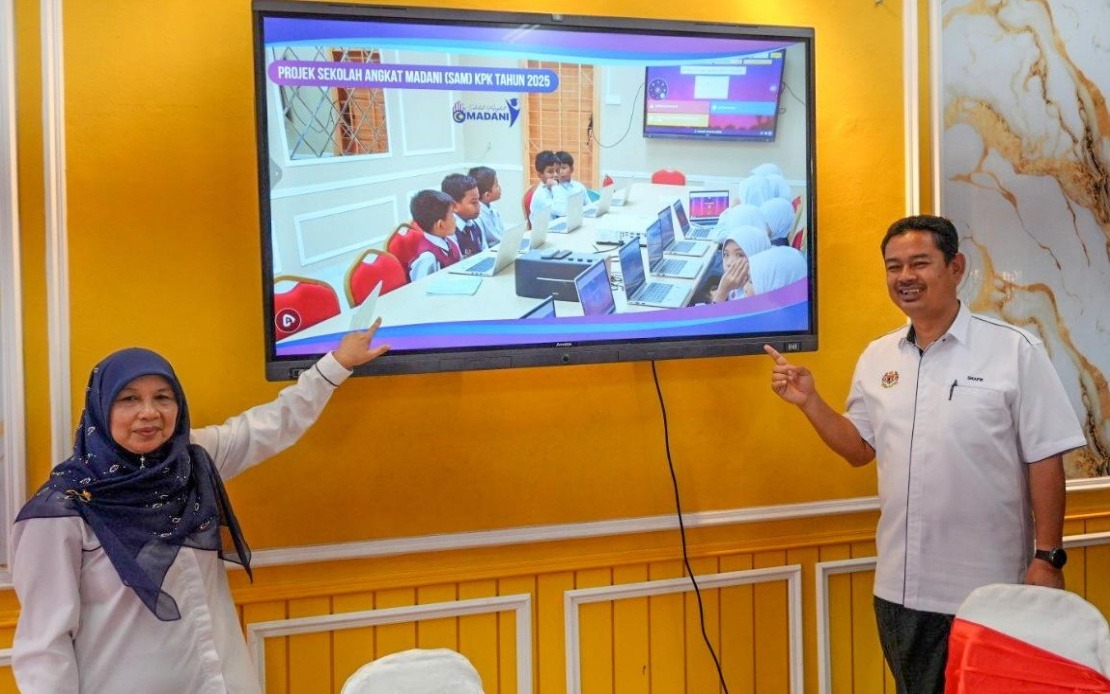
The Ministry of Plantation and Commodities has earmarked RM100,000 to revitalise SK Bendang Kering, a government primary school in Kuala Kangsar, marking another concrete step in the federal government's push to narrow educational disparities between urban and rural communities across Malaysia. The funding commitment, formalised through a handover ceremony in Ipoh on June 19, demonstrates how sectoral ministries beyond the education portfolio are mobilising resources to strengthen the nation's schooling infrastructure in underserved areas.
The initiative places the school under the ministry's formal adoption programme, a structured framework designed to provide sustained institutional and financial support beyond one-time investments. Through this arrangement, the Malaysian Rubber Board has taken on implementation responsibilities, bridging the gap between central policy directives and ground-level execution. Shafie Taib, the ministry's deputy secretary-general for Strategic Planning and Management, officiated the handover, signalling senior-level commitment to the scheme's success.
The RM100,000 allocation has been deployed strategically across multiple campus areas, beginning with physical infrastructure improvements that directly affect the school's learning environment. The assembly area and main hall have undergone refurbishment, creating more functional spaces for gatherings, performances, and community events. Equally important are the renovations to reading corners and preschool classrooms, interventions that acknowledge early literacy development and foundational learning as critical entry points for educational quality.
Technology integration forms a cornerstone of the upgrade. Interactive smartboards have been installed in classrooms, enabling educators to move beyond traditional chalk-and-talk pedagogy towards more dynamic, multimedia-enriched instruction. For rural schools often constrained by limited digital resources, such tools can meaningfully expand teaching repertoires. The addition of air conditioning units addresses the tropical climate challenge endemic to Malaysian schools, reducing heat stress that impairs concentration during peak afternoon learning hours. Fresh educational signage and replacement furniture complete the facilities overhaul, creating a physically comfortable and welcoming environment.
Beyond infrastructure, the adoption programme emphasises academic acceleration and holistic human development. A structured performance improvement scheme targeting Malay, English, Science, and Mathematics—subjects fundamental to national curriculum standards and future employability—has been introduced alongside incentive mechanisms to recognise and reward high-achieving students. Such approaches can catalyse positive peer effects, where visible recognition of excellence motivates broader participation in learning.
The ministry has equally prioritised character and soft-skills development, recognising that modern competitiveness demands more than subject mastery. The Student Leadership Motivation Camp and Student Talent Development Camp represent extracurricular initiatives aimed at cultivating confidence, decision-making capacity, and collaborative abilities. For rural students who may have fewer out-of-school enrichment opportunities than their urban counterparts, such programmes offer critical channels for discovering and nurturing personal strengths and aspirations.
The selection of SK Bendang Kering reflects deliberate policy prioritisation of rural educational disadvantage. Malaysia's historical urban-rural educational divide, rooted in infrastructure investment patterns and demographic concentrations, has perpetuated attainment gaps. By anchoring adoption schemes to schools serving lower-income catchments, the government signals intent to reverse this trajectory. The gesture becomes especially meaningful in Perak, where certain districts experience pronounced resource scarcity relative to Klang Valley concentrations.
This initiative also illustrates a broader Malaysian trend of sectoral ministries stepping beyond their traditional mandates to contribute to educational development. The Ministry of Plantation and Commodities, traditionally focused on commodity policy and agribusiness, framing education investment as integral to human capital and national competitiveness reflects evolving whole-of-government thinking. Such cross-sector collaboration can multiply resources available for education without requiring additional education ministry budget allocations.
For SK Bendang Kering's student population, predominantly from lower-income backgrounds, these investments carry tangible significance. Access to functional facilities, technology-enabled learning, and structured talent recognition programmes can measurably improve academic trajectories and career horizons. Evidence from similar interventions suggests that combining infrastructure upgrades with academic support and enrichment activities produces cumulative positive effects on retention, achievement, and post-secondary transitions.
The Ministry of Plantation and Commodities has framed the adoption programme as an ongoing commitment rather than a finite project, suggesting sustained engagement and potential for iterative improvements. This perspective addresses a persistent weakness in Malaysian school development initiatives—sporadic funding cycles that produce isolated improvements rather than systemic strengthening. Sustained institutional adoption creates accountability structures and continuity that isolated grants cannot match.
Looking forward, the model adopted for SK Bendang Kering may offer lessons for scaling rural school enhancement across Malaysia. By demonstrating how sectoral ministries can productively engage with education infrastructure and programming, the initiative creates templates for broader systemic engagement. For other rural schools operating under constrained budgets, the Kuala Kangsar example signals that additional support pathways exist beyond education ministry channels.
The emphasis on rural equity in this scheme resonates with national aspirations for inclusive growth and regional development. As Malaysia pursues higher-income status, educational quality differentials between regions risk undermining both social cohesion and economic competitiveness. Investments in rural school infrastructure and programming represent preventative approaches to skills shortages and regional disparity, priorities increasingly recognised as central to sustainable prosperity.
%22%2F%3E%3C%2Fpattern%3E%3C%2Fdefs%3E%3Crect%20width%3D%22100%25%22%20height%3D%22100%25%22%20fill%3D%22url(%23ph47hsg)%22%2F%3E%3Crect%20width%3D%22100%25%22%20height%3D%22100%25%22%20fill%3D%22url(%23ph47hsp)%22%2F%3E%3Ctext%20x%3D%2250%25%22%20y%3D%2250%25%22%20text-anchor%3D%22middle%22%20dominant-baseline%3D%22central%22%20fill%3D%22rgba(255%2C255%2C255%2C0.95)%22%20font-family%3D%22Georgia%2C%20'Times%20New%20Roman'%2C%20serif%22%20font-weight%3D%22700%22%20font-size%3D%22226%22%20letter-spacing%3D%22-0.02em%22%3EExists%3C%2Ftext%3E%3C%2Fsvg%3E)

%22%2F%3E%3C%2Fpattern%3E%3C%2Fdefs%3E%3Crect%20width%3D%22100%25%22%20height%3D%22100%25%22%20fill%3D%22url(%23ph4jpltg)%22%2F%3E%3Crect%20width%3D%22100%25%22%20height%3D%22100%25%22%20fill%3D%22url(%23ph4jpltp)%22%2F%3E%3Ctext%20x%3D%2250%25%22%20y%3D%2250%25%22%20text-anchor%3D%22middle%22%20dominant-baseline%3D%22central%22%20fill%3D%22rgba(255%2C255%2C255%2C0.95)%22%20font-family%3D%22Georgia%2C%20'Times%20New%20Roman'%2C%20serif%22%20font-weight%3D%22700%22%20font-size%3D%22151%22%20letter-spacing%3D%22-0.02em%22%3EMalaysian%3C%2Ftext%3E%3C%2Fsvg%3E)