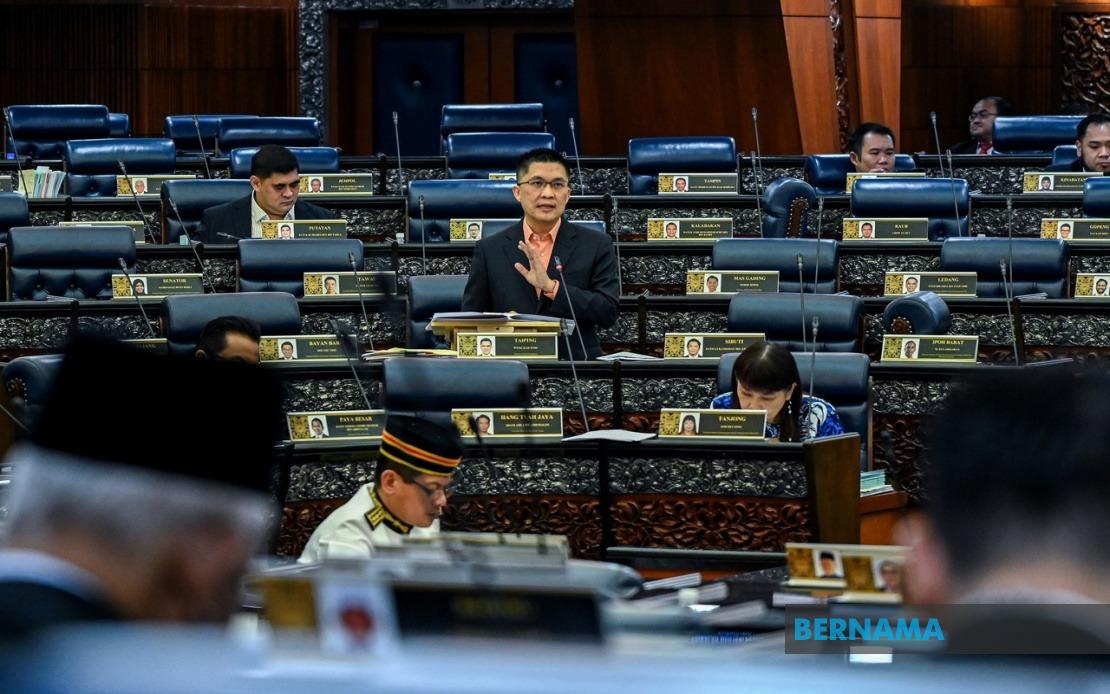
The Ministry of Education has committed to systematically closing the digital divide across Malaysia's education system as part of the Malaysia Education Blueprint 2026-2035, recognising that connectivity and digital access remain critical barriers to equitable learning outcomes. Deputy Education Minister Wong Kah Woh underscored the ministry's resolve to ensure every school, whether nestled in metropolitan areas or remote regions, receives comparable digital infrastructure and resources. This represents a significant policy shift acknowledging that educational equity in the 21st century depends fundamentally on bridging technology access gaps that have historically disadvantaged rural and underserved communities.
The ministry's strategy centres on universal high-speed internet deployment across all educational institutions, targeting every student's achievement of at least intermediate-level digital competency as measured through a standardised Digital Competency Score. Rather than adopting a one-size-fits-all approach, the MOE is implementing contextually appropriate technologies suited to diverse geographical and infrastructural conditions. This flexibility recognises that rural areas may require different deployment solutions than urban centres, whether through satellite connectivity, wireless networks, or fibre-optic infrastructure. The ambitious scope of this undertaking positions digital access as a foundational pillar alongside physical infrastructure in defining modern educational quality.
Central to this effort is the Digital Educational Learning Initiative Malaysia (DELIMa) platform, which serves as a comprehensive repository of digital teaching and learning materials accessible to both educators and students. The ministry has systematically uploaded educational content across subjects and levels onto this platform, transforming it into a critical tool for standardising access to quality learning resources. However, the platform's effectiveness depends entirely on reliable connectivity; without it, DELIMa remains inaccessible to schools and students lacking adequate internet infrastructure. This explains why the ministry has made high-speed internet provisioning its primary focus, recognising that hardware and content mean little without the connectivity enabling their use.
The equity dimension underpinning this initiative carries particular weight in Malaysia's context. Recent data reveals substantial progress under the preceding Malaysian Education Development Plan 2013-2025, with the average grade score gap between urban and rural SPM candidates narrowing by 26.23 percent. Gender-based disparities in SPM certification eligibility fell even more sharply, declining by 52.78 percent, while socioeconomic status-related achievement gaps contracted by 57.75 percent. These metrics demonstrate that targeted policy interventions can meaningfully reduce long-standing educational inequalities. The new blueprint seeks to sustain and accelerate this momentum, particularly as digital tools become increasingly central to classroom instruction and independent learning.
Wong emphasised that digital device distribution and educational resource allocation will be conducted with deliberate attention to fairness, ensuring rural schools receive comparable equipment and materials to their urban counterparts. This commitment addresses a historical pattern whereby infrastructure investments have concentrated in developed areas, leaving peripheral regions perpetually behind. By explicitly prioritising equitable distribution, the ministry acknowledges that closing the access gap requires proactive resource reallocation rather than passive market-driven outcomes. The approach signals recognition that digital equity constitutes a social justice imperative, not merely an efficiency concern.
The ministry has also committed to accelerating infrastructure development and upgrading dilapidated school facilities based on localised needs assessments. This granular approach recognises that Malaysia's geographic and socioeconomic diversity means that blanket policies cannot adequately address varied contextual challenges. Rural schools facing multiple infrastructure deficits require different interventions than aging urban facilities struggling with overcrowding. By anchoring infrastructure decisions in local needs data, the ministry aims to deploy resources strategically, maximising the impact of each investment dollar spent.
Parallel to digital infrastructure expansion, the MOE has addressed teacher welfare as an enabling factor in educational quality. Seven specific measures introduced since 2023 target workload reduction, including streamlining documentation requirements and eliminating redundant administrative processes. The rationale is straightforward: teachers overburdened by bureaucratic tasks have limited energy for engaging with new technologies and innovative pedagogies. By removing unnecessary record-keeping, the ministry creates cognitive and temporal space for educators to embrace digital tools and integrate them meaningfully into instruction. This holistic approach recognises that successful educational transformation requires attending to human factors alongside technological deployment.
The timing of this initiative reflects regional and global momentum toward digital transformation in education, accelerated by pandemic-era disruptions that exposed vulnerability in analogue-dependent systems. Southeast Asian nations increasingly recognise that digital literacy constitutes essential human capital in evolving economies. Malaysia's commitment positions it competitively within regional peer comparisons, signalling to international observers and investors that the nation takes future-readiness seriously. For Malaysian parents and students, the pledge represents tangible investment in educational access and opportunity regardless of geographic circumstance.
Implementing this vision presents formidable practical challenges. Universal broadband coverage remains aspirational in many developing nations; achieving it requires sustained funding, technical expertise, and coordination across multiple government agencies. Sustaining high-speed internet requires ongoing operational costs beyond initial infrastructure deployment. Teacher digital competency varies widely, necessitating comprehensive professional development programmes. Device distribution across hundreds of schools requires robust supply chains and maintenance systems. These implementation complexities should not diminish the significance of the strategic commitment, but they highlight the substantial resource commitment and organisational discipline required for successful execution through 2035.
The blueprint's success will ultimately depend on execution fidelity and sustained political commitment across election cycles. Malaysia's history shows that well-intentioned education policies sometimes falter when budgetary pressures mount or political priorities shift. The specific, measurable targets embedded in previous development plans—such as the 26.23 percent reduction in urban-rural achievement gaps—suggest that clear metrics and accountability frameworks can drive progress. Embedding similarly specific targets into the 2026-2035 blueprint, coupled with transparent progress reporting, would strengthen public confidence and institutional commitment.
For Malaysian students and educators, particularly those in underserved communities, this initiative signals that policymakers acknowledge and are acting upon long-standing inequities in educational access. Success would represent meaningful advancement toward meritocratic opportunity structures where geography and socioeconomic background impose fewer arbitrary constraints on learning. Beyond individual opportunity, narrowing digital divides strengthens national human capital development, essential for competing in innovation-driven global economies. The ministry's commitment thus advances multiple objectives simultaneously: educational equity, individual advancement, and national competitiveness.

