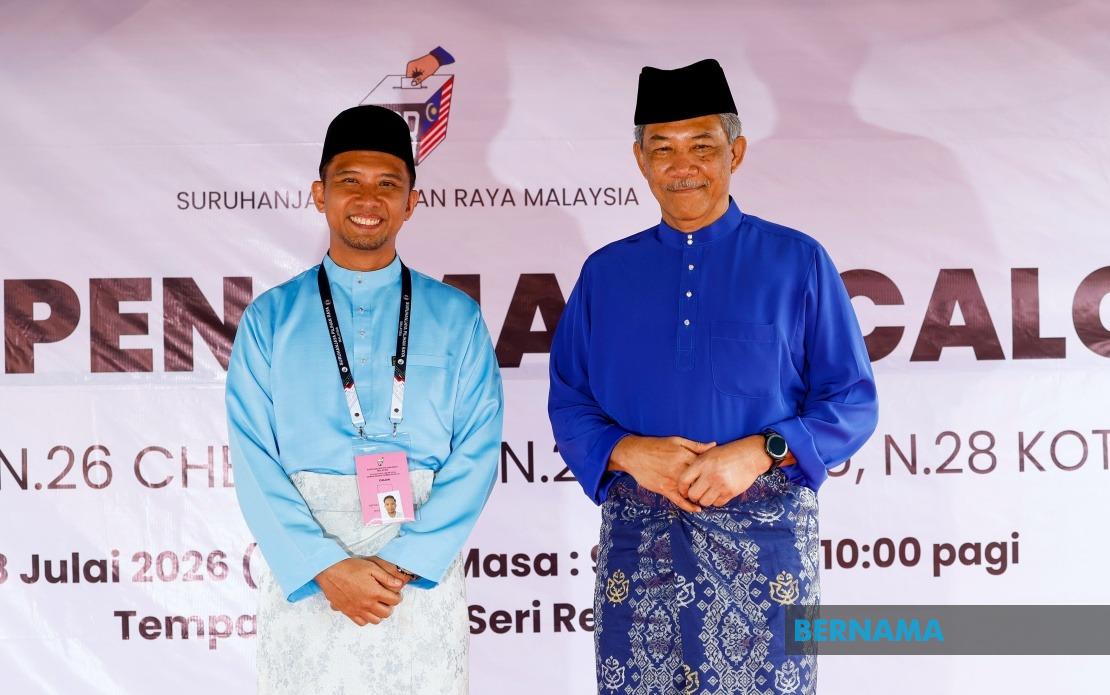
The Rantau state seat in Negeri Sembilan is shaping up as a compelling two-way battle in the 16th state election, pitting seasoned politician Datuk Seri Mohamad Hasan against an emerging healthcare professional, as nomination papers were processed and confirmed by the returning officer on July 18. Mohamad, who holds the positions of state Barisan Nasional chairman and Foreign Minister, represents continuity and political establishment experience, while his opponent, Dr Azizul Hakim Mahdi representing Pakatan Harapan, embodies a new generation of candidate prioritizing sectoral expertise and grassroots concerns.
The nomination process, which commenced at 9 am and concluded later that day at Dewan Sri Rembau, confirmed that only two candidates had submitted valid nomination documents for the Rantau constituency. All submitted papers met the stipulated requirements, officially clearing the way for a straightforward electoral contest. This two-cornered configuration differs notably from contests in other Negeri Sembilan seats, where multiple parties and independent candidates are competing, adding complexity to the overall state election landscape.
Moving into the campaigning phase, Mohamad emphasized that Barisan Nasional's strategy centres on methodically presenting its electoral platform to voters and building sufficient electoral support for victory on polling day. During a briefing to members of the press, he underscored the importance of coordinated, disciplined campaign operations across party machinery, suggesting that organisational rigour and systematic groundwork would be fundamental to securing positive electoral outcomes. His remarks reflected confidence in the coalition's organisational capacity and established voter networks across the constituency.
Dr Azizul Hakim, at thirty-five years of age, positioned his candidacy as offering voters a substantively different alternative grounded in professional medical expertise and community-focused priorities. His campaign messaging centres on healthcare accessibility and quality of life improvements for Rantau residents. With a decade of clinical experience and ownership stakes in three separate medical facilities—located in Senawang, Puncak Alam, and Melaka—he argues that his professional background provides genuine understanding of community healthcare deficiencies and solutions.
The medical practitioner's campaign platform emphasises healthcare as a foundational concern for constituency residents, particularly addressing gaps in accessibility and service quality. His framing positions healthcare delivery and doctor-led governance as interrelated propositions, attempting to translate his professional credentials into political legitimacy. This approach appeals to younger, urban-oriented voters and those concerned with healthcare provision efficiency, demographic segments that have shown receptiveness to professional rather than purely career-politician candidates in recent Malaysian elections.
Historically, Mohamad has dominated the Rantau seat with commanding electoral margins. In the 2023 Negeri Sembilan State Election, he secured 16,957 votes, defeating Pakatan Harapan's Rozmal Malakan, who collected 6,677 votes—producing a decisive 10,280-vote majority. This substantial previous victory illustrates Mohamad's deep entrenchment in the constituency and suggests structural barriers to opposition candidates seeking to unseat him. However, electoral dynamics shift across electoral cycles, and Dr Azizul Hakim's distinctive candidate profile and emphasis on healthcare could potentially mobilize voter segments dissatisfied with incumbent performance on these specific issues.
Beyond Rantau, the Negeri Sembilan state election presents voters with varied contest configurations across different constituencies. The Paroi seat features a three-cornered battle involving Pakatan Harapan's Ahmad Shahir Mohd Shah—serving as press secretary to the Menteri Besar—competing against Perikatan Nasional's Kamarol Ridzuan Mohd Zin and Parti Pribumi Bersatu Malaysia's Mohd Nazree Mohd Yunus. In Chembong, incumbent Barisan Nasional representative Datuk Zaifulbahri Idris faces a direct contest with Pakatan Harapan's Danish Nazran Murad. The Kota seat encompasses a three-way competition involving Barisan Nasional's Suhaimi Aini, Pakatan Harapan's Muhammad Allif Ibrahim, and Bersatu's Akmal Noradzmi Abdul Rahim.
The broader electoral context reveals the 36-member Negeri Sembilan State Legislative Assembly dissolved on June 5, with the Election Commission scheduling July 28 for early voting and August 1 as the official polling date. Early voting accommodates military and police personnel alongside civilian electors, recognizing these groups' scheduling constraints. Registered voter rolls encompass 889,490 eligible participants: 867,151 civilian voters, 16,884 military-affiliated early voters, and 5,455 police-category early voters. This voter composition shapes campaign messaging and turnout considerations, particularly regarding how parties mobilise base supporters across diverse demographic and occupational segments.
The Negeri Sembilan election carries implications beyond state-level politics, influencing Barisan Nasional's overall political momentum at a critical juncture in the national political cycle. Mohamad's performance in his personal constituency, combined with broader coalition outcomes across the state, will signal voter sentiment regarding federal coalitions and governance approaches. Conversely, strong performances by Pakatan Harapan and Perikatan Nasional candidates would indicate dissatisfaction with incumbent coalitional arrangements and potential shifting voting preferences among constituencies historically regarded as politically aligned.
For Rantau specifically, the straight contest between establishment politician and reform-oriented healthcare professional encapsulates broader tensions within Malaysian electoral politics between experience and institutional credibility on one hand, and demands for new approaches and professional governance on the other. The result will illuminate whether voter preferences in this constituency remain anchored in continuity and established political relationships, or whether they are shifting toward candidates promising sectoral expertise and issue-specific governance priorities. The August 1 outcome in Rantau will contribute meaningfully to understanding contemporary Malaysian voter motivations and the sustainability of existing political alignments across different demographic and geographical constituencies.

