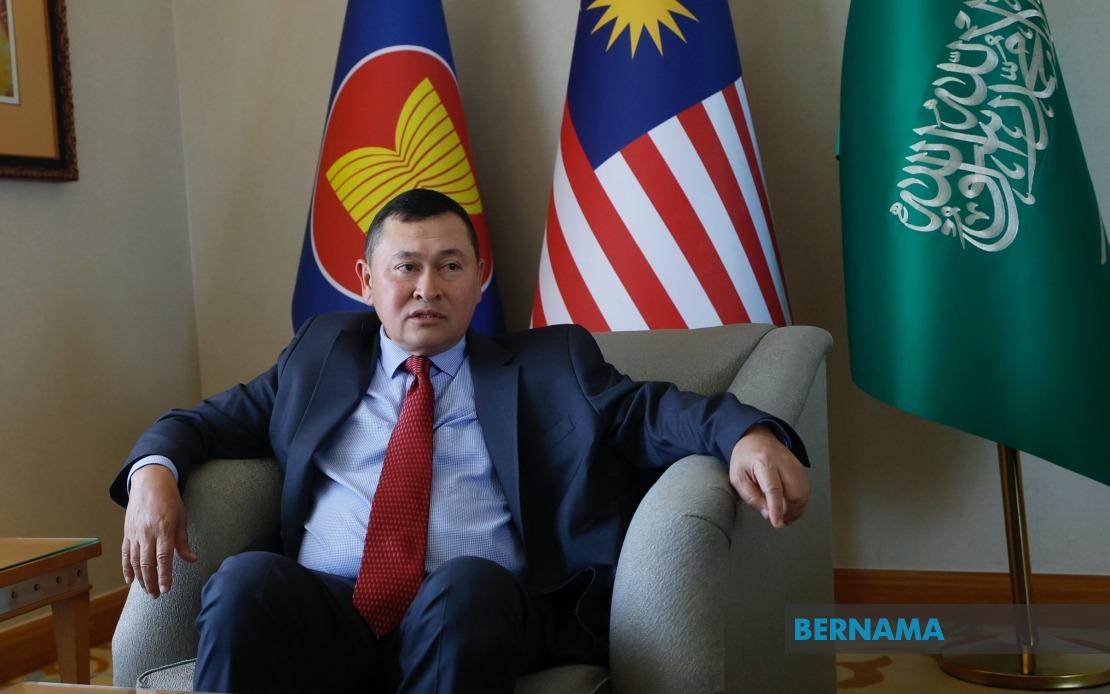
Foreign Minister Datuk Seri Mohamad Hasan is set to lead Malaysia's representation at an extraordinary gathering of the Organisation of Islamic Cooperation's Council of Foreign Ministers in Jeddah, where member states will grapple with the escalating Palestinian crisis and work towards a unified diplomatic response. The one-day meeting, confirmed by Malaysian Ambassador to Saudi Arabia Datuk Syed Bakri Syed Abdul Rahman, represents a critical moment for the 57-member bloc to coordinate its position on developments that have intensified regional tensions and humanitarian concerns.
Malaysia's participation in the summit underscores Kuala Lumpur's sustained commitment to the Palestinian cause, a cornerstone of the nation's foreign policy and a defining principle within the Organisation of Islamic Cooperation framework. Mohamad will articulate Malaysia's National Statement during proceedings, emphasising the country's steadfast backing for what it terms the legitimate Palestinian struggle and the right to establish an independent nation within the pre-1967 territorial boundaries. This framing reflects Malaysia's consistent diplomatic stance, rooted in international law and UN resolutions, distinguishing between Palestinian self-determination and broader geopolitical considerations.
The timing of the meeting carries particular weight given the ongoing military dimensions of the Israeli-Palestinian conflict. Syed Bakri outlined that Malaysia intends to place direct focus on what the government characterises as Israeli aggression against Palestinian territories, including military operations that have created severe humanitarian consequences. The Foreign Minister's intervention will specifically address the deteriorating conditions in Gaza, where civilian infrastructure and medical facilities have become focal points of international concern, as well as security developments unfolding across the West Bank region.
A secondary pillar of Malaysia's engagement concerns the expansion of Israeli settlements in occupied territories, a practice that Kuala Lumpur views as contravening international law and perpetuating the territorial fragmentation that undermines Palestinian governance and economic viability. By raising this issue within an OIC forum, Malaysia seeks to mobilise collective diplomatic pressure from predominantly Muslim nations, leveraging the bloc's combined influence at the United Nations and other multilateral platforms. This approach reflects an understanding that sustained coordination among OIC members can amplify the voice of the Global South on this issue.
Beyond rhetorical positioning, Malaysia has signalled its intention to push OIC members toward concrete action rather than ceremonial resolutions. Ambassador Syed Bakri stressed that Malaysia advocates for more substantive and measurable interventions from the international community, particularly from Islamic nations with varying degrees of diplomatic reach. This reflects frustration within some quarters regarding the gap between OIC statements and implementation capacity, a perennial challenge for the organisation when member interests or capabilities diverge.
Humanitarian assistance remains a tangible dimension of Malaysia's approach. Kuala Lumpur has committed itself to ensuring that aid channels reach affected Palestinian populations, recognising that relief operations constitute both a moral imperative and a practical avenue through which regional actors can demonstrate solidarity without direct military involvement. The government has expressed determination to maintain these assistance flows despite logistical and political complications, positioning humanitarian engagement as a complement to diplomatic advocacy.
The extraordinary meeting is expected to culminate in a formal resolution addressing the Palestinian question and Jerusalem's status, anticipated to include condemnations of what the OIC characterises as Israeli aggression and a call for coordinated member-state action. Such resolutions, while primarily symbolic in binding terms, establish benchmarks for national policies and provide rhetorical foundations for individual members to justify their foreign policy choices to domestic constituencies. For Malaysia, such instruments reinforce the government's narrative that Palestinian advocacy reflects both Islamic solidarity and alignment with international law principles.
Other agenda items on the docket include the election of a new OIC secretary-general, an administrative matter that can carry strategic implications given the secretary-general's role in shaping the organisation's priorities and diplomatic initiatives. The convergence of substantive Palestinian discussions with institutional leadership questions suggests that some member states may seek to align these processes, potentially supporting candidates with particular positions on Middle Eastern affairs or demonstrated commitment to OIC activism on Palestine.
Sidelined bilateral engagements add another dimension to Mohamad's visit. The Foreign Minister is slated to meet counterparts from multiple nations, conversations that extend beyond formal meeting business to explore trade opportunities, investment channels, and business partnerships. This reflects Malaysia's pragmatic approach to high-level diplomatic missions, treating them as opportunities to advance economic interests alongside political messaging. Such bilateral encounters often prove more consequential than plenary sessions in determining policy trajectories and establishing personal relationships that facilitate future cooperation.
For Malaysian stakeholders tracking Palestinian developments, the Jeddah meeting represents a reaffirmation that Kuala Lumpur continues to prioritise the issue within OIC structures despite competing regional concerns. The government's positioning at the meeting will likely inform parliamentary debates and civil society discussions regarding Malaysia's Middle East engagement. Moreover, Malaysia's advocacy within the OIC can influence how other Southeast Asian Muslim-majority nations calibrate their own positions, given Kuala Lumpur's diplomatic standing within the region and the bloc.
The extraordinary convocation itself signals that OIC member states perceive recent developments as requiring more than routine review through regular council schedules. This elevation of the Palestinian question to extraordinary status reflects both the severity of ground developments and the political imperative within Islamic nations to demonstrate responsiveness to public concern. Malaysia's active participation ensures that Southeast Asian perspectives, particularly those emphasising both regional stability and international law adherence, find representation in emerging OIC consensus positions.

