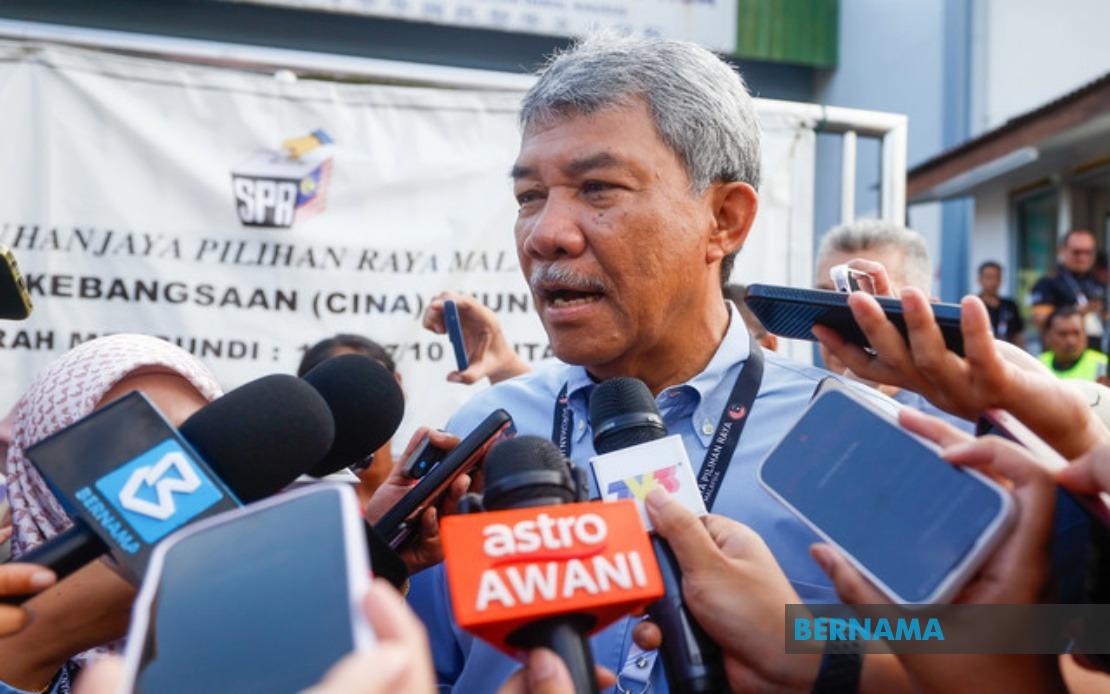
Malaysia's Foreign Minister Datuk Seri Mohamad Hasan is preparing to receive high-level delegations from two key Southeast Asian neighbours next week, as part of the annual bilateral engagement framework that underpins regional diplomacy. Cambodia's Deputy Prime Minister and Foreign Minister will be the first to arrive on Tuesday, followed by Laos' Deputy Prime Minister and Foreign Minister for separate Joint Commission Meetings. The visits underscore Malaysia's strategic importance in maintaining robust institutional ties across the Mekong region, even as global geopolitical tensions continue to reshape the diplomatic landscape.
This year Malaysia has assumed the hosting role for both bilateral commissions, reflecting the country's influence and diplomatic standing within Southeast Asia. Joint Commission Meetings serve as the primary mechanism through which Malaysia and its neighbours coordinate on trade, security, cultural exchanges, and regional cooperation initiatives. For Cambodia, the meeting will likely address ongoing trade relationships, border matters, and broader ASEAN cohesion, while the Laotian engagement carries significance given the growing importance of landlocked Laos in regional supply chains and infrastructure connectivity projects. The back-to-back nature of these visits demonstrates the compressed diplomatic calendar that foreign ministries must manage throughout the year.
Despite the scheduled nature of these visits, Mohamad had to make a difficult choice between honouring these bilateral commitments and representing Malaysia at an emergency meeting of Arab and Islamic countries in Amman, Jordan, on August 5. The gathering was convened to discuss developments in Palestine and formulate coordinated responses from Islamic nations to Middle Eastern tensions. This decision reveals the competing pressures that Malaysian foreign policy faces—balancing traditional Southeast Asian partnerships with broader responsibilities within the Organisation of Islamic Cooperation, of which Malaysia is an active member.
Rather than leaving the Palestinian portfolio unattended, Mohamad appointed Malaysia's Permanent Representative to the United Nations to attend the Amman meeting in his stead. This official, who also serves as Deputy Secretary-General of the Foreign Ministry, brings substantial expertise on Palestinian affairs and has the standing to represent Malaysia's interests at senior multilateral forums. The appointment reflects a pragmatic approach to delegation, ensuring that critical international issues are addressed without compromising bilateral relationships that require ministerial-level attention.
The decision underscores broader challenges confronting Malaysia's Ministry of Foreign Affairs, colloquially known as Wisma Putra, as it navigates an increasingly volatile global environment. Geopolitical uncertainties—ranging from tensions in the Taiwan Strait to developments in the Middle East and evolving great-power dynamics—have created additional burdens on the diplomatic apparatus. Mohamad noted that the ministry faces not only scheduled commitments but also unscheduled and emergency meetings that demand immediate attention, making long-term planning difficult and requiring constant recalibration of priorities.
The influx of official visits to Malaysia reflects the country's position as a regional hub for diplomacy and commerce. When foreign dignitaries schedule official visits, hosting them requires extensive coordination involving the foreign ministry, protocol offices, and other government agencies. The timing of Cambodia's and Laos' visits, compressed into a single week, creates operational challenges even as it demonstrates the regional consensus around engaging Malaysia for bilateral discussions. For Malaysian officials, this means juggling security briefings, ceremonial functions, and substantive negotiations simultaneously.
Cambodia and Laos represent distinct strategic considerations for Malaysia's regional policy. Cambodia, with whom Malaysia shares ASEAN membership and extensive economic ties, remains an important anchor in Southeast Asian stability. Trade flows between the countries have grown steadily, and educational exchanges have fostered people-to-people connections. Laos, meanwhile, occupies a crucial position in the Belt and Road Initiative and serves as a land bridge between Southeast Asia and China. Its infrastructure development has implications for regional logistics and economic integration, making Malaysian engagement with Laotian leadership strategically important for understanding the evolving architecture of intra-Asian connectivity.
The frequency of ministerial-level visits reflects how seriously Malaysia and its partners take bilateral relations. Joint Commission Meetings, held annually or biennially depending on the partnership, provide structured forums for reviewing progress on agreed initiatives and setting new priorities. These meetings typically produce joint statements outlining cooperative achievements and committing both parties to future action. For Malaysia, hosting these meetings signals openness to deepening relationships and positions the country as a stable, proactive partner in the region.
Moreover, these bilateral engagements occur within a broader context of regional institution-building. ASEAN's various mechanisms—the East Asia Summit, the ASEAN Regional Forum, and the ASEAN Plus Three—operate alongside bilateral commissions as overlapping platforms for coordination. Malaysia's active participation across these layers of engagement enhances its diplomatic influence and allows for nuanced negotiations on issues ranging from trade to maritime security. The Cambodian and Laotian visits, therefore, are not isolated events but rather threads in a complex tapestry of Southeast Asian diplomacy that Malaysia continues to weave.
For observers of Malaysian foreign policy, these visits illustrate the ministry's capacity for strategic multitasking even under pressure. While Mohamad could not personally attend the Amman meeting, ensuring high-quality representation prevented Malaysia from appearing disengaged from Islamic solidarity issues. Simultaneously, the decision to proceed with the bilateral meetings demonstrated commitment to Southeast Asian partnerships. This balancing act, performed quietly and without fanfare, reflects the sophisticated juggling that foreign ministers must undertake in an era when crises are concurrent and diplomatic calendars are relentless.

