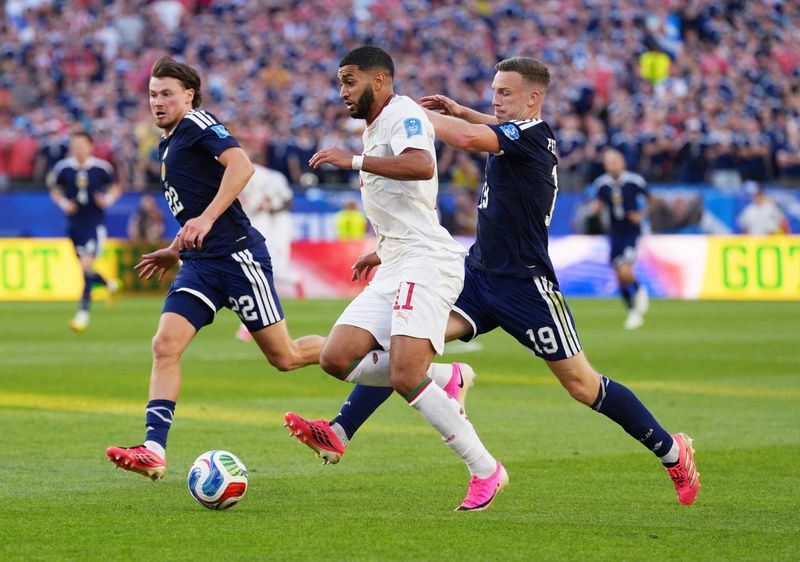
Morocco seized the initiative in Group C by dismantling Scotland with a clinical 1-0 victory at Foxborough, Massachusetts on Friday, with the winning goal arriving in such brisk fashion that it set a tournament record. Ismael Saibari's finish after 71 seconds proved to be the fastest goal in this World Cup, reflecting Morocco's intent from kickoff and their superior technical execution throughout a one-sided contest that never truly threatened to develop into a competitive affair.
The scoreline itself belies the comprehensive nature of Morocco's performance, which saw the North African side dictate play with an intensity and organisation that kept Scotland perpetually on the back foot. From the opening exchanges, the Moroccans displayed a pressing game that disrupted the Scots' rhythm, won the ball in dangerous areas repeatedly, and translated possession into attacking opportunities with alarming regularity. Scotland's vaunted defence, buoyed by their first World Cup victory in 36 years just days earlier against Haiti, found themselves constantly scrambled and disorganised, struggling to cope with the pace and movement of Morocco's attacking players.
The pivotal moment arrived within two minutes when Brahim Diaz's cross found Saibari arriving unmarked behind the Scottish backline, a gap created when central defender Grant Hanley ventured forward prematurely. The Moroccan forward's clinical finish left goalkeeper Angus Gunn with no chance, and the speed of the goal set the psychological tone for what would follow. Saibari, who has reportedly agreed terms with German giants Bayern Munich following a medical examination, demonstrated the clinical finishing that has attracted Europe's elite, becoming only the second African player to score in his opening two World Cup appearances—a distinction he now shares with Egypt's Mohamed Salah.
Throughout the first half, Morocco manufactured several opportunities to extend their lead. Azzedine Ounahi's incisive run down the left flank produced a dangerous pullback that two Moroccan players narrowly failed to convert, while Bilal El Khannouss tested Gunn's handling with a well-struck effort from another flowing move. The contrast in quality was stark: Scotland managed not a single shot on target until deep in the opening period's stoppage time, their attacking play reduced to sporadic forays that lacked the cohesion and precision of their opponents.
Morocco's dominance intensified after the interval, with El Khannouss forcing a decent save from Gunn early in the second half following a glancing header. Saibari himself came close to doubling the advantage when his deflected shot cannoned off the post, underlining Morocco's sustained pressure. The narrative of a Scotland comeback never materialised; instead, the Scots found themselves chasing shadows, attempting to pile on late pressure without ever genuinely threatening an equaliser despite a handful of half-chances.
The victory moves Morocco to four points from two matches, positioning them atop Group C with Haiti still to face on Wednesday. Scotland, having accumulated three points from their opening two games, must now navigate a daunting final encounter against five-time champions Brazil, a fixture that suddenly carries enormous significance given their precarious position. The mathematical reality is unforgiving: Brazil and Haiti play each other later on Friday, setting up a complex final matchday scenario where outcomes elsewhere in the group will determine qualification fortunes.
Morocco's performance carries particular significance given their status as surprise semi-finalists at the previous World Cup in Qatar just four years ago. That run suggested a team on the rise, capable of competing at the sport's highest level, and this dominant showing against Scotland reinforces suggestions that the North Africans possess the quality to mount another deep tournament run. The team's intensity and pressing game, combined with their technical ability in transition, represents a blueprint that has troubled even the established football powers.
Achraf Hakimi, Morocco's captain, was the subject of controversy before kickoff, receiving boos from Scottish supporters amid reports of an ongoing rape trial. Despite the distraction, Hakimi's team-mates delivered a professional, focused performance that spoke to their professionalism and preparation. The comments made by Azzedine Ounahi a day prior—suggesting Morocco's ambitions extend to the final itself—now appear less fanciful given the evidence of their play against Scotland, a team that had entered the contest with genuine confidence following their Haiti victory.
For Scotland, this reversal represents a sobering reality check. The optimism generated by their first World Cup win in more than three decades has been punctured by the harsh lesson that consistency at this level demands sustained excellence. Manager Steve Clarke's side must now regroup mentally and tactically ahead of their Brazil encounter, though their prospects of advancing now rest on a combination of their own performance and fortuitous results elsewhere in the group.