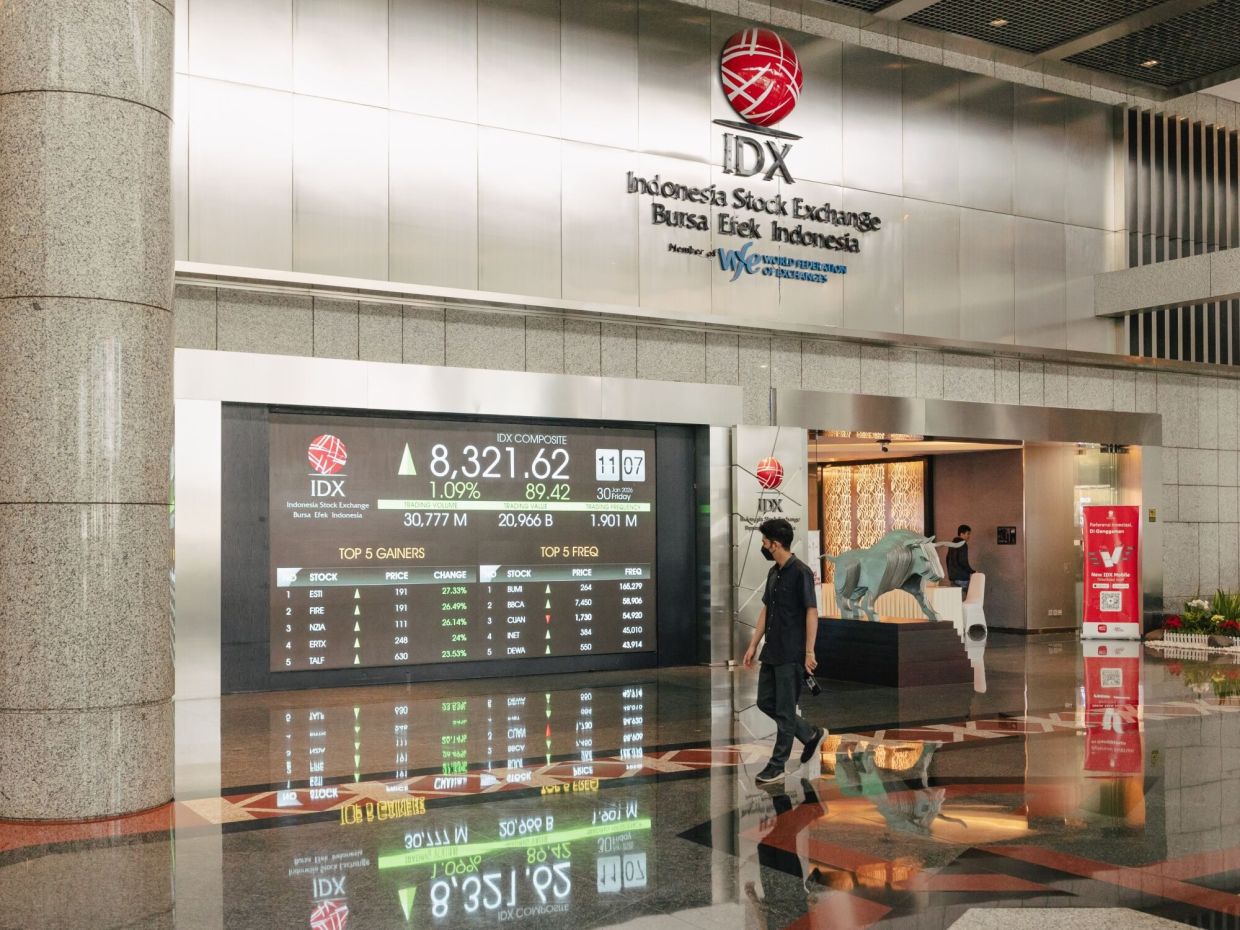
The world's leading index provider has amplified worries about Indonesia's suitability for global investors, releasing a scathing market accessibility review that highlights troubling gaps in ownership disclosure and coordinated trading patterns. The Thursday announcement adds fresh pressure on Southeast Asia's largest economy at a critical juncture, with MSCI set to announce next week whether it will strip Indonesia of its emerging market classification—a designation that carries enormous weight for the estimated $13 billion in passive funds currently benchmarked to the index.
MSCI's latest assessment has downgraded Indonesia's information flow criterion to negative status, a technical measure that captures the opacity surrounding true share ownership and market behaviour. The index provider argues that these visibility problems prevent proper price discovery and significantly hamper international investors' ability to calculate the genuine free float—the portion of shares genuinely available for trading rather than held in stable, controlling hands. For a market seeking to attract the world's largest institutional investors, such a finding strikes at the credibility of the entire trading ecosystem.
The timing of this review adds to mounting pressures on Indonesia's capital markets, which have endured a torrid year. Since January, when MSCI first publicly flagged concerns about potential downgrade, the Jakarta stock exchange has contracted sharply as nervous foreign investors have liquidated positions. This creates a vicious cycle: transparency concerns drive selling, which drives down valuations, which reinforces the perception of a deteriorating investment climate. Foreign portfolio outflows have reached approximately $3.65 billion year-to-date, contributing to a 29 per cent collapse in the benchmark Jakarta stocks index.
Indonesia's authorities had responded to the January warning with a flurry of reform measures designed to address MSCI's concerns. Regulators doubled the minimum free float requirement for listed companies to 15 per cent, a move designed to ensure that more shares remain available for ordinary trading rather than locked in the hands of controlling shareholders. Yet perhaps more dramatically, the top executives at both the stock exchange and the Financial Services Authority resigned on the same afternoon in January, signalling the severity of the crisis within the establishment itself. These steps demonstrated that the government took the transparency question seriously, though sceptics questioned whether such administrative reshuffles would truly overhaul deeply rooted practices.
Despite these remedial efforts, MSCI extended its review timeline in April and then proceeded to remove six companies from its indexes in May—most of them linked to prominent tycoons whose ownership structures epitomised the opacity problem. Each removal triggered fresh selling pressure, demonstrating how deeply the index provider's actions reverberate through a market where passive investors follow MSCI methodology. A formal downgrade would likely prove far more catastrophic, compelling tracking funds to mechanically liquidate holdings and pressuring active managers with MSCI-linked mandates to trim exposure, potentially unlocking enormous sales.
Not all market observers interpret MSCI's Thursday statement with unrelenting pessimism. Mohit Mirpuri, a fund manager at SGMC Capital in Singapore, offered a more balanced reading, noting that only one accessibility measure deteriorated while Indonesia maintained competitive scores against major emerging economies including South Korea, China and India across numerous other criteria. He cautioned against reading too much into the headlines, arguing that the deterioration was narrow rather than systemic, and maintained that his base case scenario anticipated Indonesia retaining its emerging market status when MSCI issues its verdict next week.
Yet this measured perspective faces stiff headwinds from macroeconomic realities that extend well beyond stock market mechanics. President Prabowo Subianto's administration has pursued populist policies that have unsettled investors—most notably large public spending commitments during a period of already-stretched fiscal capacity. The resulting loss of confidence in policymaking has battered the rupiah currency to record lows, prompting the central bank to embark on a campaign of interest rate increases to defend the exchange rate. MSCI's latest review also identifies structural currency market weaknesses: Indonesia lacks an efficient offshore rupiah trading market, while onshore markets face regulatory constraints, further limiting the flexibility available to international investors seeking to manage currency exposure.
The broader erosion of Indonesia's investment standing reflects this deepening confidence crisis. Both Moody's and Fitch downgraded their outlooks on Indonesia's sovereign debt to negative status earlier this year, explicitly citing reduced credibility in policymaking as the underlying concern. This represented a particularly stinging rebuke to a $1.4 trillion economy that once occupied a cherished position as a darling of emerging markets investors—the type of investment destination that featured prominently in growth-focused portfolios across the region and globally. Today that reputation lies in ruins, undermined by a combination of governance transparency issues in financial markets and broader questions about fiscal sustainability under the current administration.
The interconnected nature of these challenges means that even if MSCI decides to retain Indonesia's emerging market status, the reprieve would likely prove temporary unless authorities undertake more fundamental reforms. The transparency issues highlighted in the index provider's review reflect ingrained patterns of ownership concentration and related-party dealing that cannot be resolved through regulatory tweaks alone. They require demonstrable changes in corporate behaviour, sustained enforcement, and ultimately a shift in how Indonesian business elites view their obligations to minority shareholders and broader market integrity. Without such deeper transformations, Indonesia risks becoming trapped in a cycle of episodic crises punctuated by emergency measures that fail to address root causes.