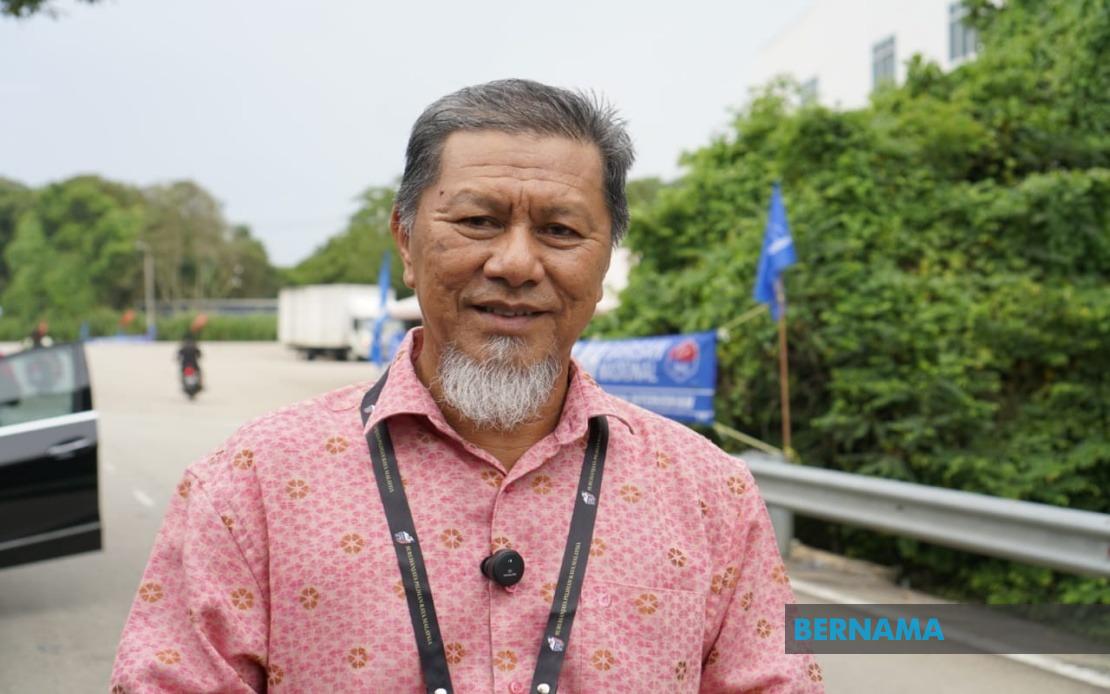
Muhd Najib Lep, the Pakatan Harapan candidate for the Bukit Pasir state constituency, has outlined an ambitious vision to unlock the economic potential of Bandar Universiti Pagoh through strategic infrastructure and social development. Speaking during the campaign period for the upcoming Johor state election, the Amanah division secretary acknowledged that the university township, despite hosting four major tertiary institutions, remains underutilised as a driver of local prosperity and requires substantial investment to realise its capabilities.
The township's current limitations present a significant handicap to both residents and the business community. Bandar Universiti Pagoh, home to prominent campuses including Universiti Tun Hussein Onn Malaysia (UTHM) and Universiti Teknologi Malaysia (UTM), lacks critical services that modern urban centres require. Banking infrastructure remains sparse, healthcare facilities are inadequate, and the absence of these essential amenities constrains the development of a thriving ecosystem around the educational institutions. Such gaps represent lost opportunities for economic spillover effects that university towns typically generate in more developed markets.
Muhd Najib's development strategy centres on translating the concentration of academic institutions into tangible income generation for surrounding communities. He emphasises that villagers, small and medium enterprises, and local business operators should benefit directly from the economic activity generated by the four higher education facilities. This approach reflects growing recognition across Malaysia that university towns must function as integrated economic ecosystems rather than isolated academic enclaves. The candidate argues that accelerated infrastructure development in Bandar Universiti Pagoh would create multiplier effects throughout the Bukit Pasir constituency, lifting the incomes and living standards of residents who currently remain peripheral to the educational hub's activities.
Beyond commercial infrastructure, Muhd Najib has identified affordable and conducive housing as a cornerstone of his campaign platform. He contends that adequate housing solutions address both immediate financial pressures on families and longer-term human capital development. By reducing housing-related financial stress, families gain breathing room in their budgets while children benefit from stable home environments conducive to academic success. This housing-first approach recognises that educational outcomes and economic mobility depend substantially on foundational living conditions, a principle increasingly acknowledged in Malaysian urban planning circles.
The candidate brings substantial credentials from his background in public service and military affairs. Having served in the Malaysian Armed Forces for nearly thirteen years before transitioning to political representation, Muhd Najib holds the chairmanship of the Pagoh Malaysian Armed Forces Veterans Association. This dual experience positions him to champion causes affecting both the general constituency and the veteran community, a demographic often overlooked in mainstream electoral discourse. His familiarity with armed forces affairs grants him credibility when addressing veteran-specific concerns that require technical policy understanding.
Veteran welfare remains a pressing concern in Malaysian politics, particularly regarding pension equity. Muhd Najib has identified the disparity between military retirees who left service before 2013 and those departing after that year as a substantial fairness issue warranting immediate attention. The pension differential creates a two-tier retirement system that veterans perceive as arbitrary and inequitable. This pension inequity has festered across multiple electoral cycles without resolution, making it a legitimate grievance that resonates with retired service personnel and their families throughout Johor and beyond.
Muhd Najib's prior electoral experience provides a foundation for his current campaign. He successfully won the Bukit Pasir seat during the 14th General Election, though the transition from federal to state-level politics requires distinct constituencies and different campaign dynamics. His track record of community engagement subsequent to his previous term demonstrates sustained commitment beyond electoral cycles, a factor he highlights as evidence of his dedication to constituent welfare rather than opportunistic candidacy.
The electoral contest in Bukit Pasir reflects the fragmented political landscape currently characterising Malaysian electoral competition. The three-cornered contest pits Muhd Najib against Mohamad Fazli Mohamad Salleh, the incumbent assemblyman representing Barisan Nasional, and Mohd Idzharruddin Mohd Nasirruddin fielded by Perikatan Nasional. The previous election margin of 198 votes demonstrates the seat's competitive nature, suggesting that the 2024 contest remains genuinely open to all three candidates. Such tight margins place considerable weight on ground organisation, voter sentiment shifts, and campaign effectiveness.
The broader Johor state election encompasses 56 assembly seats contested by 172 candidates, with voting occurring on July 11. The electorate comprises 2,727,926 registered voters across the state, making this a significant democratic exercise for a major Malaysian state. Results will substantially influence Johor's political direction and potentially signal broader trends affecting national politics. For constituencies like Bukit Pasir where multiple candidates genuinely contest, the outcome depends heavily on voter mobilisation and persuasion in final campaign days.
Muhd Najib's campaign messaging emphasises concrete local development and specific constituency-level benefits. This ground-level focus reflects the reality that state elections revolve around immediate local concerns rather than national party platforms. Voters in Bukit Pasir assess candidates partly on their capacity to secure resources, improve infrastructure, and address constituent grievances. His framing of Bandar Universiti Pagoh development resonates with both the educated middle class working at or studying at the institutions and surrounding communities seeking economic participation and improved living standards.
The candidate's confidence derives from reported strong voter engagement and positive reception during campaigning. He describes the community response as unwavering, suggesting genuine constituency support rather than formulaic campaign activity. Such grassroots sentiment, if accurately reflected, indicates that Muhd Najib's message architecture aligns with constituent priorities. However, the previous narrow margin in this constituency means that campaign momentum and voter turnout dynamics will ultimately determine the election outcome.
For Malaysian observers monitoring state-level political developments, the Bukit Pasir contest exemplifies how opposition parties increasingly focus on concrete development proposals and constituent service delivery rather than pure partisan messaging. Muhd Najib's emphasis on university township development, housing affordability, and veteran welfare represents substantive policy positioning capable of resonating with pragmatic voters. The election result will provide insights into whether such development-focused platforms can overcome the incumbency advantage and organisational resources typically favouring Barisan Nasional in Johor constituencies.

