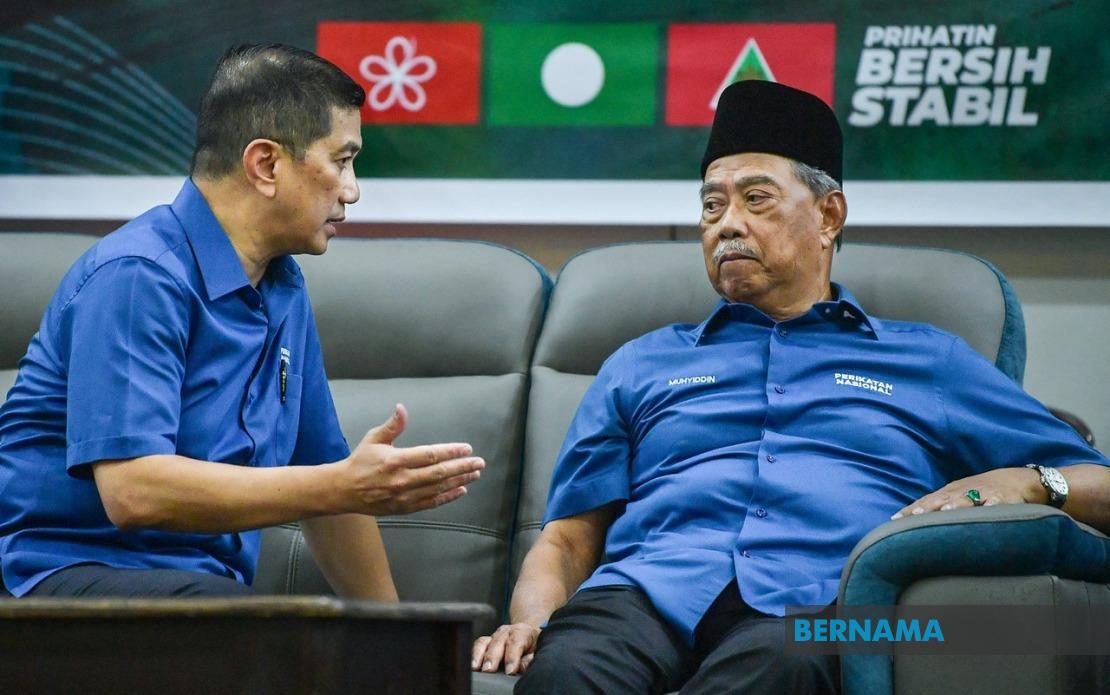
Former Prime Minister Tan Sri Muhyiddin Yassin has expressed approval of the government's recently announced set of economic relief measures, which take effect on September 1, emphasizing the importance of swift implementation to help ordinary Malaysians contend with mounting household expenses. The measures, unveiled by Prime Minister Datuk Seri Anwar Ibrahim on Sunday, represent an attempt to address widespread public anxiety about rising costs and financial hardship affecting households across multiple income levels.
Central to the relief package is the restoration of the RON95 fuel subsidy eligibility cap to 300 litres monthly, an increase from the previous 200-litre threshold. This adjustment stands to benefit motorists who frequently commute for work or business purposes, particularly in urban and semi-urban areas where private vehicle dependency remains high. Alongside this fuel provision, the government has raised the e-Invoicing exemption ceiling for businesses, now extending relief to enterprises with annual turnover reaching RM3 million, a meaningful expansion that covers a broader segment of the small and medium business community.
Muhyiddin, in his capacity as Bersatu president, stressed that the announcement alone carries limited impact without rigorous execution. He emphasized the necessity for all relevant government departments and agencies to release promised funds without delay and ensure that eligible recipients—both individuals and commercial entities—receive their entitlements efficiently. This conditional endorsement reflects a pragmatic understanding that policy effectiveness depends heavily on administrative capability and institutional follow-through, concerns that have historically plagued Malaysian government assistance schemes.
The former premier identified micro-enterprise support as particularly significant, welcoming an additional RM1 billion in micro-credit facility allocations alongside RM200 million in direct grants earmarked for petty traders, night market operators, and women engaged in home-based commercial ventures. These provisions target Malaysia's substantial informal economy, where millions of workers operate outside formal employment structures and often lack access to conventional banking services. By channeling support directly toward micro, small, and medium enterprises (MSMEs), the package addresses a frequently overlooked segment that generates substantial employment and household income.
Educational and healthcare initiatives within the relief package also drew Muhyiddin's attention. An additional RM500 million allocation for school maintenance is intended to improve facilities and learning environments across the nation's educational institutions, particularly in under-resourced areas. Simultaneously, the government has committed to digitalizing healthcare services, a modernization effort that could streamline patient access to medical care and reduce administrative burdens on health facilities already struggling with capacity constraints.
The inclusion of subsidized artificial intelligence software subscriptions for youth represents a forward-looking component of the relief measures, positioning the package beyond immediate cost-of-living concerns toward economic resilience and human capital development. Access to AI tools for younger generations could enhance digital literacy and provide competitive advantages in an increasingly technology-dependent job market, though implementation details regarding which youth cohorts qualify and how uptake will be monitored remain unclear from the announcement.
Despite his overall approval, Muhyiddin advocated for more expansive government action, suggesting that these initial measures should serve as a foundation for deeper systemic reforms. He specifically called for comprehensive reviews of taxation frameworks and subsidy rationalization policies that he contends directly contribute to financial strain experienced by ordinary Malaysians. This observation points toward structural economic questions that extend beyond temporary relief packages, addressing the underlying fiscal architecture that shapes public purchasing power and business viability.
Muhyiddin's call for further action reflects broader political positioning within Malaysia's fractious coalition government, where various factions advocate for different policy priorities. His emphasis on future comprehensive measures signals that the Bersatu faction views current initiatives as insufficient and expects the government to demonstrate sustained commitment to addressing economic challenges through the 2027 budget cycle. This sets expectations for ongoing policy evolution and suggests potential political leverage points for opposition-aligned ministers within the governing coalition.
The timing of these announcements, arriving ahead of the fiscal year's final quarter, suggests deliberate political planning to generate public goodwill before the year concludes and budget discussions intensify. For Malaysian voters experiencing genuine financial pressure from inflation, transportation costs, and utility expenses, such visible government action—whether ultimately effective or not—carries psychological significance in perceptions of government responsiveness.
Implementation challenges loom large, however. Malaysian government agencies have historically struggled with efficient distribution of assistance schemes, with bureaucratic delays, eligibility confusions, and targeting errors frequently undermining stated objectives. The success of this package depends substantially on whether implementing agencies can overcome institutional obstacles and reach intended beneficiaries promptly, a test that will reveal the government's genuine capacity for economic management.
For the broader Southeast Asian region, Malaysia's approach to cost-of-living relief offers a case study in how middle-income nations balance immediate public demands against longer-term fiscal sustainability. Other ASEAN governments facing similar inflation and affordability pressures may observe whether targeted subsidies, micro-credit expansion, and digital service investments effectively stabilize household finances and business activity, or whether such measures merely provide temporary respite while underlying economic imbalances persist.

