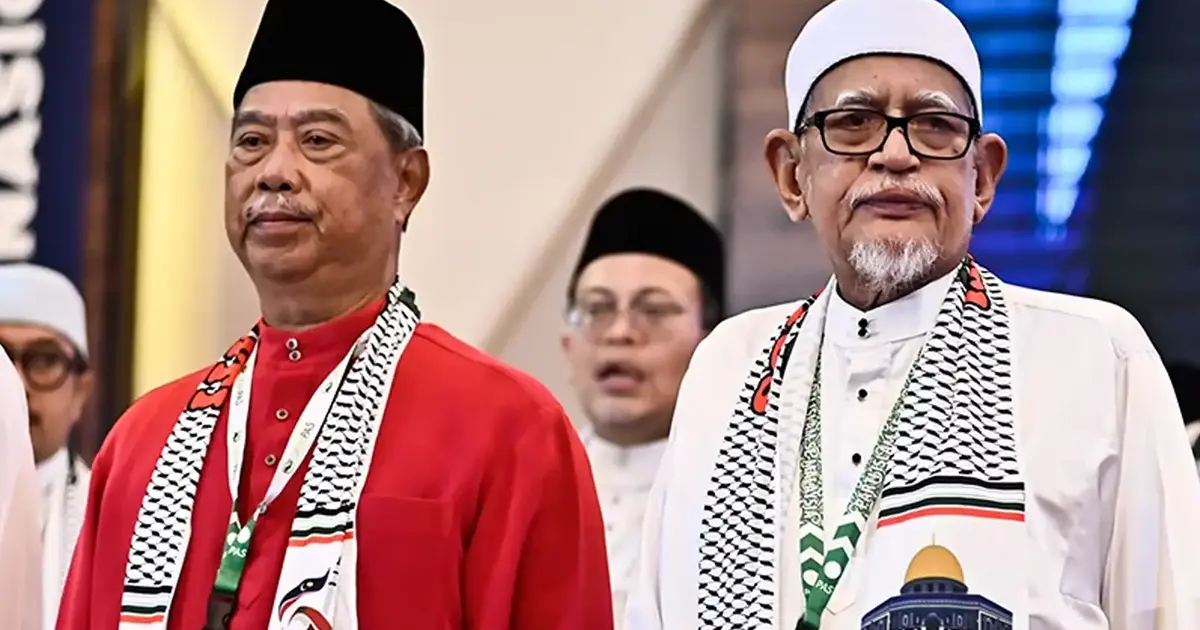
Bersatu president Muhyiddin Yassin has launched a sharp rebuke against PAS, accusing the Islamic party of pursuing bilateral talks with Barisan Nasional without consultation or coordination with its Perikatan Nasional allies. The accusation marks an escalation in tensions within the coalition framework that has shaped Malaysian politics since the 2022 general election, revealing fractures in what was once positioned as a unified opposition force.
Muhyiddin's criticism centres on what he characterises as unilateral decision-making by PAS leadership, suggesting the party is prioritising its own strategic interests over the collective welfare of the Perikatan Nasional coalition. This approach, according to the Bersatu chief, undermines the foundational understanding that coalition partners should operate with transparency and mutual accountability. The dispute underscores a fundamental challenge facing opposition alliances in Malaysia—balancing the autonomy of individual parties with the need for coordinated action.
The timing of these allegations is significant, occurring within a context where Malaysian political coalitions have demonstrated considerable volatility. The formation and reformation of political blocs following the 15th general election created new dependencies and partnerships that have not always proven stable. PAS's simultaneous engagement with multiple political actors reflects the party's calculation that maintaining flexibility offers strategic advantages in an unpredictable political landscape.
For observers of Malaysian politics, PAS's approach represents a departure from traditional coalition discipline. Historically, opposition pacts have functioned most effectively when member parties adhered to agreed frameworks and avoided parallel negotiations that might compromise collective leverage. The Islamic party's apparent divergence from this model suggests it views the current political arrangement as temporary or subject to renegotiation based on evolving circumstances.
The implications of this rupture extend beyond the immediate coalition dynamics. Barisan Nasional, as a recipient of PAS's diplomatic overtures, gains a potential opportunity to exploit divisions within Perikatan Nasional. Any successful bilateral understanding between BN and PAS would fundamentally alter the arithmetic of Malaysian parliamentary politics, potentially strengthening the historically dominant coalition and destabilising the opposition configuration that emerged after the 2022 election. This scenario carries particular relevance for Perikatan Nasional's ability to function as a coherent political force.
Muhyiddin's response also reflects broader concerns about party leadership and loyalty within coalition frameworks. When individual parties prioritise negotiations with other blocs without informing partners, it raises questions about commitment to collective agreements and the viability of formal political alliances. The accusation essentially challenges PAS's reliability as a coalition member, suggesting the party cannot be trusted to honour implicit understandings about exclusive alliance commitments.
For Malaysian voters and political analysts, this development underscores the fragility of the current political settlement. The coalition system that has dominated Malaysian politics for decades—and the opposition structures that have periodically challenged it—depends on members accepting constraints on their autonomous action. When these constraints break down, as appears to be happening between Bersatu and PAS, the entire architecture becomes vulnerable to reshuffling.
The dispute also illuminates PAS's strategic positioning within Malaysian politics. As an Islamic party with a substantial grassroots constituency, PAS maintains leverage that neither Bersatu nor most BN components can match independently. This advantage may embolden the party to view itself as able to negotiate simultaneously with multiple blocs without severe consequences. However, this calculation risks antagonising allies while offering only speculative benefits from engagement with BN.
Bersatu's public criticism represents an unusual step of openly airing intra-coalition grievances rather than managing them through private channels. This escalation suggests that behind-the-scenes negotiations between the parties have either failed or never occurred, indicating a breakdown in the communication mechanisms that coalitions typically employ to resolve such disputes. The willingness to engage in public recriminations suggests both parties may be preparing their political supporters for a significant shift in alliance structures.
The crisis also reflects institutional weaknesses in how Malaysian political coalitions coordinate policy and strategy. Unlike some international coalition systems with formal protocols and dispute resolution mechanisms, Malaysian alliances often rely on personal relationships and informal understandings. When these relationships deteriorate, or when leaders calculate that separate negotiations offer advantages, formal structures provide limited recourse.
Looking forward, Muhyiddin's statement serves as a warning to PAS regarding the costs of perceived disloyalty while simultaneously signalling to Bersatu supporters that the party leadership is defending coalition interests. Whether this public confrontation represents a temporary disagreement or a prelude to fundamental realignment remains uncertain. The coming weeks will reveal whether the parties can restore coordination through dialogue or whether they are beginning a process of gradual separation that could reshape Malaysian parliamentary politics.

