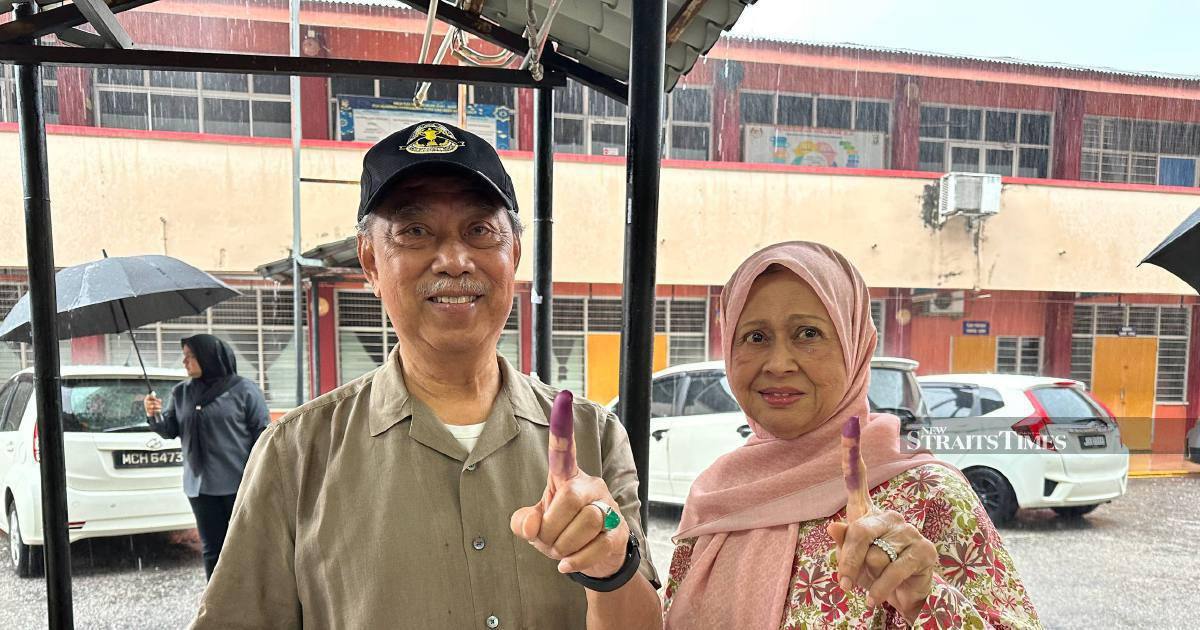
Johor's state election unfolded under challenging weather conditions today, yet Perikatan Nasional's Bersatu party remained optimistic about mobilising voters despite persistent downpours sweeping across several parts of the southern state. Party leadership, including Vice President Muhyiddin Yassin, publicly voiced hopes that accumulated voter participation would exceed the 70 per cent threshold, signalling their confidence in the electorate's commitment to the democratic process even as meteorological factors threatened to complicate polling day logistics.
The strategic focus on voter turnout figures reflects deeper political calculations within Malaysian electoral dynamics. In state-level contests, turnout rates frequently serve as bellwethers of public engagement and, more significantly, as indicators of which coalition's machinery proves more effective at mobilising their respective bases. A turnout exceeding 70 per cent would typically suggest vigorous participation from multiple demographic segments, potentially favouring parties with broad-based support networks and efficient ground operations.
The weather challenge presented a genuine logistical test for electoral administrators and voters alike. Heavy rainfall, particularly in multiple districts simultaneously, historically creates friction in Malaysia's voting process through flooding of access roads, difficulty for elderly or disabled voters to reach polling stations, and general public reluctance to venture outdoors during inclement weather. Bersatu's public statements signalled either genuine confidence in their voter mobilisation infrastructure or strategic messaging designed to project organisational competence ahead of results announcements.
Johor's electoral significance extends beyond the state's borders. As Malaysia's southernmost peninsula state and home to industrial regions with substantial populations, electoral outcomes here carry implications for national political alignments. The state functions as a strategic theatre where different political coalitions test their messaging, organisational capacity, and appeal to multiethnic constituencies—factors directly relevant to federal-level calculations.
Muhyiddin's prominence in these pre-election statements underscored Bersatu's positioning within the broader Perikatan Nasional coalition structure. As a senior figure within the bloc, his public commentary conveyed coalition-wide aspirations and attempted to frame the election narrative around voter enthusiasm rather than weather-related complications. The emphasis on surpassing 70 per cent suggested internal party benchmarks that strategists believed would translate into satisfactory seat allocations and political vindication.
Rain's impact on election participation in Malaysia carries historical precedent. Previous state and federal elections have witnessed reduced turnout during monsoon seasons or sudden downpours, though the correlation remains inconsistent across different electoral cycles and constituencies. Urban constituencies sometimes show greater weather resilience through better infrastructure access, whilst rural areas occasionally experience more significant participation declines when flooding compromises road networks.
For Malaysian observers monitoring coalition dynamics, Johor's election results would provide concrete data on the relative strength of competing electoral machines and their respective appeal across demographic segments. The turnout figures, regardless of whether they reached Bersatu's 70 per cent target, would offer interpretive material for political analysts assessing where momentum lay heading toward potential federal elections.
The weather-turnout nexus also reflects broader questions about electoral accessibility and democratic representation. In tropical Malaysia, where monsoonal patterns are predictable, structural considerations around voting mechanisms during adverse weather remain perpetually relevant. Whether current arrangements adequately accommodate the democratic rights of voters who face genuine obstacles during inclement conditions continues generating discussions among electoral reform advocates.
Bersatu's confidence framing, delivered through party leadership during polling, represented an attempt at narrative control at a moment when results remained undetermined. By emphasising voter determination despite weather, party statements endeavoured to interpret subsequent outcomes—whether favourable or disappointing—through a lens of citizen commitment to democratic participation. This rhetorical positioning provides flexibility for post-election analysis and maintains focus on the electoral act itself rather than potentially unfavourable final tallies.
The Johor election ultimately tested not merely voter commitment but also the administrative and logistical capabilities of Malaysia's Electoral Commission during adverse conditions. Successfully conducting elections amid heavy rainfall requires coordination across multiple government and civil society actors, from polling station personnel managing logistics to security personnel maintaining order and transportation authorities managing access routes. The extent to which these systems functioned effectively under pressure would also contribute to assessments of electoral institutional readiness.
As voting proceeded throughout the day, the actual participation rate would ultimately either vindicate Bersatu's optimism or require recalibration of their electoral strategy assessments. The relationship between voter determination, weather resilience, and organisational effectiveness would become evident only through concrete figures. For Malaysian political observers, the intersection of meteorological challenges and democratic participation in Johor provided a snapshot of how electoral processes function under real-world constraints in Southeast Asia's specific environmental and political contexts.

