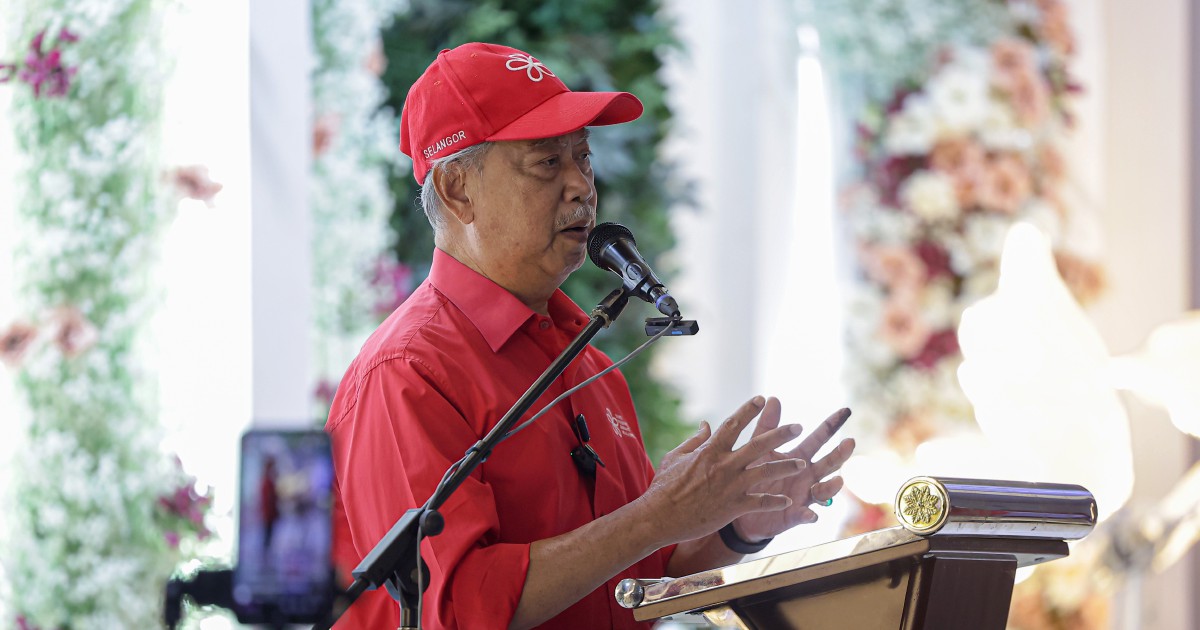
Bersatu president Tan Sri Muhyiddin Yassin has directly challenged Umno vice-president Datuk Seri Mohamed Khaled Nordin over remarks depicting his party as a destabilising force in the Negri Sembilan election campaign. The barbed exchange underscores deepening friction between two major components of the ruling Barisan Nasional coalition as they prepare for what promises to be a closely contested state poll.
Muhyiddin's robust response came after Khaled suggested that Bersatu's decision to field candidates would split the anti-government vote in ways advantageous to the opposition. The accusation struck at the heart of coalition unity, implying that Bersatu's participation threatened the broader electoral objectives of the traditional establishment alliance. For Muhyiddin, such criticism from within the coalition tent appeared particularly galling, raising questions about the viability of sustained cooperation between the two parties at state and national levels.
The Bersatu leader's rebuttal emphasised his party's legitimate standing within the Barisan framework and its entitlement to contest seats across Malaysia. By framing the dispute in terms of democratic rights rather than electoral mathematics, Muhyiddin sought to position Bersatu as a principled participant rather than an opportunistic interloper. This rhetorical strategy also implicitly questioned whether Umno, as Barisan's dominant member, could unilaterally dictate participation rules to junior coalition partners without causing resentment and factional division.
The Negri Sembilan election has become a focal point for coalition tensions that have simmered beneath the surface since the 2022 transition to Umno-led government. With multiple power centres competing for influence within Barisan, each election represents a contest not merely against opposition parties but also for relative positioning within the alliance itself. A strong showing by Bersatu in Negri Sembilan could strengthen Muhyiddin's hand in internal coalition negotiations, while a disappointing performance might embolden rivals within the partnership to further marginalise the party.
Khaled's "spoiler" characterisation appears calculated to pressure Bersatu into withdrawing candidates or limiting its contest to a manageable number of seats. Such a move would theoretically consolidate anti-opposition votes more efficiently, though it would require Bersatu to accept a subordinate role and restricted electoral space. The implicit bargain—accept a diminished presence and preserve coalition harmony—holds little appeal for a party struggling to maintain relevance and parliamentary representation after its dramatic fall from the pinnacle of federal power.
For ordinary Malaysian voters, these coalition dynamics carry significant implications. When major alliance partners publicly bicker over electoral strategy, it suggests deeper cracks in the partnership that could affect governance stability and policy coherence. Negri Sembilan residents casting ballots must contend not simply with a straightforward choice between government and opposition, but with a more complex landscape where coalition members are simultaneously competing against one another while theoretically aligned on major policy platforms.
The timing of this dispute also matters. Coming in the campaign's intensifying phase, public disagreement between Umno and Bersatu figures risks confusing voters about the coalition's core message and competence. Opposition parties will certainly exploit such divisions, arguing that a fractious government alliance cannot effectively serve public interests. This narrative proves particularly potent if coalition squabbling overshadows substantive discussion of development priorities and service delivery improvements that voters ultimately care about most.
Muhyiddin's refusal to retreat from Khaled's criticism suggests he perceives more potential benefit from fighting on multiple fronts—against opposition parties in Negri Sembilan while simultaneously defending Bersatu's coalition standing—than from accepting a marginal role. This aggressive posture may rally Bersatu supporters who fear their party is being sidelined within Barisan, but it simultaneously raises the political stakes if the party underperforms at the ballot box. A weak Negri Sembilan result could be weaponised by internal coalition critics as evidence that Bersatu lacks electoral appeal and should accept a further diminished status.
The broader Southeast Asian context suggests that coalition stability remains crucial for sustained governance across the region. Malaysia's experience shows how internal alliance fractures can undermine public confidence in government institutions and create openings for more disruptive political forces. When long-established coalitions begin publicly squabbling over fundamental issues like electoral participation rights, it signals that the underlying consensus holding the partnership together has eroded significantly.
For observers tracking Malaysian politics, the Muhyiddin-Khaled exchange represents more than a localised spat over Negri Sembilan. It reflects the much larger challenge facing the country's post-2022 political settlement: whether Umno, Bersatu, and other coalition members can genuinely cooperate as equal partners or whether one party will seek to dominate the others through incremental marginalisation. The answer emerging from this and subsequent contests will shape not just coalition stability but also the broader trajectory of Malaysian governance and democratic health in the years ahead.

