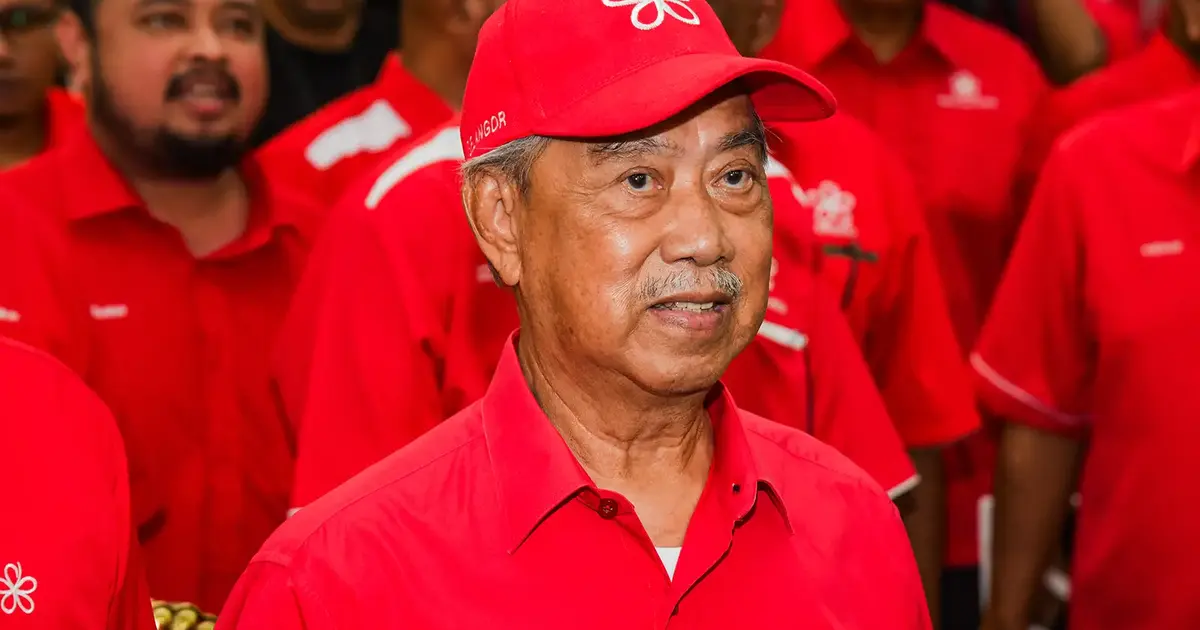
Bersatu president Muhyiddin Yassin has signalled renewed optimism about the party's capacity to expand its electoral appeal beyond the Malay community, arguing that the organisation no longer requires partnership with PAS to achieve meaningful support among non-Malay voters. This assertion reflects a strategic recalibration for Bersatu as Malaysian politics continues to fragment and realign following recent electoral cycles that have tested coalition frameworks across the country.
Muhyiddin's confidence stems from an assessment that Bersatu's prior difficulties in attracting non-Malay support resulted specifically from voter reservations about PAS's brand of politics rather than fundamental obstacles facing Bersatu itself. The distinction is significant because it positions the party as capable of appealing to a broader demographic spectrum once freed from what some voters perceive as ideological constraints imposed through formal alliances with the Islamist party. This framing allows Bersatu to present itself as a pragmatic, inclusive force in Malaysian politics without being tethered to positions that traditionally alienate urban and non-Muslim constituencies.
The statement carries implications for Malaysia's broader political landscape, where coalition-building has become increasingly complex following the fragmentation of both Barisan Nasional and Pakatan Harapan structures. Non-Malay voters, who constitute approximately 40 percent of the Malaysian electorate, have become critical swing voters in closely contested electoral battles. Their capacity to determine outcomes in marginal seats means that parties seeking to govern must either build genuine cross-community coalitions or risk remaining perpetually in opposition. Bersatu's pivot toward this demographic recognises this mathematical reality and suggests the party believes its governance record and policy platform can resonate beyond traditional Malay-Muslim support bases.
PAS, by contrast, has consolidated its position as a religiously-oriented party with explicit Islamic governance objectives. While this approach has solidified support among certain constituencies, particularly in states like Kelantan and Terengganu, it has presented a political ceiling when seeking to expand into urban centres and non-Muslim communities. Voters in these areas frequently cite concerns about religious policies, education curriculum, and social conservatism as reasons for withholding support. By separating from PAS strategically, Bersatu potentially removes these objections as obstacles to its own political advancement.
The timing of Muhyiddin's remarks reflects Bersatu's current positioning within Malaysian political configurations. The party has experienced significant internal and external pressures in recent years, including membership fluctuations and shifting alliances. Demonstrating capacity for independent political viability, particularly among electorally significant non-Malay communities, serves to reinforce Bersatu's relevance and attractiveness as a coalition partner for other parties. If Bersatu can credibly demonstrate appeal across community lines, it becomes a more valuable asset in any future governing arrangements, as it would bring electoral reach that purely communal parties cannot deliver.
This strategic articulation also addresses internal party dynamics. Bersatu members who have expressed frustration with PAS's influence over coalition decision-making may find encouragement in leadership statements suggesting greater independence and flexibility. The party can project an image of pragmatic centrism—distinct from PAS's religious orientation and yet maintaining credibility with Malay-Muslim voters who form its core base. This positioning mirrors successful parties in other democratic contexts that manage to appeal across community lines while retaining strong support within their primary constituencies.
Non-Malay voters have demonstrated increasing sophistication in evaluating coalition components and holding parties accountable for alliance decisions. Many Chinese and Indian Malaysian voters, as well as indigenous Sabahan and Sarawakian communities, evaluate political parties not merely on ethnicity-based representation but on economic policy, governance competence, and institutional integrity. Bersatu's argument that it can deliver these elements without the ideological baggage some associate with PAS partnership could prove persuasive to pragmatic centrist voters seeking alternatives to incumbent opposition alliances.
However, building such cross-community support requires more than rhetorical repositioning. Bersatu would need to substantively address policy areas of concern to non-Malay constituencies—religious freedom safeguards, economic opportunities for minority business communities, and equitable resource allocation across regions and ethnic groups. Previous statements about inclusive governance mean little without institutional commitments that voters can monitor and parties can be held accountable for implementing.
The broader context involves Malaysia's ongoing political evolution as traditional communal-based coalitions gradually yield to more issue-focused and performance-based alignments. Younger voters particularly show reduced attachment to ethnic-defined political identities and increased interest in governance outcomes, corruption prevention, and economic competitiveness. Bersatu's confidence about appealing to non-Malay voters may reflect recognition that this demographic shift is underway and will likely accelerate across coming electoral cycles.
Regionally, Malaysian political developments carry implications for Southeast Asia's democratic dynamics. Successful cross-community coalition-building demonstrates that diverse societies can construct governance frameworks transcending narrow communal interests. Conversely, if polarisation deepens and political parties increasingly entrench within ethnic and religious silos, it suggests challenges for regional stability and cooperation. Muhyiddin's comments contribute to ongoing regional conversation about whether multiethnic democracies in Southeast Asia can develop political cultures emphasising shared national interests over identity-based sectarianism.

