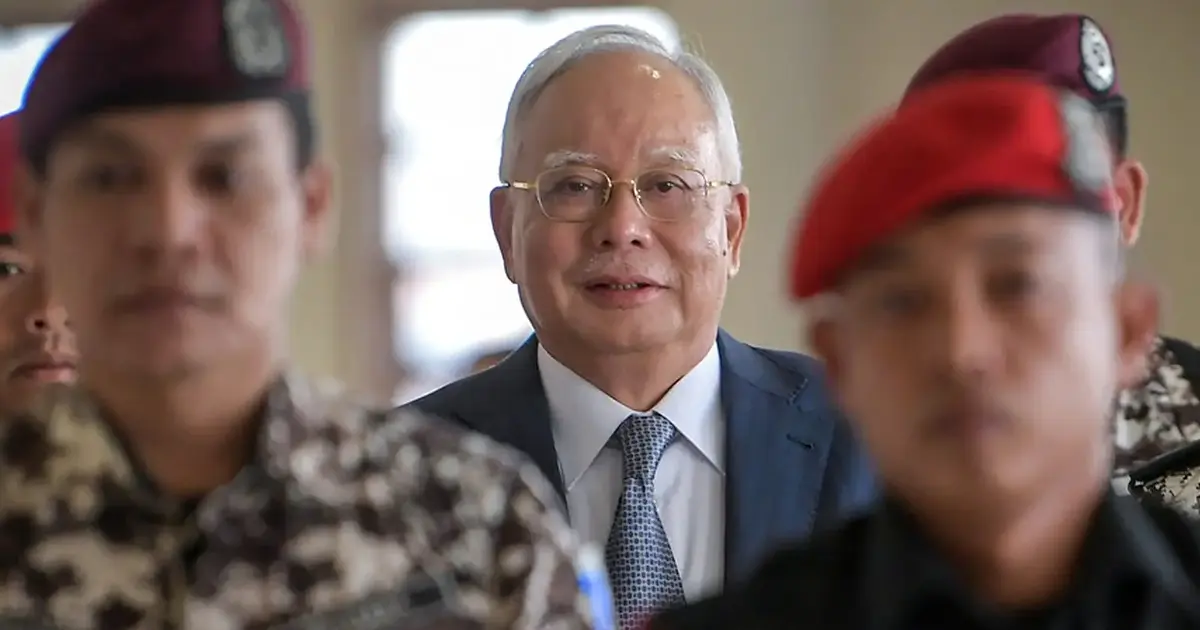
Former Prime Minister Najib Razak has secured court permission to attend an upcoming hearing in which the Malaysian Bar Council will present its legal challenge against a decision made by the pardons board. The Court of Appeal granted this authorisation following an ex parte application—a procedural mechanism where one party presents arguments to the court without the opposing side being present—submitted by Najib's legal representatives.
The development marks another significant turn in the protracted legal saga surrounding Najib's criminal convictions and subsequent pardons process. Since his initial conviction in 2020 on corruption charges related to the 1Malaysia Development Berhad scandal, Najib's legal circumstances have shifted substantially through various appeals and executive actions. The fact that he now seeks to appear personally at this critical hearing underscores the gravity the former premier attaches to the proceedings.
The Bar Council's intervention in this matter reflects the legal profession's broader concerns about the transparency and propriety of how the pardons board has conducted its review. As Malaysia's primary professional body for lawyers, the Bar has a constitutionally recognised role in safeguarding judicial independence and the rule of law. Their decision to mount a formal legal challenge suggests they believe significant procedural irregularities or substantive errors warrant judicial scrutiny.
The ex parte application procedure that permitted Najib's attendance is a standard judicial mechanism, yet it also highlights the unusual complexity of this case. Normally, such applications require both parties to present arguments, but the ex parte route allows applicants to make urgent submissions when immediate court intervention is necessary. That Najib's legal team chose this path indicates they viewed his personal presence at the hearing as essential to his case's prospects.
For Malaysian observers, this development carries broader implications beyond Najib's personal circumstances. The case has become emblematic of questions surrounding executive clemency powers, the independence of official review bodies, and the intersection between political considerations and legal processes. How the Court of Appeal ultimately rules will establish important precedents for how such pardons decisions may be challenged and reviewed in future cases.
The pardons board, formally known as the Yang di-Pertuan Agong's advisory body, operates within a constitutional framework that grants the monarch certain discretionary powers regarding clemency. However, the Bar Council's challenge appears to rest on arguments that specific procedures were not followed correctly or that the board's reasoning did not meet legal standards. The upcoming hearing will require the court to balance deference to executive prerogative with the judiciary's duty to ensure administrative actions conform to law.
Najib's decision to attend in person represents a calculated legal strategy. His presence may allow him to respond directly to legal arguments, demonstrate commitment to the proceedings, and potentially influence how the court perceives the case's significance. For a former head of government, appearing in court as a party to litigation remains extraordinarily unusual and carries substantial political and personal weight.
The timing of this hearing also merits consideration within the broader Malaysian political context. Nearly a decade after the revelations that sparked the 1MDB scandal and subsequent regime change in 2018, questions about accountability, justice, and reconciliation remain contentious. This hearing will inevitably attract intense public and media attention, serving as a focal point for ongoing national conversation about how Malaysia addresses high-level corruption allegations and their resolution through legal and administrative channels.
Legal observers note that the Court of Appeal's willingness to grant Najib's application for personal attendance suggests the judges recognised legitimate reasons for his presence. Whether the court will ultimately rule in his favour on the substantive issues the Bar Council raises remains uncertain, but the procedural decision to permit his attendance indicates the appeal will receive careful judicial consideration.
The Bar Council's involvement fundamentally transforms this from a private dispute into a matter of institutional legal principle. By challenging the pardons board's decision, Malaysia's legal profession is asserting its role as guardian of constitutional governance and proper administrative procedure. Regardless of the outcome, the case will contribute to jurisprudence governing how such executive decisions may be scrutinised and reviewed.
As proceedings advance, observers across Southeast Asia will watch closely. Malaysia's handling of high-profile political cases has attracted regional attention, particularly given the country's aspirations to strengthen governance and anti-corruption enforcement. How this case resolves may influence perceptions of Malaysia's institutional resilience and the effectiveness of its checks and balances.
The hearing itself will likely focus on technical legal arguments about whether the pardons board followed proper procedures, whether its decision-making process satisfied constitutional and administrative law standards, and whether the Bar Council has legitimate standing to bring such a challenge. These questions, while apparently technical, carry profound implications for how Malaysia's executive institutions operate and how their decisions may be held accountable to law.

