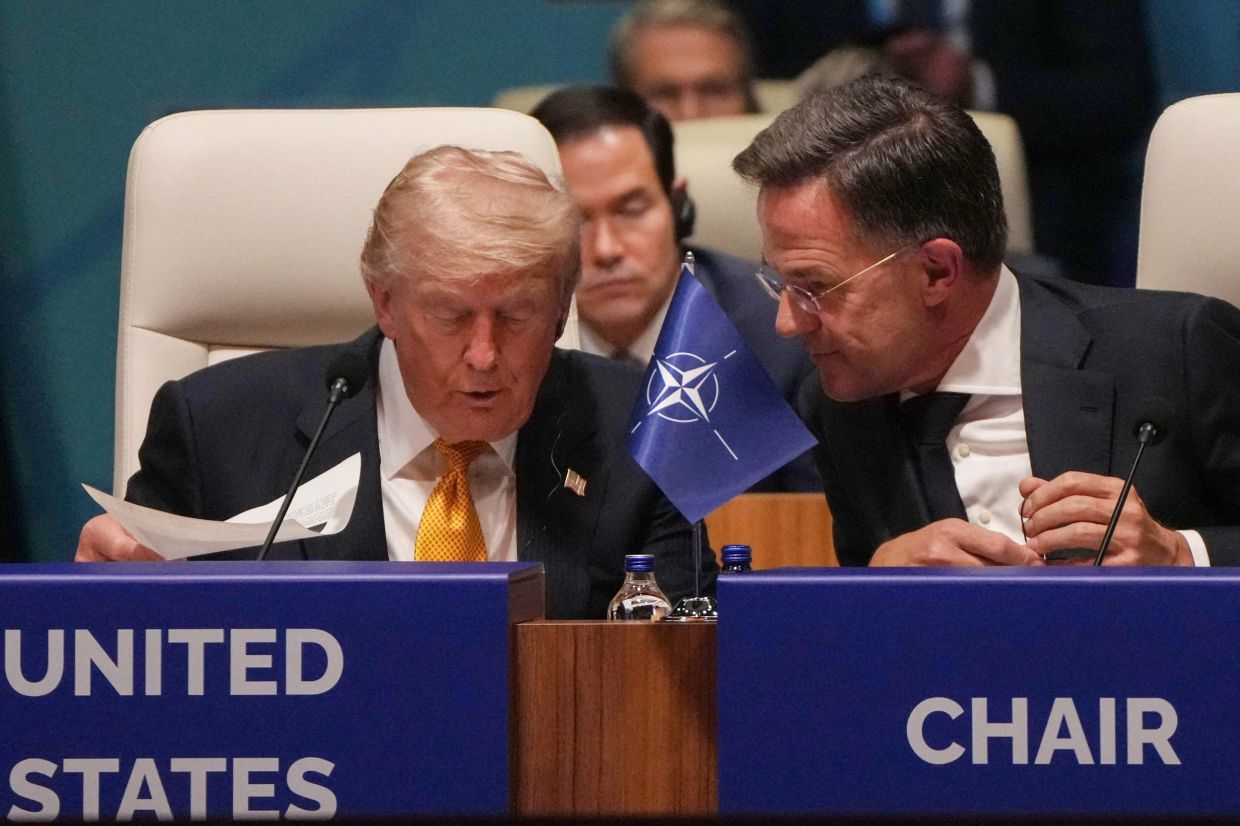
NATO Secretary General Mark Rutte has defended the transatlantic security alliance against US President Donald Trump's criticism, asserting that this week's summit in Ankara showcased remarkable cohesion among member states while producing defence procurement commitments exceeding US$50 billion. Speaking after Wednesday's North Atlantic Council meeting of leaders in Turkey, Rutte characterised the gathering as demonstrating "a huge sense of unity" and delivering concrete outcomes that advance NATO's strategic objectives across the continent and beyond.
The financial commitments agreed at the Ankara summit represent a significant stepping stone towards NATO's ambitious defence spending target of five per cent of GDP by 2035, a goal established at last year's summit in The Hague. These procurement arrangements span an expansive range of military capabilities essential for modern defence operations, encompassing deep precision strike systems, integrated air and missile defence infrastructure, uncrewed platforms, advanced technological systems, and intelligence gathering capabilities. Rutte emphasised that the alliance has committed to developing what he termed "interoperable transatlantic warfighting clout," alongside the integration of sophisticated artificial intelligence models that will enhance operational effectiveness across NATO's structure.
Beyond the defence acquisition programme, alliance leaders collectively pledged €70 billion (approximately US$80 billion) in military equipment, training assistance, and direct support for Ukraine, reaffirming their commitment to the embattled nation's resistance against Russian aggression. This substantial financial commitment underscores NATO's strategic priority of supporting Ukraine while simultaneously strengthening its own defensive posture. The summit also witnessed member states reaffirming their adherence to the foundational Article 5 principle—that an attack on one member constitutes an attack on all—and pledging unwavering collective security arrangements.
However, beneath the proclaimed unity lies underlying tension stemming from Trump's persistent criticism of European defence contributions and the broader NATO framework. The US President has repeatedly expressed dissatisfaction with allied nations, particularly their reluctance to support American military initiatives against Iran or participate in efforts to reopen the Strait of Hormuz following Tehran's blockade. Trump's frustration intensified after announcing a review of American troop deployments in Europe, signalling potential reductions that could fundamentally alter NATO's security architecture. Throughout the summit, Trump voiced his unhappiness with what he characterised as insufficient burden-sharing, emphasising Washington's substantial financial investment in the alliance.
Rutte's approach to managing these tensions reveals a diplomatic strategy focused on retaining American engagement with NATO while accommodating Trump's demands for increased European defence spending. Rather than dismissing Trump's grievances, the Secretary General reframed the US President's push for enhanced military expenditure as having provided "a huge encouragement" that strengthened alliance cohesion and collective commitment. Rutte suggested that Trump's criticism, despite its forceful nature, ultimately benefits NATO by compelling member states to accelerate defence modernisation and increase investment in military capabilities. This framing attempts to transform tension into productive pressure that advances NATO's strategic interests.
The declaration issued following the leaders' meeting reiterated NATO's position that Iran "must never" acquire nuclear weapons and called upon Tehran to respect international maritime law governing the Strait of Hormuz. However, Rutte conspicuously avoided directly committing NATO to expanded military involvement in Iran-related operations, instead highlighting Europe's existing strategic value to American power projection across the continent. The Secretary General noted that US air strikes against Iranian targets would have been significantly more difficult without European infrastructure and bases supporting American military operations, thereby underscoring the mutual benefits NATO membership provides Washington beyond defence spending calculations.
When questioned about contingency planning should the Trump administration substantially withdraw troops from Europe, Rutte deflected by emphasising the "huge sense of unity" evident among the 32 allied leaders and expressing confidence in the alliance's resilience. He suggested that vigorous debates between member states, even those involving the US President, reflect healthy alliance dynamics rather than fundamental weaknesses. Rutte's repeated assertion that Trump remained "completely committed" to NATO despite his criticisms indicates an underlying anxiety about American withdrawal, even as the Secretary General publicly maintains optimistic rhetoric about alliance durability.
Trump's remarks regarding Greenland and broader Arctic security concerns prompted Rutte to acknowledge that the US President had identified legitimate strategic vulnerabilities. The Secretary General affirmed that Russia and China pose genuine threats to American security through potential Arctic expansion and agreed that NATO must prioritise securing the Arctic region through enhanced cooperation among allied nations. This concession reveals how Trump's unconventional security concerns are gradually reshaping NATO's strategic agenda, pushing the alliance to consider geopolitical challenges beyond traditional European-centric calculations.
The question of Indo-Pacific involvement in NATO affairs generated less enthusiastic discussion, with Rutte dismissing suggestions that major regional powers must attend every NATO summit. However, he emphasised that the transatlantic alliance and Indo-Pacific security are increasingly interconnected, noting his positive meeting with South Korean President Lee Jae Myung. This perspective reflects NATO's gradual transformation into a global security framework that addresses challenges spanning multiple geographical theatres, recognising that threats in Asia-Pacific regions inevitably affect transatlantic security.
Rutte characterised the Ankara summit as validation of what he termed "NATO 3.0," an evolving alliance structure emphasising European military strengthening while maintaining American leadership and commitment. Under this framework, European nations and Canada assume greater responsibility for alliance defence while engaging in transformative defence investments and major industrial projects spanning both sides of the Atlantic. The Secretary General framed this rebalancing as strengthening rather than diminishing NATO, positioning the alliance as better positioned to protect one billion people across the Euro-Atlantic region. Yet underlying this optimistic assessment remains awareness that NATO's future depends substantially on maintaining American engagement—a fragile proposition given Trump's demonstrated willingness to leverage security commitments as negotiating tools in broader strategic calculations.

