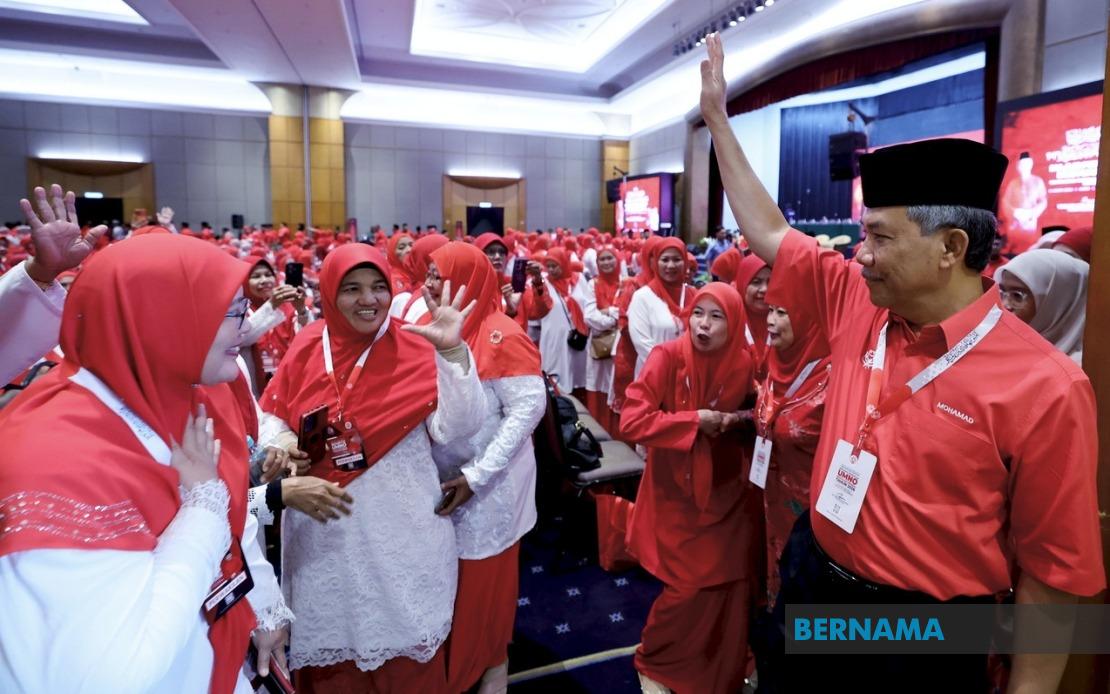
Barisan Nasional is set to abandon its long-established approach to seat allocation in Negeri Sembilan, signalling a strategic pivot that could reshape the political landscape in the state ahead of the 16th state election scheduled for August 1. Deputy Chairman Datuk Seri Mohamad Hasan, who also chairs the BN machinery in Negeri Sembilan, indicated that the coalition intends to reallocate constituencies away from the rigid traditional distribution model that has governed seat assignments for decades. The decision reflects growing recognition that voter composition patterns have shifted substantially across most state constituencies, necessitating a comprehensive review of where the coalition's component parties can mount the most competitive campaigns.
The shift away from traditional seat allocation represents a significant departure from BN's historical practice of assigning fixed constituencies to specific member parties on a permanent basis. Under the previous system, certain parties would contest in the same seats across successive elections, a practice that Mohamad acknowledged restricted both voter choice and the flexibility component parties required to pursue victories in constituencies where they possessed stronger grassroots support. This structural inflexibility, he argued, created a situation where underperforming parties maintained their seats regardless of electoral reality, a scenario he suggested was ultimately detrimental to BN's collective performance. The new approach aims to create space for a more dynamic allocation framework that allows component parties to contest in constituencies aligned with their actual organisational strengths rather than historical precedent.
Modifying the traditional seat distribution carries significant political implications across Malaysia's coalition landscape. In states where BN has historically dominated, the rigid allocation of constituencies has sometimes created complacency within certain component parties and reduced opportunities for new candidates or rising political figures to contest from winnable seats. Negeri Sembilan, where BN has maintained considerable influence, presents an opportunity to test whether a more flexible system can enhance overall coalition performance. However, the transition also carries risks, as reallocating seats may trigger internal tensions among component parties accustomed to their traditional fiefdoms, particularly if negotiations suggest that some parties will contest fewer constituencies than previously.
Modifying the traditional seat distribution carries significant political implications across Malaysia's coalition landscape. In states where BN has historically dominated, the rigid allocation of constituencies has sometimes created complacency within certain component parties and reduced opportunities for new candidates or rising political figures to contest from winnable seats. Negeri Sembilan, where BN has maintained considerable influence, presents an opportunity to test whether a more flexible system can enhance overall coalition performance. However, the transition also carries risks, as reallocating seats may trigger internal tensions among component parties accustomed to their traditional fiefdoms, particularly if negotiations suggest that some parties will contest fewer constituencies than previously.
Mohamad explained that the reallocation process will be informed by detailed analysis of voting patterns and demographic data from the previous election cycle. Each constituency will be assessed according to how voter composition has evolved, with particular attention to shifts that might affect campaign strategies or electoral prospects. This evidence-based approach represents a more rigorous methodology than the historical practice of simply perpetuating seat assignments regardless of changing circumstances. Division heads across Negeri Sembilan have been instructed to submit candidate lists following established procedures, with each constituency represented by at least three potential candidates to ensure the BN leadership has sufficient flexibility in final selections.
The compressed timeline adds urgency to the seat allocation process. BN leadership must complete the reallocation exercise and finalise candidate nominations by July 15, when the coalition plans to formally launch its election machinery. This acceleration reflects the demanding calendar set by the Election Commission, which has scheduled nominations for July 18 and early voting for July 28. The tight schedule leaves minimal room for protracted negotiations among component parties or extensive grassroots consultation, meaning that decisions made at the BN Supreme Council level will likely be implemented with limited opportunity for revision. This centralised decision-making approach suggests that coalition leadership has determined the need to move swiftly even if some component parties harbour reservations about particular allocations.
Internal cohesion emerges as a critical concern for BN as it approaches the election. Mohamad specifically cautioned that the coalition cannot afford internal disputes or sabotage, noting that past elections have seen several seats lost due to factional conflicts within BN's own ranks. This warning carries particular weight given Malaysia's competitive political environment, where even marginal divisions within coalitions can translate into lost seats. The seat reallocation initiative, if mishandled, risks exacerbating such internal tensions by creating perceived winners and losers among component parties. Successful implementation will require skilful political management to ensure that affected parties view the process as beneficial to the coalition's overall prospects rather than as unfair disadvantaging of particular constituencies.
Moderate uncertainty surrounds Mohamad's personal participation in the election. As the sitting assemblyman for Rantau, a seat he has held continuously since 2004, Mohamad indicated that any decision regarding his candidacy would ultimately rest with party leadership rather than his personal preference. His willingness to defer this decision to higher echelons suggests that leadership may be considering broader strategic factors, including whether his candidacy in his traditional seat remains optimal or whether he might be redeployed elsewhere. For an experienced politician of Mohamad's stature, such flexibility signals serious commitment to the coalition's overall success, though it also indicates that no constituencies are necessarily immune from reconsideration under the new allocation framework.
The Negeri Sembilan election assumes broader significance for Malaysian politics as a test case for coalition strategy evolution. The state, with its relatively compact electorate and BN's historical dominance, offers an manageable environment in which to pilot new organisational approaches. Success in reallocating seats and maintaining component party cohesion while improving electoral performance could provide a template for other BN-governed or contested states. Conversely, a botched allocation process that triggers internal conflicts or suboptimal candidate nominations could reinforce arguments that the traditional system, despite its limitations, at least provided predictability and prevented destabilising contests over seat distribution. The outcome will likely influence how other Malaysian states and political coalitions approach their own constituency management in coming electoral cycles.

