The race to govern Negeri Sembilan officially commenced on July 18 as candidates began submitting their nomination papers at eight centres statewide, marking the formal opening of one of Malaysia's keenly watched state electoral contests. The nomination window closes at 10 am, after which the Election Commission will release the confirmed roster of candidates and usher in a 14-day campaign sprint concluding on July 31. This procedural moment carries symbolic weight, transforming weeks of backstage party manoeuvring and candidate selection into public competition for the legislature's 36 seats. The timing follows the state assembly's dissolution on June 5, approved by Yang Dipertuan Besar Tuanku Muhriz Tuanku Munawir, resetting the political calendar in this central Malaysian state.
As nomination day unfolded, preliminary figures revealed the magnitude of the electoral engagement. The Election Commission reported that 464 nomination forms had changed hands by the preceding day, while 70 prospective candidates had already lodged the mandatory deposits securing their candidacies. These numbers hint at the intensity of internal party selection processes that preceded this formal announcement—a behind-the-scenes competition often as fierce as the public campaign itself. The deposit requirement acts as a filter, preventing frivolous candidacies while imposing a financial commitment that signals genuine intent to contest.
The electoral battleground encompasses nearly 900,000 registered voters across Negeri Sembilan's communities. Specifically, 867,151 ordinary voters will determine the outcome, supplemented by 16,884 military personnel and their spouses and 5,455 police officers and their families with voting entitlements. This composition reflects Malaysia's federated structure, where provision for armed forces and police ballots remains embedded in electoral arrangements nationwide. The voter roll encompasses diverse demographic and occupational interests, from urban professionals in Seremban to rural constituencies where agricultural and resource-based communities predominate.
Pakatan Harapan presents the most expansive candidate slate, fielding nominees in all 36 state seats and signalling its ambition to replicate or exceed its performance from the 2023 election, when it secured 17 seats. Barisan Nasional fields 25 candidates, maintaining presence across most constituencies whilst strategically conceding terrain in certain areas. Perikatan Nasional contests 11 seats, reflecting its status as the third major force in Negeri Sembilan politics. These three coalitions represent the principal protagonists in the political drama unfolding over the coming weeks, each seeking to reshape the state's governance or consolidate existing advantages.
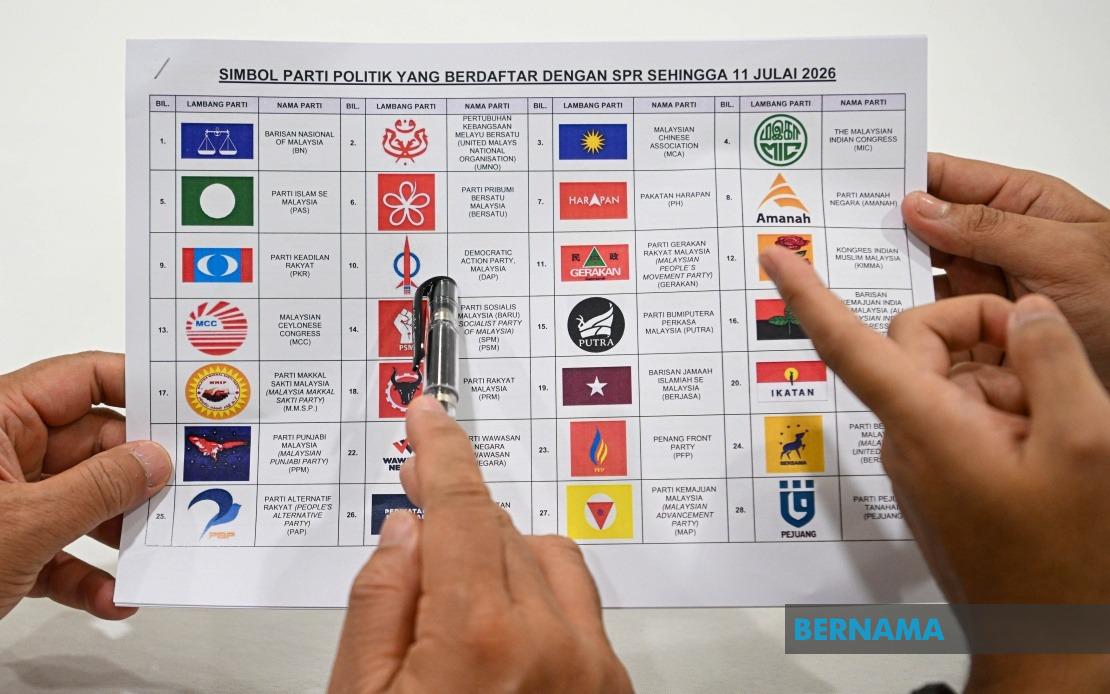
Beyond the major coalitions, smaller parties contribute to the electoral diversity. Parti Pribumi Bersatu Malaysia, whilst technically fielding 24 candidates, does so partially through the Parti Bersepakat Hak Rakyat Malaysia alliance, with Urimai-affiliated nominees contesting under Bersatu's designation—an arrangement reflecting the complex coalition dynamics characterising Malaysian electoral politics. Additionally, Parti Orang Asli Malaysia, the Socialist Party of Malaysia, and Parti Barisan Jemaah Islamiah Se-Malaysia each mount single-candidate campaigns, providing alternative choices for voters dissatisfied with mainstream offerings. This constellation of competitors ensures Negeri Sembilan's election encompasses genuine ideological and organisational diversity.
The security apparatus has mobilised substantially to facilitate orderly proceedings. Negeri Sembilan police have stationed 4,800 officers and personnel across nomination venues and anticipated campaign sites, augmented by an additional 1,373 personnel seconded from Bukit Aman's federal contingent. This deployment underscores the anticipated scale of nomination day activities, particularly the large crowds of party supporters, candidates, and political figures expected to converge on nomination centres. The police presence aims preventatively—enabling ceremonial candidate presentations whilst maintaining order and deterring disruptions or provocations that could sully the electoral process. The Election Commission has explicitly cautioned all participants against breaches of conduct rules and warned against provocative behaviour that might compromise the nomination process's integrity.
Weather considerations add a practical dimension to proceedings. The Malaysian Meteorological Department forecast generally fair conditions across most Negeri Sembilan areas during the morning nomination period, though Port Dickson and Seremban—hosting multiple nomination centres—face anticipated rainfall. Afternoon thunderstorms are predicted statewide, suggesting that nomination day crowds must prepare for tropical precipitation typical of Malaysia's climate. These meteorological conditions, whilst locally manageable, underscore the logistical complexity involved in conducting nationwide electoral processes across geographically and climatically diverse terrain.
The 14-day campaign period ahead will determine electoral dynamics, as political parties deploy their messaging and mobilisation strategies. This timeframe, compressed compared to federal election campaigns, concentrates competitive activity and tests parties' organisational efficiency and resource deployment. Campaign narratives will likely emphasise local development, constituencies' particular grievances, and broader state governance visions. For Malaysian political observers and Southeast Asian analysts, Negeri Sembilan's election provides a crucial indicator of electoral sentiment in the broader Malay-majority peninsular heartland, testing whether 2023's PH revival continues or whether BN and PN momentum has shifted the political landscape.
Early voting procedures commence on July 28, enabling military personnel, police officers, and others eligible for advance balloting to cast votes before the main polling day. This administrative innovation, increasingly deployed in Malaysian elections, accommodates voters whose professional duties preclude participation on standard election days. Polling day itself transpires on August 1, marking the culmination of the formal campaign and the moment when Negeri Sembilan's 889,490 eligible voters determine their state's political direction for the coming term. The contrast between the 2023 outcome—PH's 17 seats, BN's 14, and PN's 5—provides the baseline against which this election's results will be evaluated, with even modest seat fluctuations potentially reshaping Negeri Sembilan's governance coalitions and affecting broader peninsular political balances.

