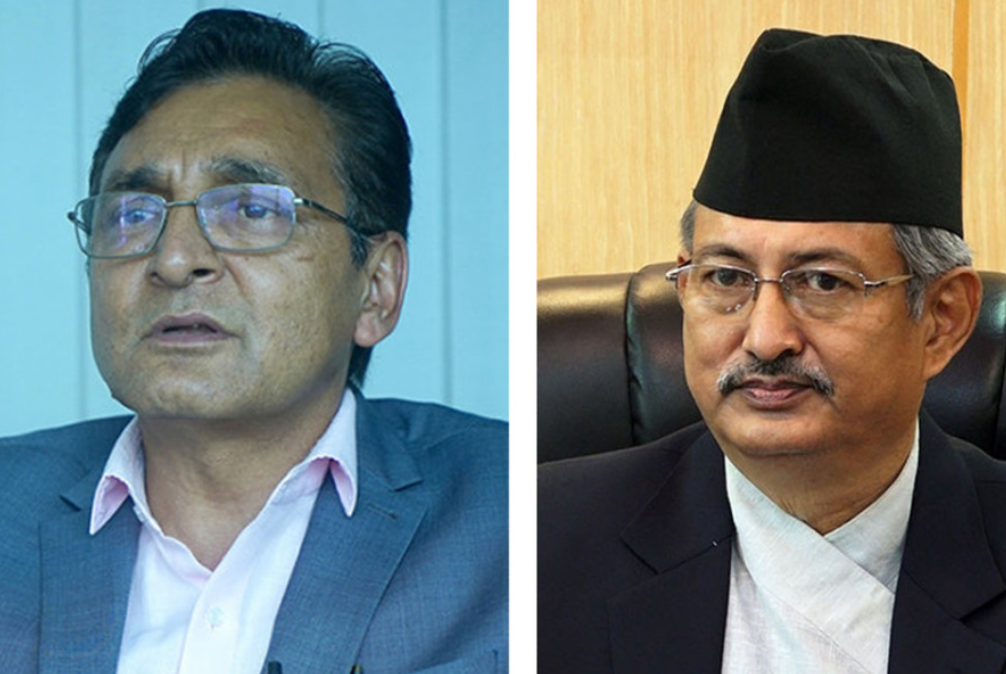
A district court in Kathmandu has handed down jail sentences to two prominent former government ministers after finding them guilty of manufacturing false documents to help Nepali citizens unlawfully resettle in the United States under the guise of Bhutanese refugees. The verdicts, delivered late Tuesday, mark a significant moment in Nepal's recent anti-corruption push and underscore ongoing governance challenges in the region's resettlement processes. The case, which came to light in 2023, has exposed vulnerabilities in international refugee management systems that have long served as a pathway for displaced populations fleeing persecution.
Former Deputy Prime Minister and Energy Minister Top Bahadur Rayamajhi received a four-year prison sentence on multiple charges including offences against the state, fraud, and involvement in organised crime. His co-defendant, former Home Minister Bal Krishna Khand, was sentenced to two years imprisonment as an accomplice to the scheme. Rayamajhi, already in custody, and Khand, who is currently out on bail, have maintained their innocence throughout the proceedings. Both men departed government before the fraudulent operation was exposed, creating a temporal separation between their tenure and the investigation that has allowed their defence teams to argue lack of culpability.
The legal teams representing both former ministers have signalled their intention to challenge the convictions on appeal. Rayamajhi's attorney, Dharma Raj Regmi, argued that his client was never involved in developing refugee policy and therefore could not have orchestrated such a scheme from his ministerial position. Khand's lawyer, Pankaj Karna, similarly indicated plans to pursue appellate remedies. These appeals suggest the case will likely remain in legal proceedings for years, reflecting the complexity of establishing direct ministerial responsibility in large-scale administrative fraud.
Beyond the two former ministers, fourteen additional individuals have also received jail sentences of up to four years for their roles in the conspiracy. This broader cohort includes a former senior bureaucrat who held a position within the home ministry structure and a former leader of the Bhutanese refugee community in Nepal. The involvement of such figures indicates the scheme required coordination across multiple institutional levels and within refugee advocacy networks, suggesting systematic exploitation of resettlement mechanisms rather than isolated opportunism.
The refugee context underlying this fraud case extends back three decades to a significant humanitarian displacement crisis originating in Bhutan. Beginning in the early 1990s, approximately 120,000 people of Nepali ethnicity fled Bhutan, seeking refuge across the border in Nepal where they faced uncertain living conditions in camps. These individuals had lived in Bhutan for generations but faced increasing marginalisation and restrictions on political participation in the predominantly Buddhist kingdom of fewer than 800,000 inhabitants. The exodus reflected deeper tensions between Bhutan's monarchy and its Nepali-speaking population, tensions that bilateral negotiations between the two countries have failed to resolve.
In response to this protracted displacement, the United States, Canada, Australia, and other Western nations established a third-country resettlement programme to address the impasse. This mechanism emerged after Bhutan and Nepal could not reach agreement on repatriation, leaving the refugee population in permanent limbo. Nearly 113,000 of the original cohort have been successfully resettled internationally, with the United States accepting approximately 100,000 individuals. This American resettlement programme has fundamentally altered the trajectory of tens of thousands of lives, providing permanent relocation pathways where bilateral diplomacy proved insufficient.
The document forging operation that ensnared the two former ministers exploited the established resettlement infrastructure by creating false credentials claiming Nepali nationals were actually Bhutanese refugees. Whether this fraud resulted in actual Nepali citizens being resettled in America remains unclear, as investigators have not definitively established how many individuals were processed under false identity claims. However, the very existence of such a scheme demonstrates vulnerabilities in verification procedures that international organisations and receiving countries may have overlooked during the rapid processing of large refugee cohorts.
Several thousand displaced Bhutanese nationals of Nepali origin remain in eastern Nepali camps decades after the initial exodus, having resisted resettlement and instead advocated for eventual repatriation to Bhutan. This hardened stance reflects deep attachments to their homeland despite the harsh circumstances that forced them into exile. Their persistence in the camps underscores the incomplete resolution of this humanitarian crisis, even as the majority of their compatriots have relocated to third countries. The camps themselves have become semi-permanent settlements with established communities, schools, and social structures.
The corruption case arrives amid broader governance transformation in Nepal. In September 2022, youth-led anti-corruption protests resulted in 76 deaths and precipitated the collapse of the previous government, signalling public exhaustion with systemic malfeasance. These upheavals reflected generational demands for institutional accountability and transparent governance. In March 2024, a government backed by Gen Z activists and led by 36-year-old Balendra Shah, a former rapper with no conventional political experience, assumed office on an explicit anti-corruption mandate. Shah's administration has prioritised investigating alleged misconduct from predecessor administrations, positioning this refugee fraud prosecution as demonstration of commitment to that agenda.
For Malaysia and Southeast Asia, this case illuminates risks within regional displacement and resettlement frameworks that have evolved across the past three decades. As the region continues addressing refugee populations from Myanmar, the Rohingya crisis, and other displacement sources, the Nepali experience offers instructive lessons about document verification, institutional oversight, and the potential for fraud when large populations move through resettlement systems. The case also reflects how politicised refugee narratives can become in South and Southeast Asia, where complex historical grievances and ethnic tensions frequently underpin displacement. Nepal's prosecution strategy signals that addressing such crimes requires sustained political will and institutional capacity that many developing nations struggle to maintain across multiple administrations.

