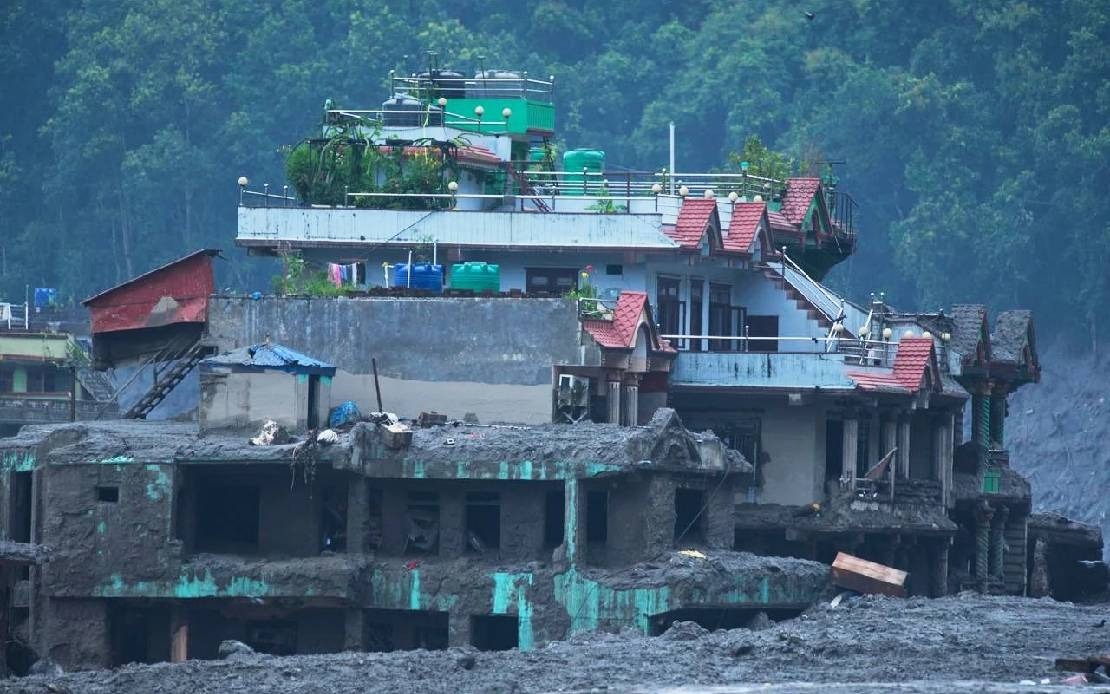
Nepal has launched an urgent appeal for international technical assistance and substantial financial aid following a catastrophic flood triggered by a glacier collapse that has left unprecedented destruction across the Himalayan nation's remote northern regions. The disaster, which struck on Wednesday along the Nepal-Tibet border, has claimed at least 626 lives in Nepal and seven in China's Tibet region, with nearly 3,000 people still missing and presumed dead, making it one of the most severe natural disasters to hit the impoverished country of 30 million people in recent memory.
The massive deluge, originating from the collapse of a Himalayan glacier, unleashed a torrent of rock, ice, mud and debris through mountain river systems with devastating force. The wall of destruction obliterated infrastructure in its path, demolishing buildings, sweeping away bridges, and destroying critical power stations that serve remote Himalayan communities. The sheer velocity and volume of the disaster underscores the climate change vulnerabilities facing the entire region, where glacial retreat has become an increasingly urgent concern for nations dependent on Himalayan water systems.
Search and rescue operations have been severely hampered by continuing adverse weather conditions, with heavy rain and dense fog forcing authorities to suspend systematic recovery efforts on Saturday. Narendra Pariyar, the chief bureaucrat overseeing operations in the badly affected Rasuwa district, explained that the immediate priority has shifted to organising ground transport to evacuate rescued pilgrims and survivors to Kathmandu, the capital, where medical facilities and coordination can be centralised. This logistical pivot reflects the scale of displacement and the difficulty of accessing affected mountain regions.
The missing persons toll reflects the cross-border nature of the tragedy. Approximately 2,426 people remain unaccounted for in Nepal alone, while Chinese authorities report at least 554 missing in Tibet's Gyirong County. Among the missing are at least 540 foreign nationals, predominantly Hindu pilgrims from India who had been undertaking religious journeys through the region when the disaster struck. The involvement of international citizens has amplified diplomatic attention and humanitarian response coordination among neighbouring governments.
The recovery process faces grim complications three days after the initial event. Bodies recovered from the disaster zone have deteriorated significantly in the warm, humid Himalayan climate, with decomposition rendering many beyond recognition through conventional visual identification methods. Recognising both the health risks posed by corpse management and the potential for epidemic diseases, authorities have established protocols to collect DNA samples from unidentified remains before conducting mass burials in designated open spaces, as announced by the Chitwan district administration. This approach balances respectful treatment of the deceased with practical public health imperatives.
In Kathmandu, families of the missing have gathered at Maharajgunj Medical Campus, where recovered bodies have been transported for identification. The scene reflects the human dimension of the disaster, with relatives attempting to identify deceased family members through photographs displayed on hospital gates and boundary walls. Of 49 bodies brought to the hospital, only seven had been identified as of Saturday, underscoring the identification challenges and the emotional toll on surviving families confronting uncertainty about their relatives' fates.
An additional hazard complicating recovery efforts is the formation of a large upstream lake along the Nepal-China border, created when the flood debris dammed mountain watercourses. On Friday, authorities were forced to temporarily suspend rescue operations when this newly formed reservoir began overflowing into Nepal's Lhende Khola and Trishuli rivers, threatening downstream communities with secondary flooding. Chinese satellite monitoring indicates the water is gradually flowing through the natural dam, though the reservoir remains a persistent risk factor. Nepal is currently monitoring two such upstream bodies of water, and officials warn that flood dangers will continue until both have completely drained, potentially extending the crisis phase for weeks.
Nepal's Foreign Minister Shisir Khanal has articulated precisely which forms of international assistance the country requires, moving beyond general appeals to specify technical gaps. Rather than requesting help with basic search and rescue operations, which Kathmandu indicates it can manage internally, Nepal is seeking expertise in rescuing people trapped in collapsed tunnels, restoring severed transport and communication links where bridges have been destroyed, conducting advanced body identification and DNA analysis, and establishing secure facilities for prolonged body storage. Khanal emphasised that these requests reflect areas where Nepal lacks sufficient domestic technical capacity and institutional expertise.
India has responded with substantial immediate assistance, deploying three flights carrying approximately 60 tonnes of relief material including blankets, medicines, food and water purification tablets. New Delhi has committed to dispatching specialised teams including a tunnel rescue unit and medical personnel, while its disaster response force is on standby. The Indian government has also offered prefabricated bridge systems and technical teams to help restore critical connectivity severed by the flood's destruction of existing infrastructure. This regional response demonstrates how disasters along shared Himalayan frontiers activate transnational solidarity mechanisms.
China's initial response has been more circumscribed. Beijing has issued calls for emergency assistance to affected areas and indicated willingness for international rescue cooperation but has not yet specified concrete material or technical contributions. The relatively reserved Chinese statement contrasts with India's detailed commitment list, though coordination between the two nations remains ongoing given the cross-border nature of the disaster and China's significant stake in recovery efforts in Tibet.
Finance Minister Swarnim Wagle has informed international partners that Nepal's preliminary reconstruction estimate ranges between $4 billion and $5 billion, though he cautioned that this remains indicative pending comprehensive damage assessments. The scale of this financial requirement—equivalent to a substantial portion of Nepal's annual GDP—underscores why international donor coordination and multilateral financial support mechanisms will be essential to the nation's recovery. The estimate encompasses rebuilding destroyed infrastructure, restoring power systems, reconstructing transportation networks, and providing livelihood support to displaced populations across multiple districts.
China's authorities are simultaneously undertaking parallel search operations for more than 500 missing people within Chinese territory, indicating that Beijing is deploying its own resources to locate victims. The dual-nation recovery effort will require careful coordination to ensure that international resources are deployed efficiently and that families separated across the border can be reunited where survivors are identified. This coordination reflects the complex geopolitical dimensions inherent in transnational disaster management along contentious borders, where cooperation is essential despite broader bilateral tensions.

