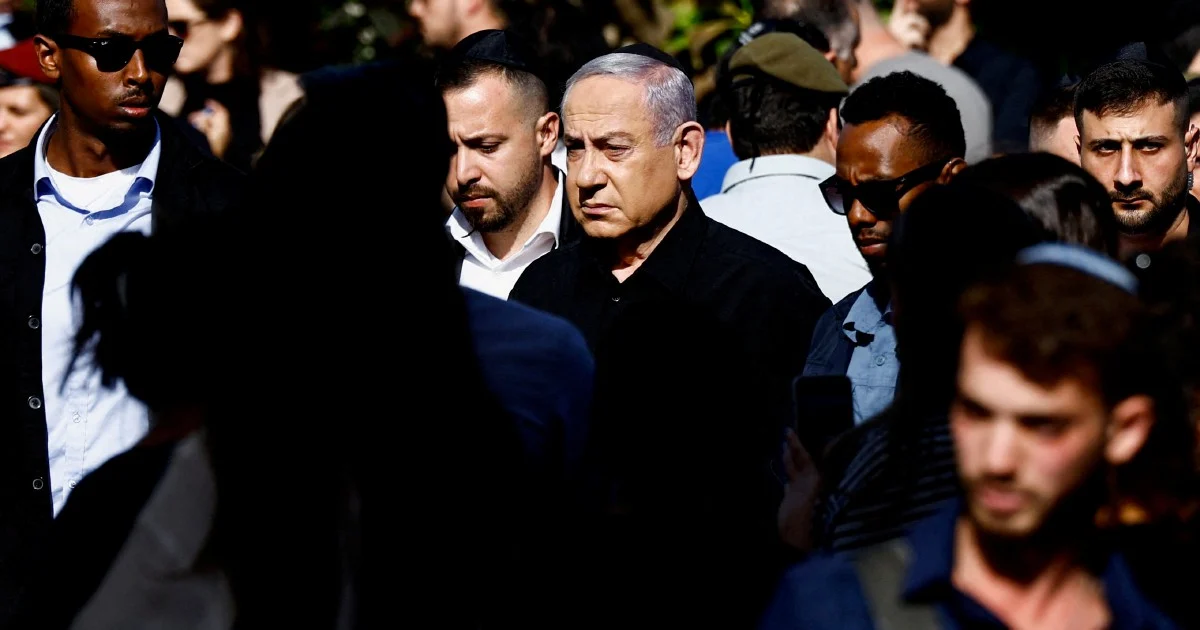
Israeli Prime Minister Benjamin Netanyahu has wrapped up his testimony in his ongoing corruption trials, the country's justice ministry confirmed on Wednesday. The completion of his court appearances marks a significant moment in cases that have consumed considerable political attention and judicial resources over recent years, even as the prime minister contends with pressing geopolitical challenges affecting Israel's strategic position in the Middle East.
The trials have centred on allegations of bribery, fraud, and breach of trust—charges Netanyahu has consistently denied. His testimony spanned multiple court sessions as the legal process examined his conduct during his tenure in office. The complexity and length of the proceedings have reflected both the seriousness of the allegations and the intricate nature of the evidence presented by prosecutors. Throughout the trial, Netanyahu maintained his stance that the accusations were politically motivated and without merit.
The timing of the testimony's conclusion coincides with Israel's heightened concerns regarding broader Middle Eastern developments. Netanyahu has been responding to what many Israeli officials and security analysts view as a problematic shift in United States-Iran relations. The administration's approach toward Iran has generated significant consternation within Israeli policy circles, with concerns focused on how any rapprochement might alter the regional balance of power and security dynamics that have long preoccupied Israeli strategic planning.
For Malaysian observers, this intersection of domestic legal proceedings and regional security matters illustrates a fundamental challenge facing Israeli leadership: the difficulty of managing grave internal political crises while simultaneously addressing external threats. The dual strain on Netanyahu's attention and credibility—facing serious criminal allegations at home while claiming the mantle of guardian against regional threats—represents a complex political situation with few historical parallels among major democratic leaders.
The corruption charges represent the most serious legal jeopardy any sitting Israeli prime minister has faced. Previous Israeli leaders, including Ehud Olmert, faced legal proceedings, but the scope and severity of these trials have been historically significant. The fact that Netanyahu has remained in office while undergoing criminal trial reflects the constitutional framework of the Israeli political system, which does not mandate immediate suspension of duties following indictment or during prosecution.
The conclusion of his testimony does not signal the end of the trials themselves. Further proceedings lie ahead, including closing arguments and ultimately a judgment from the court. The judicial process may extend considerably longer, potentially spanning years. This prolonged uncertainty surrounding the prime minister's legal status creates ongoing political complications for Israel's governance, affecting both domestic policy decisions and Israel's international standing.
The geopolitical dimension adds complexity to Netanyahu's predicament. His government's security and foreign policy decisions carry heightened scrutiny when made by a leader simultaneously defending himself against major criminal accusations. International observers and allies may question whether decision-making is influenced by political considerations rather than purely by national security calculations. This dynamic becomes particularly acute when addressing matters as significant as Iran policy and regional deterrence.
For Southeast Asia, the Netanyahu trials and Israel's broader political turbulence carry indirect implications. Regional stability in the Middle East affects global energy markets, trade patterns, and maritime security in ways that reach far beyond the immediate region. Malaysia's own interests in shipping lanes, energy security, and maintaining stable relations with diverse international partners mean that Middle Eastern political instability ultimately touches Southeast Asian interests.
The US-Iran angle particularly warrants attention from Malaysian policymakers. Malaysia has maintained pragmatic diplomatic relations with both Iran and the United States, often serving as a neutral venue for backdoor discussions and cultural exchanges. Any fundamental shift in US-Iran relations could affect the delicate balance that regional countries like Malaysia have sought to maintain. If broader Middle Eastern tensions escalate, the reverberations could influence global commodity prices, shipping costs, and security concerns affecting Malaysian trade and investment.
Netanyahu's ability to navigate both legal challenges and security crises simultaneously will likely shape Israeli politics and policy for the foreseeable future. Whether the trials' conclusion accelerates toward a verdict or extends further, the legal process will remain a defining feature of his political legacy. The interaction between his domestic legal jeopardy and his management of Israel's external security challenges creates an unusually volatile political environment.
As the trials progress toward their final phases, observers across the Middle East and internationally will monitor not only the judicial outcome but also how it affects Israeli political stability and policy direction. For a region already marked by deep tensions and competing interests, leadership continuity and clarity are valuable commodities. The uncertainty surrounding Netanyahu's legal fate adds another layer of unpredictability to an already complex geopolitical landscape.

