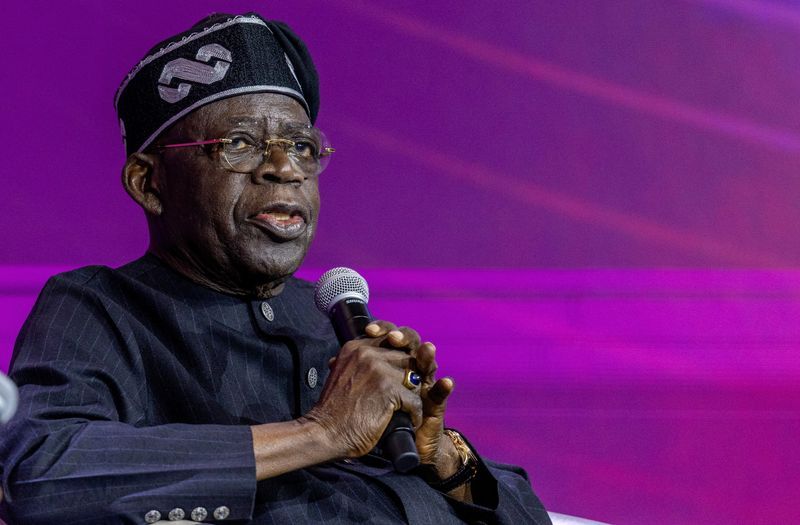
President Bola Tinubu has instructed Nigeria's Federal Competition and Consumer Protection Commission to probe major technology companies over suspected misuse of journalistic content and anti-competitive behaviour, marking a significant escalation in tensions between the country's news sector and dominant global digital platforms. The directive, announced by the FCCPC on Monday, responds to formal complaints lodged by the Nigerian Press Organisation, a coalition representing newspaper publishers, broadcast outlets, journalists' unions and online news providers across Africa's most populous nation.
The investigation targets companies including Meta, Alphabet and X, alongside generative artificial intelligence platforms operating within Nigeria's borders. These firms currently dominate how news circulates digitally across the country, controlling crucial distribution channels through search engines, social platforms and AI-powered recommendation systems. The inquiry represents a watershed moment for Nigeria's regulatory capacity, testing whether domestic authorities can effectively govern multinational technology corporations whose business models depend partly on aggregating, republishing and leveraging third-party content.
The FCCPC has outlined specific areas of examination that reflect mounting global frustration with tech platform practices. Investigators will scrutinise whether these companies exercise excessive market dominance, engage in conduct that stifles competition, extract or commercially exploit copyrighted news and broadcast material without permission, and utilise journalistic content to train large language models and generative AI systems. Each allegation strikes at fundamental concerns about how technology platforms monetise journalism without sharing revenue with creators, while simultaneously using that same content to train systems that could eventually replace human reporters.
The regulatory body has stated the investigation carries no presumption of wrongdoing, emphasising that all parties will receive fair opportunity to present evidence before conclusions are finalised. This procedural fairness matters considerably for international relations, as Meta, Alphabet and X have substantial business interests across Nigeria and the broader African continent. The firms have yet to respond publicly to the enquiry, though their historical pattern suggests they will defend their operations as legally compliant and economically beneficial to local digital ecosystems.
Nigeria's move reflects a global pattern of governmental action against technology platforms' content practices. South Africa's competition authority secured significant concessions from Google and YouTube following a market inquiry, including a 688 million rand media support package valued at approximately 42 million dollars. France imposed a 500 million euro fine on Google in 2021, citing inadequate compensation negotiations with publishers and breaches connected to AI training on publisher content. Australia and Canada have institutionalised mandatory bargaining frameworks that compel technology companies to negotiate licensing agreements with news organisations, resulting in substantial payments flowing back to publishers.
The timing of Nigeria's investigation carries particular significance for Southeast Asia, where governments similarly grapple with regulating powerful technology platforms whose practices shape information flows and public discourse. Malaysia, Indonesia and other regional economies face comparable challenges around content aggregation, intellectual property rights and the concentration of digital advertising revenue among a handful of multinational firms. Nigeria's regulatory approach could establish important precedents for how developing nations assert sovereignty over their information ecosystems and protect local media industries from what publishers view as exploitative practices.
Industry observers suggest this investigation represents an inflection point in the decades-long relationship between news organisations and technology platforms. For two decades, publishers accepted reduced compensation in exchange for audience reach provided by search engines and social networks. However, the emergence of generative AI has fundamentally altered calculations, as technology companies now extract value through training systems that potentially obviate the need for original reporting. This structural shift has unified previously fragmented media industries around demands for fair compensation and regulatory intervention.
Nigeria's media landscape encompasses substantial newspaper and broadcast operations, particularly in Lagos and Abuja, alongside growing digital-native newsrooms serving the country's young, internet-connected population. The Nigerian Press Organisation's willingness to pursue regulatory action suggests consensus across traditional and digital publishers that current arrangements disadvantage local journalism. Technology platforms' algorithms determine which stories reach audiences, then harvest engagement metrics and user data that fuel advertising sales, while publishers receive minimal compensation for content that drives traffic and user retention.
The investigation's outcome will likely influence how other African governments approach technology regulation. The African Union and regional economic communities have increasingly emphasised digital sovereignty and local content protection as strategic priorities. A successful Nigerian case could embolden regulators in Kenya, Ghana, South Africa and other nations to pursue similar enforcement actions, creating a patchwork of requirements that technology companies must navigate across the continent.
For Malaysian policymakers and media stakeholders, Nigeria's regulatory initiative offers valuable lessons about structuring investigations that survive judicial scrutiny while achieving meaningful outcomes. Technology platforms' legal resources are vast, and cases can extend years through appeals. However, the demonstrated success of South African, French, Australian and Canadian approaches suggests that persistent regulatory pressure, grounded in clear market analysis and consumer protection rationales, can force concessions and establish accountability mechanisms.
The investigation also raises fundamental questions about digital value distribution that extend beyond Nigeria. As artificial intelligence becomes increasingly central to technology platforms' revenue models, the question of how original creators share in those revenues will intensify. Journalists, photographers, writers and other content creators across Africa and Southeast Asia may soon face similar questions about whether their intellectual property rights are being adequately protected and compensated when technology companies exploit their work to train AI systems.
The FCCPC has not announced a timeline for concluding its investigation, but the deliberative nature of such regulatory inquiries typically spans six months to several years. During this period, negotiations between the commission, technology platforms and media organisations may occur outside formal proceedings. Previous regulatory interventions in other countries suggest that technology companies often prefer negotiated settlements to protracted legal battles, making the investigation potentially useful as leverage for securing commitments on compensation and content licensing frameworks.

