Three major Muslim-majority nations—Türkiye, Saudi Arabia, and Pakistan—have cemented a defence alliance aimed at bolstering collective security and regional stability. The Mecca Joint Defence Agreement, signed during a trilateral summit held at Al-Safa Palace in the holy city, represents a significant convergence of strategic interests among countries with substantial influence across the Middle East, South Asia, and beyond. The accord has already drawn formal endorsement from the Organisation of Islamic Cooperation, with senior officials describing it as a watershed moment for Muslim-world cooperation on security matters.
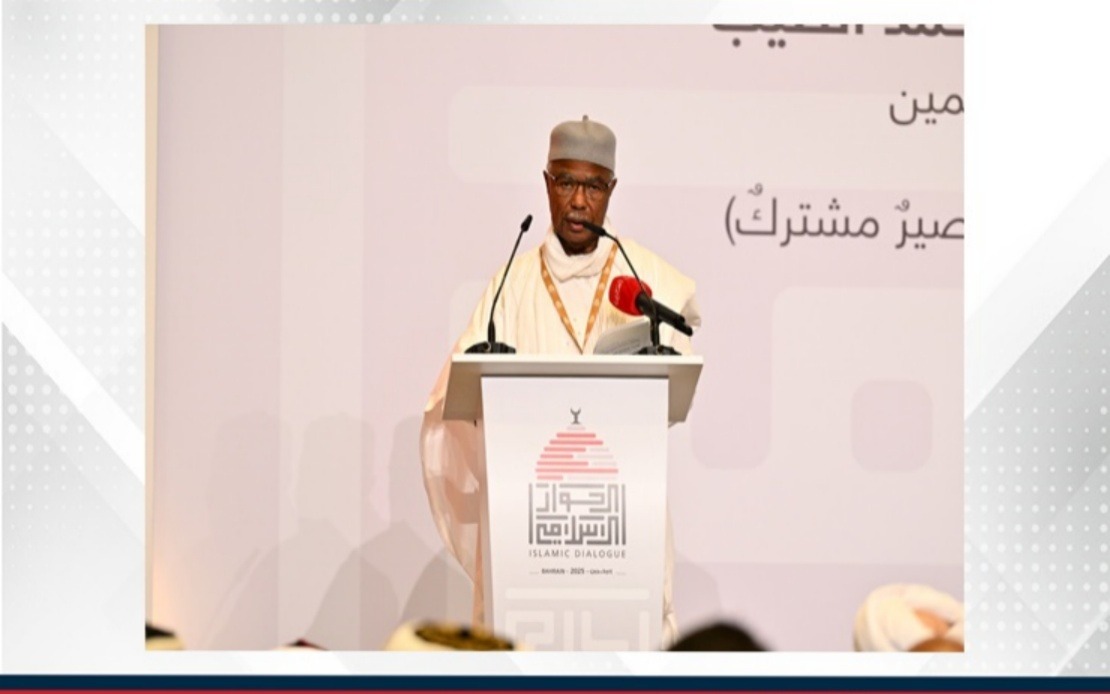
OIC Secretary-General Sharein Brahim Taha articulated strong backing for the arrangement, framing it as an essential component of broader efforts to safeguard peace and security across regions inhabited by Islamic communities. He characterised the initiative as reflecting a shared commitment among the signatories to deepen institutional ties and amplify their collective voice on matters of regional and international concern. The OIC chief's remarks underscored how the agreement sits within a larger strategic framework aimed at fostering unity and coordinated action among member states facing interconnected security challenges.
The defence pact was formalised when Turkish President Recep Tayyip Erdogan, Saudi Crown Prince Mohammed bin Salman, and Pakistani Prime Minister Shehbaz Sharif assembled for the summit. The gathering brought together leaders representing some of the Muslim world's most consequential actors—a geopolitical heavyweight combining military capability, financial resources, and demographic scale. The location itself—Mecca, Islam's holiest city—carries symbolic weight, suggesting that the partners view their arrangement as rooted in shared religious and civilisational bonds rather than merely transactional interests.
According to Turkish officials overseeing negotiations, the agreement operates on several foundational principles. It is deliberately constructed to avoid targeting any particular nation, instead anchoring itself on commitments to peace, stability, and shared prosperity through coordinated security approaches. This framing appears designed to assuage concerns that the pact could be perceived as directed against rivals or as part of polarising regional bloc-building. The agreement emphasises burden-sharing among partners, suggesting a model where costs and responsibilities are distributed equitably rather than concentrated.
A core provision establishes a collective defence mechanism whereby an armed attack on any single signatory would be treated as an assault on all three. This language invokes the principle of collective deterrence—a mechanism long embedded in international security arrangements but one that takes on particular significance when three strategically positioned nations adopt it. For Pakistan, geographically situated between Central Asia and the Indian Ocean, such an undertaking could reshape calculus around border security and regional conflicts. For Saudi Arabia and Türkiye, both with interests spanning the Middle East and beyond, the commitment extends their security umbrella across vast terrain.
The OIC's enthusiastic reception reflects institutional recognition that the pact addresses genuine gaps in coordinated security planning among Muslim-majority states. Taha noted that the arrangement constitutes a pillar for supporting stability not merely within the immediate region but across the broader Islamic world. This language suggests that the OIC perceives fragmentation and uncoordinated responses to security threats as persistent challenges that collaborative arrangements might helpfully remedy. By endorsing the Mecca accord, the organisation signals that multilateral defence partnerships deserve encouragement rather than suspicion.
For Southeast Asian observers, including Malaysians, the pact warrants close attention as a demonstration of how middle-power and regional-power nations can construct security arrangements outside the traditional Western-led alliance system. The agreement involves no NATO members and represents autonomous decision-making by major non-aligned powers. At a moment when regional security architectures across Asia are shifting—with tensions in the South China Sea, evolving US-China competition, and questions about India's regional posture—the Turkey-Saudi-Pakistan model illustrates alternative approaches to collective defence that do not necessarily align with or oppose Western interests.
Moreover, Pakistan's participation carries implications for South Asian stability. The country has long struggled with security threats ranging from cross-border terrorism to complex geopolitical rivalries. An expanded security partnership with regional powers like Türkiye and Saudi Arabia could potentially provide diplomatic and strategic alternatives to relying solely on traditional partnerships or managing disputes bilaterally. Similarly, Saudi Arabia's involvement signals Riyadh's continuing effort to position itself as a linchpin in broader Muslim-world security frameworks—an ambition that has motivated various regional initiatives in recent years.
Türkiye's role in the arrangement reflects Ankara's broader strategic repositioning under President Erdogan's government. Having cultivated closer ties with Gulf states whilst maintaining complex relationships with Western allies, Türkiye appears intent on establishing itself as an indispensable security partner across Muslim-majority regions. The defence agreement with Saudi Arabia and Pakistan advances that objective whilst simultaneously diversifying Türkiye's strategic partnerships beyond NATO—a posture that aligns with Ankara's efforts to navigate great-power competition without surrendering autonomy.
The stated emphasis that the accord targets no country deserves scrutiny, as such denials often accompany security arrangements that implicitly address perceived threats. Regional observers will likely assess the pact through the lens of existing geopolitical tensions—whether involving Indian concerns about Pakistan, tensions in the Gulf, or questions about how the arrangement positions signatories relative to Iran, Russia, and China. The agreement's success will depend partly on how signatories operationalise its mechanisms and whether it translates into tangible defence cooperation, military coordination, and intelligence-sharing.
OIC Secretary-General Taha's hope that the pact would advance peace and prosperity signals the organisation's aspirations for outcomes beyond narrowly construed security objectives. This reflects broader thinking within Islamic multilateral forums about how security cooperation can serve as a foundation for economic integration, cultural exchange, and diplomatic coordination. If structured appropriately, the Mecca agreement could catalyse deeper institutional ties among signatories and establish precedents for expanded cooperation across multiple domains.
The signing of this accord coincides with a period of significant regional rebalancing, with traditional alignments under pressure and new partnerships emerging. For Malaysia and other Southeast Asian nations, the Turkey-Saudi-Pakistan defence pact exemplifies how major Muslim-majority powers are actively reshaping their security postures and strategic relationships. Whether this particular arrangement becomes a model for other regional partnerships—potentially including Southeast Asian participants—remains to be seen, but the OIC's endorsement signals institutional support for collaborative security arrangements grounded in shared values and regional stability objectives.

