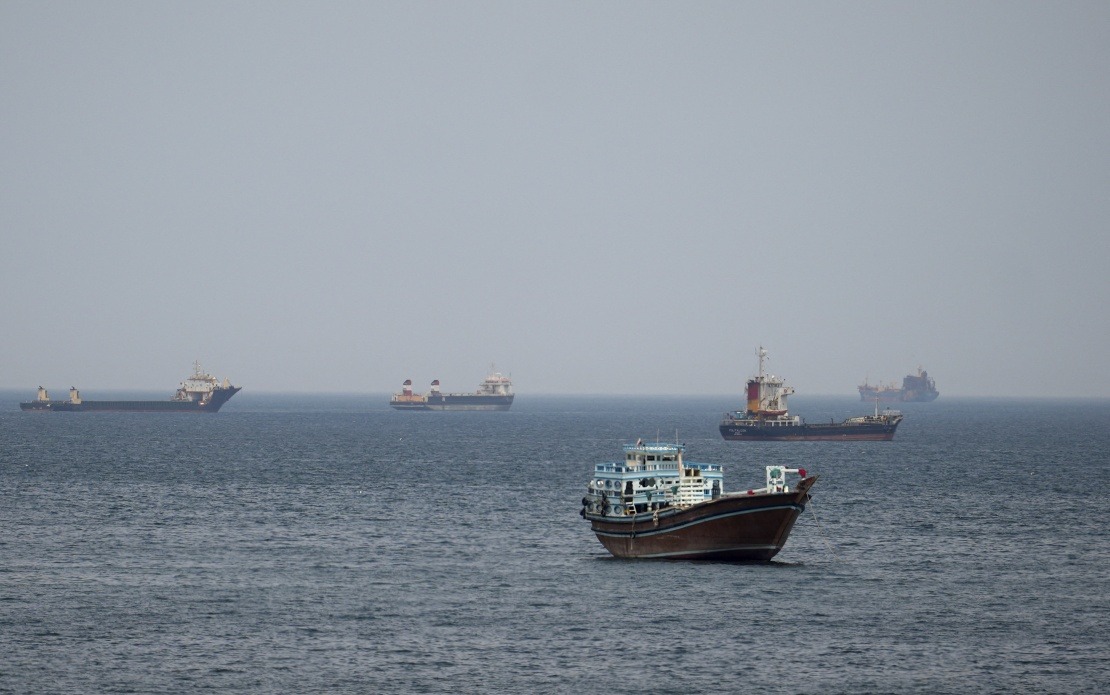
An interim agreement between the United States and Iran has taken effect, prompting a swift resumption of oil shipments through one of the world's most strategically critical waterways and a corresponding plunge in global crude prices. The accord, which removes American restrictions on Iranian maritime trade, marks a dramatic shift in regional dynamics just four months after military hostilities commenced. Oil tankers have begun their passage through the Strait of Hormuz once again following the deal's implementation on Thursday, with market analysts projecting that normal export volumes through this crucial chokepoint—responsible for approximately one-fifth of worldwide petroleum supply—could materialise within the coming months.
The immediate economic repercussions have been pronounced. Crude prices have fallen to their lowest levels since the conflict erupted on February 28, reflecting investor optimism that the restoration of Iranian exports will alleviate earlier supply concerns and stabilise energy markets. For Southeast Asian economies like Malaysia, Indonesia, and Singapore, which depend heavily on stable energy prices for industrial competitiveness and import expenditures, this development represents significant relief. Higher oil costs during the preceding four months had threatened inflationary pressures across the region's manufacturing and transportation sectors. The prospect of sustainable crude supplies at moderate price points offers these nations greater fiscal predictability and reduced vulnerability to supply-chain disruptions.
Nevertheless, the agreement's architecture remains contested and fragile. Negotiators have secured a 60-day window to establish comprehensive terms regarding Iran's nuclear weapons programme—the stated catalyst for the American military intervention. Washington has pledged a $300 billion reconstruction fund for Iran alongside additional financial incentives designed to facilitate compliance. Vice President JD Vance, designated to lead the American negotiating team, has signalled that the United States will simultaneously press Tehran to constrain its long-range missile capabilities, adding another contentious dimension to forthcoming discussions.
Iranian leadership has adopted a notably defiant posture throughout these early negotiations. Supreme Leader Ayatollah Moitaba Khamenei characterised Trump's signature on the agreement as driven by "desperation," effectively signalling that Iranian officials intend to negotiate from a position of strength rather than accommodation. Through official communications, Khamenei indicated that further American demands regarding the nuclear programme would face resistance, declaring that Tehran will not capitulate to excessive conditions. This rhetorical positioning suggests that the 60-day negotiation period may witness considerable friction and possibly deadlock on pivotal issues.
The geopolitical asymmetries underlying this accord merit careful scrutiny. When Trump initiated military operations nearly four months prior, he articulated ambitious strategic objectives encompassing the destruction of Iran's nuclear weapons capacity, elimination of its regional strike capabilities, cessation of militant funding, and facilitation of internal regime change. Yet the finalised agreement has accomplished none of these stated aims. Analysts and policy observers contend that Iran has emerged from this confrontation in an unexpectedly robust position—having withstood sustained superpower military pressure, maintained functional control mechanisms over the Strait of Hormuz, and extracted valuable exemptions from international financial sanctions. Tehran has stipulated that during the negotiation period it will continue directing maritime traffic through the strait and issuing permits, though no tolls will be levied during this interim phase.
For Malaysian policymakers and business interests, Iran's repositioning carries significant implications. As a nation heavily engaged in regional trade and investment, Malaysia has pursued balanced relationships across the Gulf. The apparent strengthening of Iran's negotiating position may recalibrate risk assessments for Malaysian firms contemplating commercial engagement with Iranian partners. Additionally, the stability of the Strait of Hormuz—through which Malaysian shipping and petroleum imports transit—remains a paramount concern for national economic security. Iran's demonstrated capacity to assert control over this waterway underscores the importance of maintaining workable diplomatic relations with Tehran, a consideration that resonates across ASEAN capitals.
Yet the ceasefire's durability remains questionable given escalating violence in an adjacent theatre. Israeli military forces have continued conducting airstrikes across Lebanon in defiance of the agreement's explicit provisions calling for permanent termination of that conflict and restoration of Lebanese territorial sovereignty and independence. Over one million Lebanese civilians have been displaced by the intensifying bombardment. These operations directly contradict Trump's public pledge to achieve comprehensive ceasefire across all fronts, exposing potential limits to American leverage over regional allies and raising doubts about enforcement mechanisms for the Iran accord itself.
The fracture between Washington and Tel Aviv has grown increasingly pronounced. Trump has issued uncommon public criticisms of Israeli military strategy, remarking that attacking Lebanon—portrayed as America's sole remaining powerful regional ally—constitutes strategic miscalculation. Israel, notably excluded from the Iran negotiations, has rejected ceasefire conditions and released territorial maps depicting an expanded military occupation zone within Lebanon. This divergence signals that Trump's appetite for constraining allied operations may not translate into tangible policy pressure, undermining the credibility of American commitments to the broader agreement.
Congress has emerged as another potential obstacle to agreement implementation. Republican allies of the Trump administration in Congress have questioned whether the president has surrendered excessive leverage in exchange for conflict termination. This domestic political dimension introduces additional unpredictability into the already tenuous negotiation process. Any weakening of Trump's congressional coalition could jeopardise approval and funding for promised financial packages to Iran, potentially triggering Iranian withdrawal from the accord.
For the international community and particularly Southeast Asian stakeholders, this moment presents both opportunity and risk. Energy market stabilisation offers tangible economic benefits across the region's import-dependent economies. Yet the superficial nature of the ceasefire and unresolved fundamental disputes suggest that a return to hostilities remains plausible within the negotiation window or immediately thereafter. Malaysian and ASEAN governments must prepare contingency planning for both scenarios whilst leveraging this temporary period of relative stability to strengthen supply-chain resilience and diversify energy sourcing arrangements.
The coming two months will effectively determine whether the current agreement represents a genuine shift toward regional de-escalation or merely a tactical pause preceding renewed conflict. The convergence of intractable nuclear negotiations, contested Israeli military operations, and domestic American political divisions suggests that achieving a durable resolution will require extraordinary diplomatic skill and mutual strategic adjustment. For now, the reopening of maritime commerce through the Strait of Hormuz and corresponding oil price moderation offer welcome relief to regional economies, but cautious monitoring of negotiation progress remains advisable given the substantial uncertainties embedded within this fragile framework.
%22%2F%3E%3C%2Fpattern%3E%3C%2Fdefs%3E%3Crect%20width%3D%22100%25%22%20height%3D%22100%25%22%20fill%3D%22url(%23phly23g)%22%2F%3E%3Crect%20width%3D%22100%25%22%20height%3D%22100%25%22%20fill%3D%22url(%23phly23p)%22%2F%3E%3Ctext%20x%3D%2250%25%22%20y%3D%2250%25%22%20text-anchor%3D%22middle%22%20dominant-baseline%3D%22central%22%20fill%3D%22rgba(255%2C255%2C255%2C0.95)%22%20font-family%3D%22Georgia%2C%20'Times%20New%20Roman'%2C%20serif%22%20font-weight%3D%22700%22%20font-size%3D%22194%22%20letter-spacing%3D%22-0.02em%22%3ECabinet%3C%2Ftext%3E%3C%2Fsvg%3E)