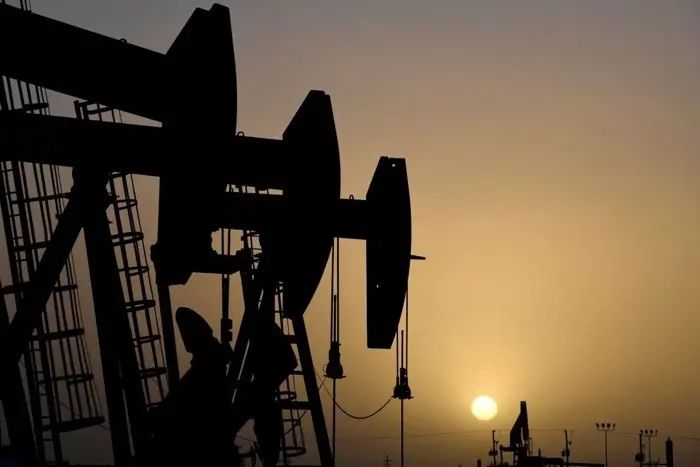
Crude oil markets rallied sharply on Friday as military tensions between the United States and Iran escalated across the Middle East, with both nations conducting successive waves of strikes that have dismantled the fragile truce established just weeks earlier. Brent crude futures rose 0.83% to $84.93 per barrel, while West Texas Intermediate gained 1.03% to $79.76 per barrel, reversing losses from the previous session and capping a volatile week that saw both benchmarks climb nearly 12%. This represents the third consecutive weekly gain for Brent and the second for WTI, reflecting mounting investor anxiety over the stability of global oil supplies.
The catalyst for Friday's price movement centred on the resumption of direct military confrontation between Washington and Tehran. For the first time since a memorandum of understanding temporarily halted hostilities last month, US forces launched two major air strike campaigns in a single day on Wednesday, targeting Iranian military infrastructure primarily located near the nation's southern coastline. American operations continued into Thursday and beyond, with Central Command confirming the initiation of what it described as a sixth consecutive night of strikes designed to systematically degrade Iranian military capabilities. Meanwhile, Tehran responded with its own barrage of missiles and drones directed at US military installations across the region, including a newly expanded air base in Jordan, creating a cycle of escalation that threatens to spiral beyond containment.
The immediate tactical dimension of this conflict carries profound implications for global energy markets because both nations possess the capacity to disrupt oil flows through the Strait of Hormuz, one of the world's most critical maritime chokepoints. Roughly one-fifth of globally traded crude oil transits through this narrow waterway annually, making any closure or significant disruption a potentially catastrophic event for the global economy. The resumption of active hostilities has narrowed the maritime corridor for commercial traffic, introducing physical and psychological barriers to normal shipping operations that naturally compress available supply.
Beyond the Strait of Hormuz, however, an additional and arguably more dangerous vulnerability has emerged along the Red Sea. Iranian leadership has instructed the Houthi political and military organisation to maintain readiness to close the Red Sea shipping route as a retaliatory measure, particularly if the United States targets Iranian power generation infrastructure. This threat represents a dramatic escalation in the conflict's potential scope, as it would create a second major supply disruption point affecting not only Middle Eastern crude but also shipping routes serving the broader Indian Ocean region. The prospect of simultaneous disruptions across both critical passages has introduced what market analysts describe as a dual-risk scenario, effectively embedding an additional geopolitical risk premium into global crude benchmarks.
The implications of such a scenario extend well beyond immediate price movements and directly affect Southeast Asian energy security. Malaysia, Singapore, Indonesia, and Thailand collectively depend on stable Middle Eastern oil supplies to meet domestic consumption and maintain their roles as regional energy hubs. Any protracted closure of either the Strait of Hormuz or the Red Sea would force alternative routing through longer and more expensive pathways, increasing transportation costs and potentially redirecting supplies away from Asian markets toward other destinations. Singapore's position as a major global oil trading and refining centre would face particular pressure, as would Malaysia's downstream petroleum sector, which relies on competitive access to crude feedstocks.
Tim Waterer, chief market analyst at KCM Trade, characterised the current situation as creating a perpetual geopolitical premium within both oil benchmarks, meaning that beyond the fundamentals of supply and demand, investors are now paying a sustained fear tax on crude purchases. This premium reflects the market's acknowledgment that the baseline risk environment in the Gulf has fundamentally shifted from a period of relative stability to one characterised by active hostilities and the threat of catastrophic supply interruptions. The technical analysis suggests that West Texas Intermediate could potentially test mid-$80s price levels if it maintains support above the mid-$70s threshold, indicating that traders envision a sustained elevated price environment.
International observers, including Fatih Birol of the International Energy Agency, have expressed genuine concern about the trajectory of events. Speaking at a Council on Foreign Relations event in Washington, Birol explicitly stated his worry that without improvement within the coming weeks, the situation threatens to become seriously destabilising for global energy markets. His remarks carry particular weight given the IEA's role as a barometer of official international sentiment on energy security matters. The agency's explicit concern signals that established institutions view the current escalation not as a temporary flare-up but as a potential harbinger of prolonged disruption.
Regional tensions have already begun manifesting beyond the US-Iran dynamic. Qatar's defence ministry reported that its armed forces successfully intercepted Iranian missiles early Friday morning, an incident that underscores how the conflict is gradually pulling in neighbouring states. Qatar's interior ministry noted that a child sustained injuries from shrapnel resulting from interception operations, illustrating the civilian dimension of this expanding conflict. Such incidents risk creating secondary flashpoints that could further complicate diplomatic efforts to de-escalate the situation.
For Malaysian readers and Southeast Asian energy analysts, the immediate policy concern involves monitoring whether this escalation will trigger actual closure attempts of critical sea lanes or whether military posturing will eventually give way to negotiation. The region's manufacturing sector, particularly energy-intensive industries such as petrochemicals and fertiliser production, faces potential cost pressures if crude supplies tighten and prices consolidate at elevated levels. Additionally, Malaysia's maritime routes, particularly the Malacca Strait and approaches to the Sunda Strait, could experience increased traffic diversion if Middle Eastern conflicts force longer routing alternatives, creating congestion and logistical complications.
The week's cumulative price gains reflect market participants' assessment that geopolitical premiums will persist regardless of whether active military operations eventually pause. The fundamental calculation appears to be that even if the current round of strikes concludes, the underlying tensions remain unresolved and could reignite at any moment. This creates an environment where oil traders maintain elevated risk assessments, effectively locking in higher floor prices until some form of diplomatic resolution or at least explicit mutual understanding of limits emerges.
Looking forward, the trajectory of oil prices will depend critically on whether the military escalation either reaches a natural plateau or continues intensifying toward even more destabilising scenarios. Each successive wave of strikes raises the probability that either side might execute the threatened supply disruptions—actual closure of the Red Sea by Houthi proxies or Iranian-orchestrated limitations on Strait of Hormuz traffic. Should such disruptions occur, the current price levels would represent merely the opening movement of a more dramatic adjustment upward. Conversely, if diplomatic channels eventually constrain the military escalation, crude could gradually decline as geopolitical risk premiums normalise. For Southeast Asia specifically, this binary outcome will substantially influence energy costs, industrial competitiveness, and the region's attractiveness as a manufacturing destination throughout 2024 and into 2025.

