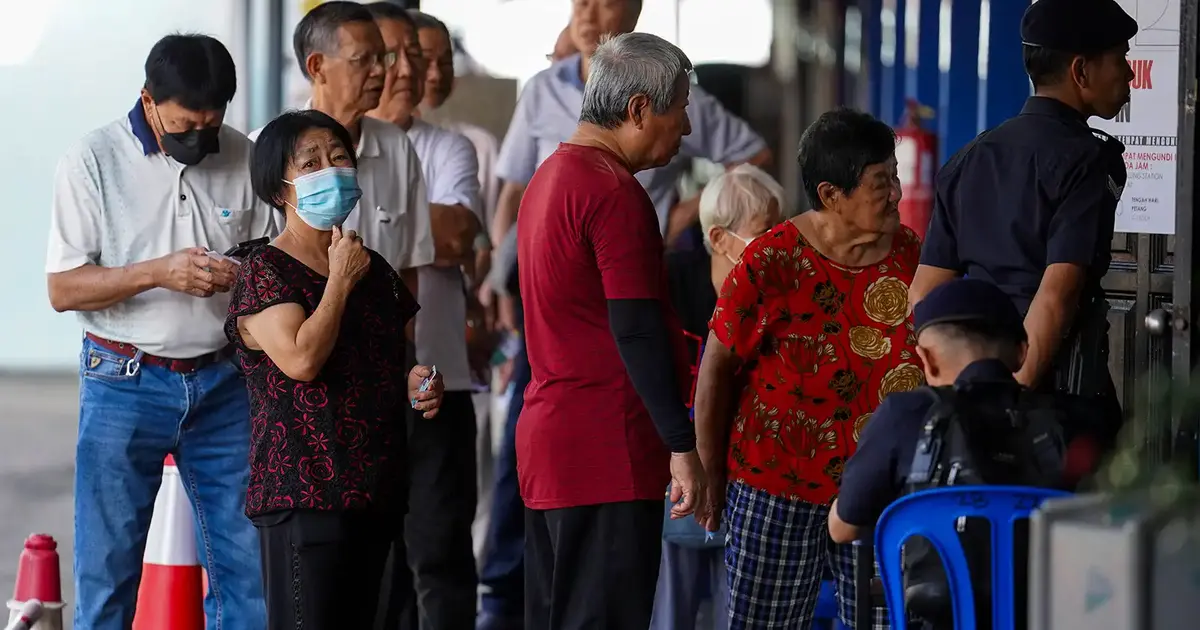
Pakatan Harapan's diminished support among Chinese voters in Johor stemmed largely from depressed turnout rather than wholesale movement to Barisan Nasional, according to Ong, the former Bangi MP. His assessment offers a more nuanced reading of coalition performance in the recent state election, distinguishing between voters who stayed home and those who actively switched their allegiance. This distinction carries significant implications for how PH interprets its electoral challenges and calibrates strategy going forward in a state where Chinese voters have historically been important demographic swing voters.
Ong's interpretation challenges simpler narratives of Chinese voter defection that emerged immediately following the election results. Rather than suggesting deep-rooted disaffection across the community, he points to participation problems as the primary culprit. Low voter turnout, he argues, disproportionately affected PH's support base, leaving the coalition weakened relative to its actual reservoir of sympathisers. This explanation has particular relevance for Malaysian political analysis because it suggests that mobilisation and voter engagement matter as much as policy or ideology in determining electoral outcomes among specific demographic groups.
The distinction between abstention and defection carries real analytical weight in Malaysian politics. When voters simply do not show up to polling stations, it reflects different underlying grievances or circumstances than when they actively vote for an opponent. Abstention might indicate disappointment, fatigue, or logistical barriers to participation, whilst defection suggests genuine ideological shift or preference change. Ong's emphasis on the former rather than the latter suggests that PH retains latent support among Johor's Chinese voters that failed to materialise at the ballot box, presenting the coalition with a potential recovery opportunity if it can address participation barriers.
Johor holds particular strategic importance within Malaysian electoral politics. As the nation's southern economic anchor and home to substantial urban Chinese populations in Johor Bahru and other major towns, the state has long represented a testing ground for coalition performance. Chinese voters in Johor have demonstrated considerable sophistication in their voting behaviour, sometimes supporting government coalitions and sometimes opposition parties depending on perceived performance and available alternatives. This volatility makes the state especially significant for understanding broader coalitional dynamics across the country.
Ong's analysis suggests that only a marginal number of Chinese voters in Johor actually transferred their support to Barisan Nasional. This finding, if accurate, indicates that the Chinese voter base did not fundamentally realign during the election. Instead, voters who might otherwise have backed PH simply did not participate. Understanding the reasons behind this abstention becomes crucial for diagnosing the coalition's vulnerabilities. Possible explanations range from inadequate ground mobilisation to insufficient messaging reaching Chinese language media consumers to practical obstacles preventing participation.
The significance of this interpretation extends beyond Johor's borders. Chinese voters comprise strategically important populations in numerous Malaysian states and constituencies, particularly in urban areas where elections are often decided by narrow margins. If low turnout rather than defection explains PH's setback among Chinese voters in Johor, it implies that similar dynamics might operate elsewhere, and that the coalition's fundamental challenge involves engagement and motivation rather than ideological repositioning. This distinction shapes how parties might approach future campaigns and community outreach.
From Barisan Nasional's perspective, Ong's assessment offers a more modest reading of its achievements. Rather than celebrating conversion of significant numbers of Chinese voters to its camp, BN's victory in Johor reflected opposition weakness in mobilising its base. This interpretation cautions against overconfidence about BN support among Chinese voters and suggests the coalition victory rested partly on PH's organisational failings. For PH, it conversely points toward recovery opportunities through improved mobilisation without requiring dramatic policy shifts or repositioning to win back support.
The timing of Ong's remarks places them within ongoing post-election analysis and blame assignment within opposition circles. Former MPs and party figures frequently offer interpretative commentary on electoral outcomes, seeking to frame results in ways that advance their preferred strategic narratives. Ong's focus on turnout rather than defection aligns with interpretations that emphasise organisational and implementation challenges rather than fundamental policy or leadership failures, potentially supporting voices within PH advocating for operational improvements over strategic overhauls.
Understanding voting patterns among Malaysian Chinese communities requires attention to multiple variables beyond simple support or opposition. Turnout rates, campaign intensity, media exposure, community messaging, and practical accessibility all shape electoral outcomes. Ong's intervention reminds analysts that headline vote shares can mask different underlying stories about voter behaviour. A party's vote share might decline due to opponent gains, own base erosion, or simply reduced participation among supporters, each scenario carrying different implications for political strategy and coalition viability.
Looking forward, Ong's analysis provides Pakatan Harapan with a particular strategic focus point for Johor recovery efforts. If Chinese voter abstention rather than defection explains recent underperformance, then targeted mobilisation campaigns, improved community engagement, and enhanced visibility within Chinese language platforms and networks could yield improvements without requiring fundamental repositioning. This pathway appeals to PH leaders reluctant to accept narratives of declining Chinese support or to modify core coalition policies perceived as important to broader party identity.

