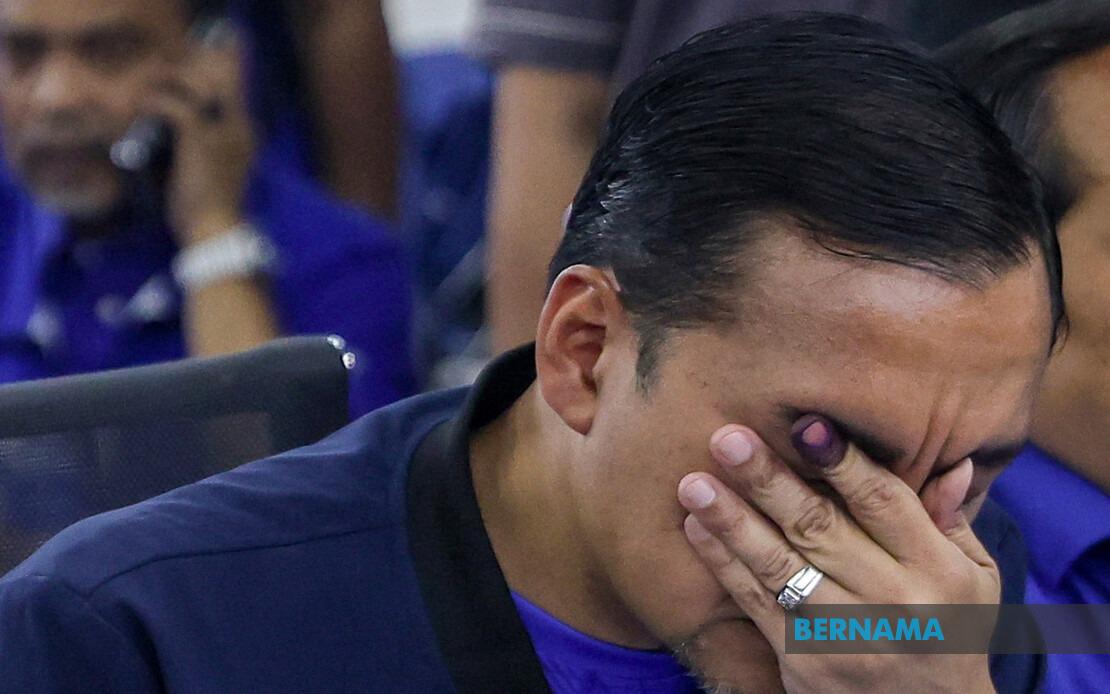
Datuk Onn Hafiz Ghazi, the Johor Menteri Besar and state Barisan Nasional chairman, has secured a decisive victory in the Machap constituency during the 16th Johor state election held on July 11, signalling strengthened support for the coalition in the traditional bastion. The Election Commission confirmed that Onn Hafiz accumulated 20,382 votes, enabling him to overcome his closest rival by a substantial 15,375-vote majority in a direct contest against the Pakatan Harapan challenger Nur Hafiz Roslan.
The margin of victory represents a significant expansion of Onn Hafiz's electoral base compared to his performance in 2022, when he clinched the seat with a majority of 6,543 votes. The difference is particularly striking given the changed electoral landscape: five years ago, Machap witnessed a four-way contest involving Perikatan Nasional's Azlisham Azahar, MUDA's R. Sangaran, and PEJUANG's Sharuddin Md Salleh alongside the eventual victor. The consolidation of opposition votes into a single challenger this time, coupled with Onn Hafiz's nearly tripled victory margin, points to a more cohesive and energised BN campaign performance in what observers regard as a critical state.
Onn Hafiz's commanding win carries broader implications for Barisan Nasional's positioning ahead of potential federal developments. As the Menteri Besar, his electoral fortitude directly influences the party's authority to govern Johor, Malaysia's second-most populous state and a traditional stronghold of UMNO and its coalition partners. The stronger showing in Machap demonstrates that BN's coalition structure, rebuilt after the 2022 general election defeats that saw the bloc cede federal power, retains considerable appeal among the Johor electorate even as alternative political forces continue to compete nationally.
The Machap constituency itself reflects demographic and economic characteristics typical of Johor's mixed urban-rural composition. Located within the broader Johor landscape, the seat encompasses areas with diverse economic profiles ranging from agricultural communities to increasingly urbanised suburbs. Voters in such constituencies have historically demonstrated pragmatism regarding coalition governance, balancing developmental expectations with political representation. Onn Hafiz's retention and expansion of his support suggests that the administration's record on state-level delivery resonates with these mixed constituencies.
The structural shift from a fragmented opposition field to a unified PH challenge also merits examination. The disappearance of Perikatan Nasional, MUDA, and PEJUANG candidates in favour of a single Pakatan Harapan representative suggests efforts by the opposition to consolidate its vote in Johor. However, the result indicates that such consolidation failed to dent BN's hold on Machap meaningfully beyond the expected swing from a split opposition. This pattern could foreshadow dynamics across other Johor seats contested simultaneously, with major implications for which coalition controls the state assembly.
For Malaysian political observers, Machap's outcome provides a data point on whether the 2022 general election's punitive verdict on ruling coalitions represents an enduring shift in voter preference or a temporary correction subsequently reversed. Johor, having elected a BN government in 2023 following the state election earlier that year, continues to validate the coalition's resilience in peninsular strongholds despite concurrent challenges elsewhere. The state's political trajectory thus warrants close monitoring as a potential template for BN recovery strategies.
The scale of Onn Hafiz's personal victory also underscores his standing within the Johor BN machinery and UMNO hierarchy. As Menteri Besar, his electoral momentum provides negotiating leverage within coalition councils and state governance matters. A weakened performance might have invited internal questioning of his leadership; instead, an expanded mandate consolidates his position and projects continuity of his administration's approach to state development and inter-party dynamics within BN.
Looking ahead, Machap's result will influence how BN and its opponents calibrate strategies for subsequent electoral contests. If the pattern holds across Johor, BN may emerge with renewed confidence in its governing mandate. Conversely, should opposition performances strengthen in other constituencies despite Machap's outcome, the statewide implications could prove more nuanced. The immediate political narrative, however, centres on BN's demonstrated competitiveness and Onn Hafiz's personal electoral durability in an environment where political fortunes have shifted considerably since 2022.
The victory also reflects voter behaviour patterns in Malaysian electoral contests where incumbent chief ministers, particularly those perceived as effective administrators, often command personal loyalty transcending broader national political currents. Onn Hafiz's capacity to convert state development initiatives and administrative visibility into electoral support demonstrates the continued relevance of local governance performance in determining constituency-level outcomes, even within the framework of national political competition.

