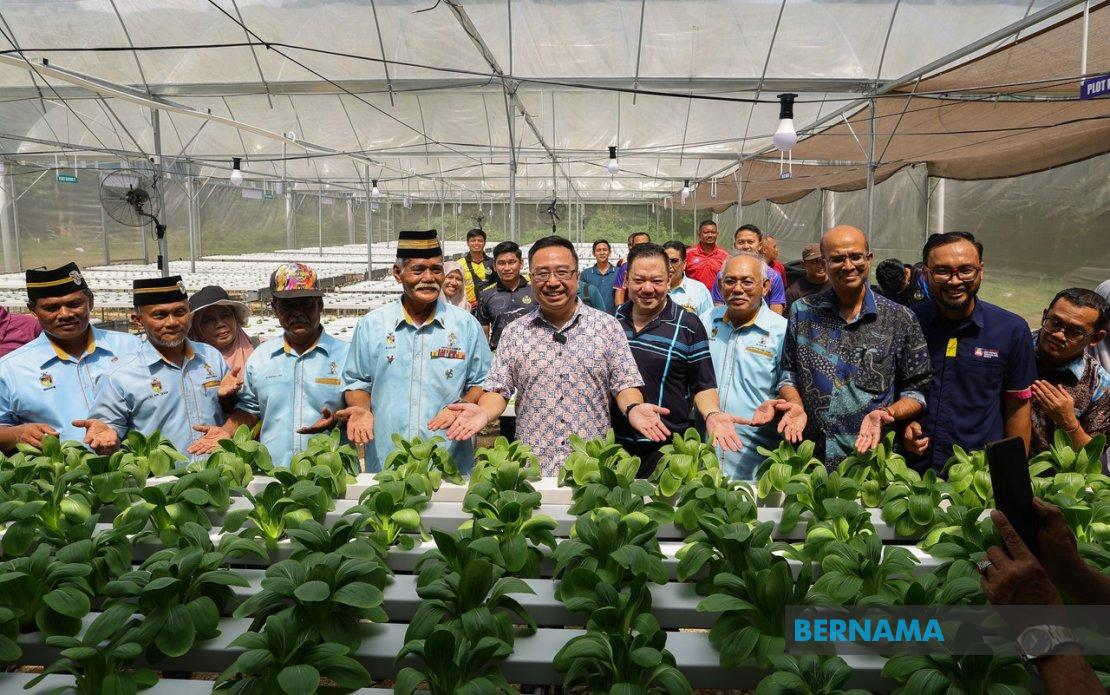
The Malaysia Social Innovation Programme (MyIS Komuniti) has emerged as a significant intervention in rural development, with Science, Technology and Innovation Minister Datuk Chang Lih Kang announcing at an event in Port Dickson that the initiative has now touched the lives of more than 6,700 individuals across diverse communities. Since its expansion in 2021, the programme has channelled RM13.97 million across 67 distinct projects, representing a substantive commitment to grassroots innovation and sustainable livelihoods in Malaysia.
Yayasan Inovasi Malaysia (YIM), the implementing body that has overseen the initiative since its inception in 2015, has positioned itself at the intersection of technological advancement and community welfare. The organisation's approach reflects a broader recognition within government circles that innovation need not remain confined to urban centres or large corporations; rather, it can be strategically deployed to address persistent challenges in resource-constrained settings. Chang's framing of the programme as an instrument for inclusive and sustainable development underscores the administration's shift towards social innovation as a development priority alongside traditional economic metrics.
The flagship project showcased at the Pasir Panjang event, supported with a RM251,616 allocation, exemplifies the programme's practical orientation. Developed through a partnership involving the Royal Electrical and Mechanical Engineers (JLJD), Universiti Teknologi MARA, and community associations, the aquaponics installation represents a convergence of multiple innovation streams. The system ingeniously marries fish farming with hydroponic vegetable cultivation, creating a closed-loop ecosystem where nutrient-rich water from fish tanks fertilises plants before being recycled back into the system. This circular design minimises water consumption and waste while maximising output from limited physical space—a particularly valuable approach in densely populated areas or regions where land scarcity constrains agricultural expansion.
The integration of renewable energy technologies elevates the aquaponics system beyond simple sustainability rhetoric. Solar-powered units coupled with Internet of Things (IoT) sensors enable real-time monitoring of critical parameters including water quality, temperature fluctuations, and overall system performance. This technological layer allows communities to move beyond reactive problem-solving toward preventive management, substantially reducing crop losses and operational disruptions. The capacity to track system dynamics remotely democratises agricultural expertise, permitting less-experienced operators to maintain optimal growing conditions through data-driven insights rather than relying solely on traditional knowledge.
From a production standpoint, the tangible outputs validate the investment rationale. In 2024 alone, the Pasir Panjang installation generated over 800,000 kilograms of vegetables, establishing a proven track record of commercial viability. Such yields transform the project from a purely developmental exercise into a genuine income-generation mechanism for participating communities. The vegetable farming component has already reached maturity, whereas the fish farming segment remains in growth phase, suggesting that overall production capacity will increase substantially as operations expand.
Market access has proven equally crucial to production success. The programme's engagement with the Federal Agricultural Marketing Authority (FAMA) addresses a perennial challenge facing small-scale producers: bridging the gap between farm and consumer. By facilitating direct-to-consumer sales channels whilst leveraging FAMA's established distribution networks, the initiative removes intermediaries that typically extract disproportionate margins. This structural support is often the decisive factor separating subsistence farming from genuinely profitable agricultural enterprise.
The Negeri Sembilan JLJD Veterans Association, with more than 100 members directly participating as recipients and strategic partners, exemplifies the programme's targeted approach toward specific demographic groups. Veterans bring both disciplinary traditions and potential economic vulnerabilities; positioning them as beneficiaries and implementing partners simultaneously demonstrates a sophisticated understanding of social capital. Their involvement lends operational credibility to the initiative whilst creating dignified employment and income supplementation opportunities aligned with civic service values.
For Malaysia's broader development landscape, the MyIS Komuniti results carry significant implications. Rural areas consistently lag urban centres in technological adoption and income generation; this programme inverts that pattern by deliberately introducing cutting-edge agricultural technology to peripheral communities. The approach acknowledges that inclusive development cannot be achieved through transfer payments alone; rather, it requires deliberate capability-building, asset creation, and institutional support structures.
The partnership architecture meriting particular attention brings together government agencies, academic institutions through UiTM, military-affiliated organisations, and community associations. Such multi-stakeholder configurations distribute risks and mobilise diverse expertise, moving beyond siloed development initiatives. UiTM's technical contributions in aquaponics system design leverage academic resources for applied community benefit, whilst JLJD's organisational capacity provides operational stability.
Within the Southeast Asian context, Malaysia's emphasis on social innovation technology positions the nation as a potential model for regional peer learning. Neighbouring countries grappling with comparable rural development challenges could potentially adapt the MyIS framework to their own institutional contexts. The programme's emphasis on food security through technology-enhanced agriculture addresses a persistent regional vulnerability, particularly relevant given climate change pressures on traditional farming systems.
Looking forward, the challenge lies in scaling these successes beyond the current 67 projects. Sustainability mechanics warrant attention: whether communities can maintain systems post-implementation, whether market demand can absorb increased production, and whether the model proves replicable across diverse geographic and demographic settings. The preliminary evidence from Port Dickson suggests the foundation is solid, but expansion will test the programme's institutional robustness and financial viability at larger scale.

