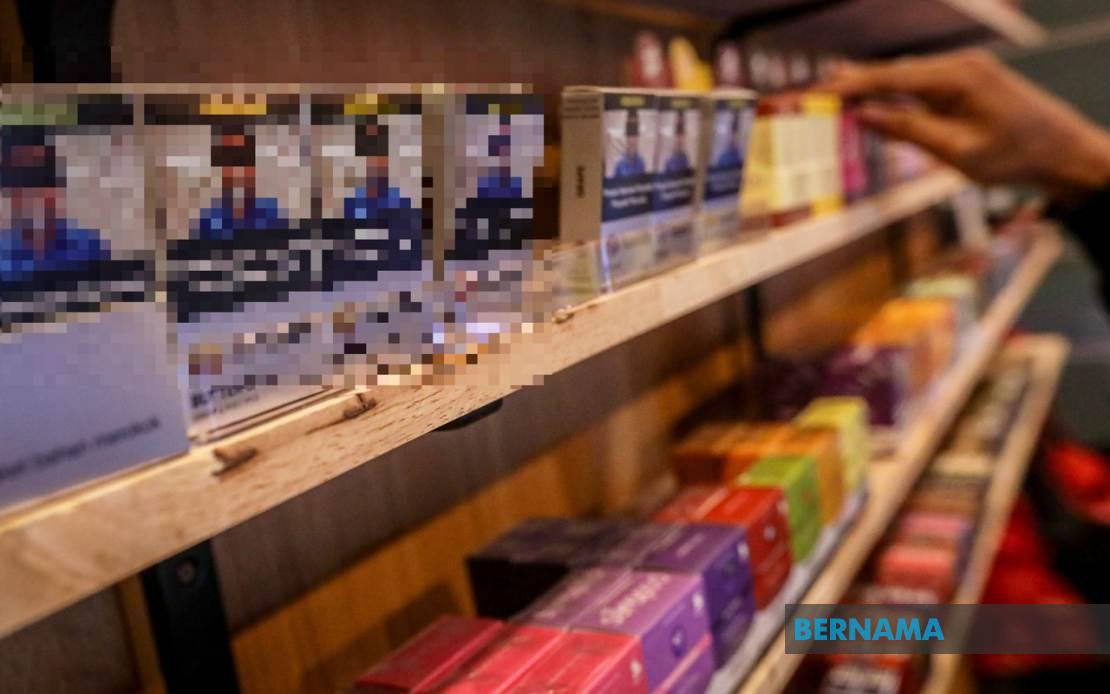
Malaysia's fight against illicit vaping has intensified dramatically, with law enforcement revealing that 718.43 kilogrammes of electronic cigarette products contaminated with dangerous drugs and psychoactive compounds have been confiscated over the past two-and-a-half years. The Home Ministry disclosed these figures in a parliamentary reply, alongside data showing 585 arrests linked to the illegal trade spanning 400 separate investigations. The trend underscores a troubling pivot in how syndicates distribute narcotics to younger demographics, exploiting the growing popularity and perceived legitimacy of vaping devices as a distribution channel.
The progression of seizures tells a concerning story about the evolving nature of Malaysia's drug trafficking landscape. In 2023, authorities recovered 471.50 kilogrammes from 66 suspects across 32 cases, establishing an initial baseline for enforcement attention. The following year saw a modest drop to 62.68 kilogrammes with 114 arrests from 92 cases, suggesting that early crackdowns may have disrupted some supply chains. However, this reprieve proved temporary. By 2025, seizures rebounded sharply to 115.22 kilogrammes involving 138 arrests from 108 separate cases. Most alarmingly, preliminary data from the first five months of 2026 already shows 69.03 kilogrammes seized with 267 arrests across 168 cases—suggesting enforcement activity has accelerated substantially and, paradoxically, that larger quantities may be in circulation.
The contamination profiles reveal the sophisticated nature of modern drug smuggling operations. Enforcement agencies have identified vape products laced with synthetic drugs, tetrahydrocannabinol (THC)—the psychoactive component of cannabis—mushroom extracts, and various other psychoactive substances. This diversification indicates that criminal networks are not simply diverting existing drug supplies but deliberately engineering products tailored to the vaping medium. The appeal to traffickers is evident: vaping devices are portable, socially normalised among youth, easily concealed, and can be marketed through encrypted channels. The Home Ministry has specifically flagged the use of online platforms, social media marketplaces, and courier services as primary distribution mechanisms, creating enforcement challenges that conventional street-level policing struggles to address.
Youth vulnerability remains at the centre of official concern. The Home Ministry emphasised that vape products mixed with prohibited substances are explicitly targeting students and young people, populations considered both economically accessible and particularly susceptible to addiction. This demographic focus reflects a troubling strategic choice by syndicates—rather than compete in saturated adult markets, criminal enterprises are cultivating new users among teenagers and young adults who may underestimate the risks associated with vaping or be unaware that products contain drugs. This represents a generational public health threat, as early exposure to THC-laced or synthetic drug products during critical developmental periods carries well-documented neurological consequences.
Operasi Khas Vape 1.0 provides concrete evidence of enforcement capability when resources are concentrated. Conducted in April, this single special operation inspected 1,670 premises and identified 728 locations operating in violation of regulations. The haul was substantial: 8,091 vape devices, 5,257 cartridges, and 205.764 kilogrammes of vape substances and liquids valued at RM4.59 million. Within this seizure, authorities recovered 19.67 kilogrammes of substances suspected of containing controlled drugs, worth RM2.9 million alone. These figures suggest that individual premises can hold vast inventories, indicating well-funded operations with significant cash flow and storage capacity. The operation's scope—covering entertainment venues, dedicated vape kiosks, suspected clandestine drug laboratories, and youth-frequented locations—demonstrates that authorities have mapped distribution infrastructure and are conducting systematic raids.
The economic dimension cannot be overlooked. The street value of seized products, particularly the RM2.9 million attributed to drug-contaminated substances, illustrates the profitability driving supply. These margins sustain organised criminal networks and provide resources for expansion, recruitment, and corruption. For context, a single illicit operation can generate returns comparable to mid-sized legitimate businesses, creating powerful incentives for criminal entrepreneurs to take calculated risks. The value figures also suggest that enforcement agencies are dealing not with street dealers operating independently but with sophisticated distribution networks capable of accumulating and warehousing substantial product volumes.
The Home Ministry's response encompasses enforcement, intelligence gathering, and prevention strategies working in parallel. Beyond the kinetic operations, authorities have enhanced cyber surveillance capabilities to track online sales, upgraded forensic and laboratory analytical facilities to identify novel drug compounds, and intensified information gathering networks to anticipate trafficking patterns. These capacity-building measures acknowledge that traditional enforcement alone cannot keep pace with innovation in the illicit market. As smugglers develop new formulations and distribution methods, law enforcement capabilities must evolve correspondingly. The emphasis on analytical laboratories is particularly significant, as identifying new psychoactive substances requires ongoing research to understand chemical composition and potential health effects.
Drug prevention education and public awareness campaigns represent the preventative pillar of this comprehensive approach. Targeting young people and school students specifically, these initiatives attempt to create protective knowledge barriers before experimentation occurs. However, the effectiveness of such programmes depends on messaging credibility and accessibility—campaigns must compete with sophisticated digital marketing by syndicates that normalise and glamorise vaping. Schools and community organisations implementing drug education face the challenge of addressing not generalised substance abuse but specific, trendy products that exploit gaps in regulatory oversight and enforcement capacity. Parents, educators, and young people themselves often lack awareness that vape products can contain controlled drugs, creating an information asymmetry that criminals exploit.
Malaysia's vaping enforcement challenge reflects broader Southeast Asian patterns. Thailand, Singapore, and Indonesia have implemented varying regulatory frameworks, from outright bans to permissive regimes, creating regional arbitrage opportunities for traffickers. Products banned in one jurisdiction can flow across borders where enforcement is lighter. Malaysia's position as a regional logistics hub—with extensive courier networks, port facilities, and transportation infrastructure—makes it both a destination market and a transit point. The reliance on courier services and online platforms means that vape trafficking operates across jurisdictions seamlessly, complicating bilateral coordination and information sharing.
The Home Ministry's commitment to continuing "firm and comprehensive" efforts signals recognition that this problem will persist without sustained, well-resourced interventions. Budget allocations for enforcement operations, intelligence capacity, laboratory facilities, and educational programmes must remain stable and potentially increase if seizure trends indicate growing supply. Furthermore, inter-agency coordination between the Royal Malaysia Police, Customs, Health Ministry, and Communications Ministry will be essential, as the problem spans drug enforcement, border security, public health, and digital regulation domains. No single agency possesses complete visibility or jurisdiction over all aspects of the illicit vape supply chain.

