The Pahang state government is making a significant push into sports infrastructure and talent development, announcing a RM3.5 million allocation aimed at strengthening three key sporting disciplines within the state. The funding represents a deliberate strategy to elevate Pahang's competitive standing in Malaysia's national sports landscape, where certain states have historically maintained dominant positions across major championships and tournaments.
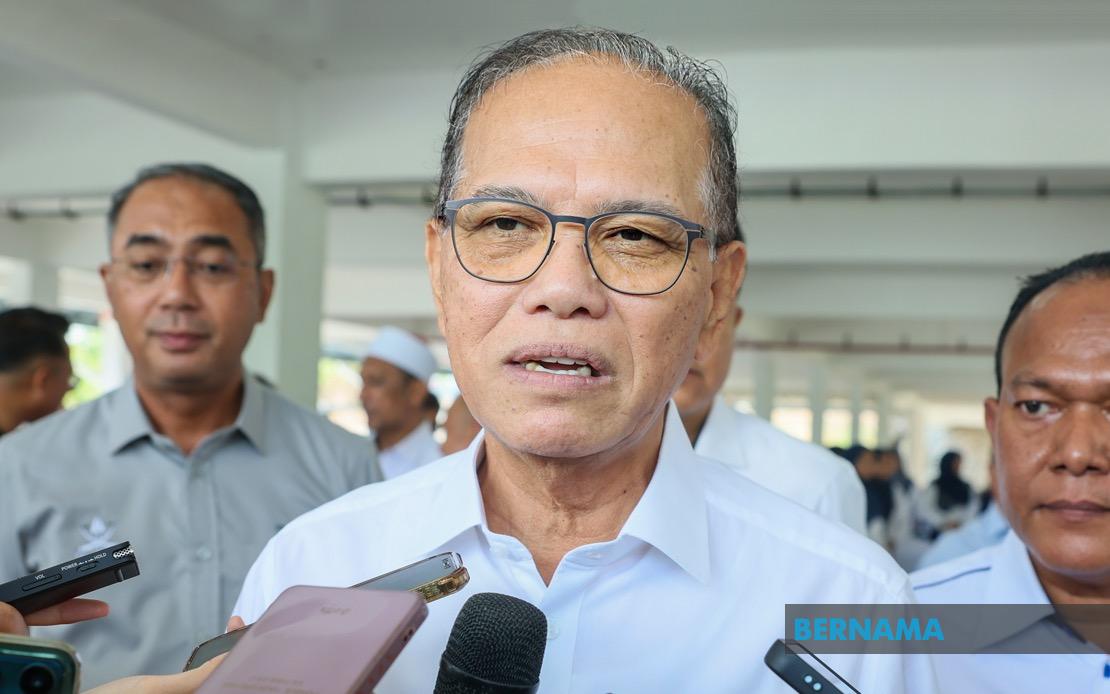
Menteri Besar Datuk Seri Wan Rosdy Wan Ismail framed the investment as part of a broader vision to position Pahang alongside the country's established sporting powerhouses. Speaking at the closing ceremony of the Pahang 1st Netball League Championship at the Pahang Sports Complex (SUKPA) in Kuantan on July 5, he stressed that meaningful sports development requires unwavering commitment rather than superficial gestures. The announcement signals a coordinated approach to building competitive advantage through strategic resource allocation and systematic talent identification.
The funding distribution reveals clear prioritisation within the state's sporting agenda. Football receives the largest share at RM2 million, reflecting its central importance to grassroots participation and national competitiveness. Netball has been allocated RM1 million, whilst sepak takraw, the traditional Southeast Asian sport deeply rooted in Malaysian culture, receives RM500,000. This breakdown demonstrates how Pahang is balancing investment across sports with varying levels of established infrastructure and participation.
Beyond immediate financial commitment, the state government has signalled sustained support through future funding increases. Wan Rosdy announced plans to raise netball's allocation by RM500,000 in the coming year, bringing its total to RM1.5 million. This escalation suggests confidence in the sport's development trajectory and recognition of netball's potential to deliver medal success at national competitions. The decision also reflects responsiveness to the demonstrated interest evident from the championship tournament itself.
The grassroots development dimension proves equally significant as the headline spending figure. Rather than concentrating resources on elite athletes, Pahang's strategy deliberately targets emerging talent across communities. This foundational approach acknowledges that sustained national competitiveness requires deep talent pools and early identification systems. By fostering development at entry-level participation, the state creates pathways for young athletes to progress through structured competitive environments.
The timing of this announcement coincides with the Pahang 1st Netball League Championship, which drew 42 participating teams and crowned Semambu as champions. The tournament winners received RM10,000 in prize money alongside the championship trophy. Such competitions serve dual purposes—they identify promising athletes whilst simultaneously building the community engagement necessary for sports to thrive beyond official funding cycles. The substantial team participation suggests existing appetite for organised competition that this funding can now substantially enhance.
Wan Rosdy articulated a secondary benefit of sports investment that resonates across Malaysian social policy discourse: the role of athletics in fostering unity and social cohesion. Beyond medal tallies and tournament victories, sports programming functions as a platform for developing discipline, cooperation, and shared identity across diverse communities. This perspective aligns sports investment with broader nation-building objectives, making the financial commitment defensible on social grounds beyond purely competitive performance metrics.
Pahang's position within Malaysia's sporting hierarchy has historically been modest compared to established powerhouses. This allocation represents a conscious effort to narrow that gap through sustained, targeted investment. The state's focus on three specific disciplines rather than dispersed spending across numerous sports reflects strategic thinking about resource efficiency and the realistic potential for meaningful advancement.
For Southeast Asian context, Pahang's emphasis on sepak takraw deserves particular attention. This discipline holds deep cultural significance across the region and represents Malaysia's traditional sporting heritage. By protecting funding for sepak takraw whilst simultaneously investing in football and netball, Pahang signals commitment to preserving indigenous sports traditions alongside participation in universally recognised competitive spheres. This cultural dimension adds layers of meaning to what might otherwise appear purely as a performance investment.
The netball funding increase to RM1.5 million next year suggests that performance metrics from the current allocation cycle will inform future disbursement decisions. This conditional escalation creates incentive structures for sports administrators and athletes to demonstrate progress justifying enhanced support. Such performance-linked funding models have become increasingly common in Malaysian sports governance as states seek accountability alongside competitive advancement.
For Malaysian readers assessing state-level sporting initiatives, Pahang's announcement exemplifies broader trends in subnational sports policy. As federal resources remain distributed across all states, individual governments increasingly seek to establish distinctive sporting identities and competitive niches. Pahang's selection of these three sports likely reflects existing community participation levels, facility availability, and realistic assessments of where investment might yield both immediate and long-term returns.
The announcement carries implications extending beyond Pahang's borders. As one state makes significant sports funding commitments, competitive dynamics may prompt neighbouring states to review their own allocations. This inter-state competition for sporting talent and championship success represents a healthy dimension of Malaysia's federal system, encouraging innovation and investment across regions. Pahang's move may catalyse broader conversations about sports development priorities within state governments nationwide.

