The Pahang State Mufti Department and the Pahang Islamic Religious and Malay Customs Council have reinforced a royal directive from Al-Sultan Abdullah Ri'ayatuddin Al-Mustafa Billah Shah to preserve and strengthen the role of mosques and suraus as the proper venues for congregational worship in the state. This reaffirmation comes amid growing discussions about modernising Islamic facilities across Malaysia, including proposals to establish Friday prayer spaces within commercial shopping complexes nationwide.
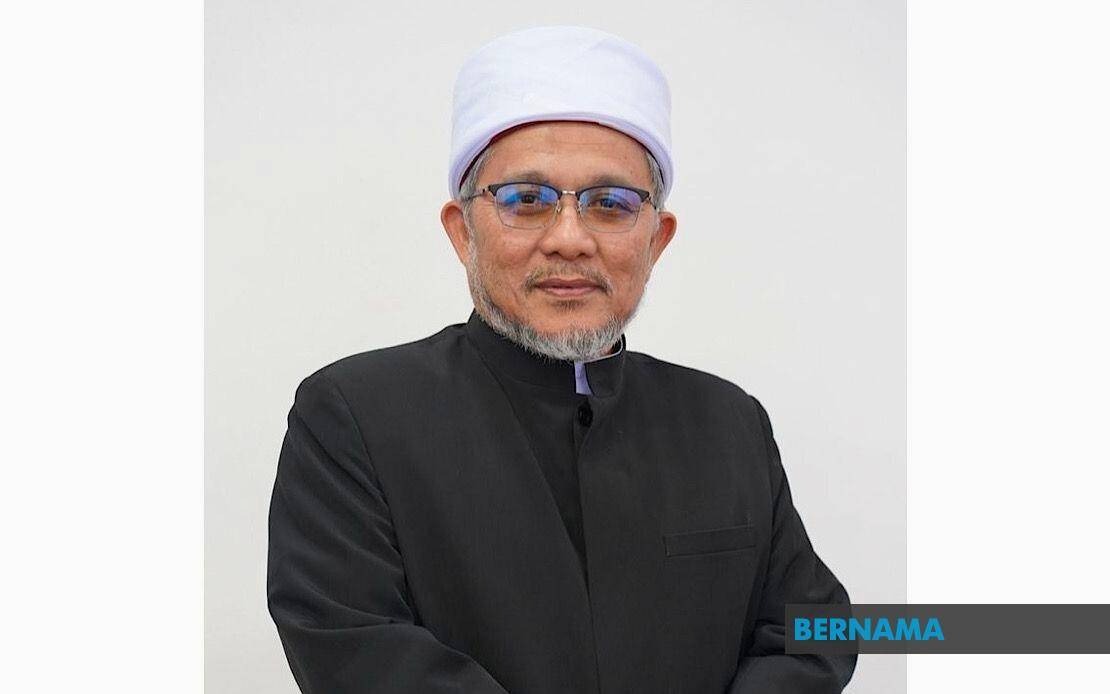
Pahang Mufti Prof Datuk Dr Asmadi Mohamed Naim articulated the Sultan's position clearly, emphasising that Friday prayers in Pahang must continue to be conducted exclusively at recognised mosques and suraus that hold official authorisation to conduct Friday prayers, known locally as SKJ. The decree establishes that MUIP, as the state's Islamic governance body, holds exclusive authority over mosques and suraus in Pahang—a responsibility enshrined in the state's constitutional powers under the Ninth Schedule of the Federal Constitution.
The Sultan's directive reflects a deliberate policy choice rooted in Islamic jurisprudence. According to the Syafi'i school of Islamic law followed in Malaysia, Friday prayers carry specific religious requirements that extend beyond mere convenience. These include strict timing constraints tied to the Zohor prayer period, a mandatory minimum congregation size of 40 worshippers, the requirement for two formal sermons to precede the prayer, and the necessity that the venue be officially designated to prevent duplication of services in adjacent areas. These conditions establish that Friday prayers are ceremonial obligations requiring proper institutional frameworks rather than spontaneous gatherings in secular spaces.
Pahang's approach distinguishes itself by prioritising community-centred planning in mosque distribution. The state's religious authorities highlight that existing infrastructure has been developed with careful consideration of local population needs and demographic patterns. The flagship Sultan Ahmad 1 State Mosque in Kuantan stands as the principal venue, while the Tepian Putra Mosque, the newly inaugurated Bandaraya Mosque, and Al-Shafie Mosque in Kota SAS collectively provide comprehensive coverage across the state. This existing network, according to Mufti Asmadi, possesses sufficient capacity to accommodate current and anticipated congregational demands without requiring supplementary facilities in commercial environments.
The Pahang position gains significance against the backdrop of competing religious policy visions within Malaysia's federal system. Just days prior, Datuk Dr Zulkifli Hasan, the Minister in the Prime Minister's Department with responsibility for religious affairs, publicly endorsed initiatives to introduce Friday prayer facilities in shopping malls following preliminary positive responses from trial locations in the Federal Territories. This ministerial endorsement suggested momentum behind modernising prayer infrastructure to reflect urban lifestyle patterns and commercial integration.
However, Pahang's reassertion of the Sultan's decree underscores a fundamental tension in Malaysian Islamic governance: the balance between accommodating contemporary urban lifestyles and preserving traditional institutional structures that carry both theological significance and community identity. While shopping mall facilities might offer convenience to busy urban professionals, they potentially fragment congregational unity and dilute the central role that mosques have historically occupied in Muslim community life.
The timing of Pahang's clarification suggests deliberate pushback against creeping commercialisation of religious practice. By explicitly invoking the Sultan's authority and constitutional provisions, state religious leaders signal that mosque-centred worship remains a non-negotiable principle of Islamic practice in Pahang, regardless of modernisation pressures or federal-level initiatives. This stance aligns with broader concerns within Southeast Asian Islamic governance about maintaining religious authenticity amid rapid urbanisation and commercialisation.
The emphasis on MUIP's custodial role carries practical implications. As the constitutionally recognised authority, MUIP exercises gatekeeping power over which facilities receive SKJ status—a designation that carries legal and religious weight. This institutional arrangement prevents ad-hoc proliferation of Friday prayer venues and maintains administrative coherence across the state's religious infrastructure. For worshippers and communities, it ensures clarity about authorised facilities while protecting the sanctity of traditional prayer spaces from secular contamination.
From a broader Malaysian perspective, Pahang's position reflects how different states leverage their constitutional autonomy over Islamic affairs to chart distinct policy courses. While federal religious ministries might advocate for pragmatic adaptations reflecting urban realities, state sultans and religious councils defend traditional institutional structures that embody cultural continuity and Islamic principle. This dynamic creates a complex governance landscape where Friday prayer infrastructure becomes a proxy for deeper questions about Islamic modernisation, state authority, and community identity in contemporary Malaysia.
The decree's emphasis on maintaining existing authorised facilities also addresses infrastructure efficiency concerns. Rather than duplicating prayer capacity across multiple venues, the state's strategy concentrates resources in purpose-built facilities designed to accommodate large congregations with proper amenities, acoustic clarity, and ritual spaces. Shopping mall facilities, by contrast, typically involve improvised or temporary arrangements incompatible with the formal requirements of Friday prayers as understood in Malaysian Islamic jurisprudence. Pahang's approach thus reflects both theological consistency and practical resource management.
Looking forward, Pahang's reaffirmation likely signals resistance to any federal initiatives that might mandate or incentivise mall-based prayer facilities across states. By securing explicit royal validation of the mosque-centric model, state authorities establish a precedent that other sultanates might follow, potentially fragmenting whatever national consensus the federal religious ministry hoped to build around commercial prayer spaces. This illustrates how Malaysia's federal-state religious governance structure creates opportunities for principled disagreement on Islamic policy questions.

